

Ban Xia Xie Xin Tang (Pinellia Decoction to Drain the Epigastrium)
Ban Xia Xie Xin Tang Bàn Xià Xiè Xīn Tāng
Pinellia Decoction to Drain the Epigastrium
- Category
- Formulas that Harmonize
- Ingredients
- 7 herbs
Actions
What does Ban Xia Xie Xin Tang do?
Ban Xia Xie Xin Tang harmonizes the Stomach and Intestines, directs rebellious Stomach qi downward, and dissipates epigastric focal distention (pi) caused by cold and heat lodged together in the middle jiao. It is the archetypal “harmonizing” formula, pairing acrid, warming herbs that open congealed qi with bitter, cold herbs that drain heat downward — a strategy traditionally called xin kai ku jiang (“acrid to open, bitter to drain”) — while simultaneously tonifying the Spleen qi that allowed the disorder to take hold.
- Harmonizes Stomach and Intestines — realigns the Spleen's ascending and Stomach's descending qi movement, which has become tangled together as mixed cold and heat.
- Directs rebellious qi downward — Ban Xia's core action, settling the nausea and vomiting that come from Stomach qi moving the wrong direction.
- Dissipates focal distention (pi) — resolves the subjective, non-painful fullness below the sternum that gives the “Xie Xin Tang” formulas their name.
- Dries dampness and transforms phlegm — Ban Xia's secondary action, addressing the greasy tongue coat that often accompanies this pattern.
- Tonifies Spleen qi — Ren Shen, Da Zao, and Zhi Gan Cao rebuild the qi deficiency that both predisposes to and results from the disorder.
Source: composition confirmed from Sacred Lotus sources & references; chief/deputy/assistant/envoy analysis and the xin-kai-ku-jiang framing cross-referenced against multiple online sources and Bensky & Barolet, Formulas & Strategies. Traditional-use framing; not medical advice.
Indications
What is Ban Xia Xie Xin Tang used for?
Ban Xia Xie Xin Tang treats epigastric focal distention (pi) from mixed cold and heat disrupting the Stomach and Intestines — classically arising after a Shaoyang-stage disorder was mistakenly purged, driving the pathogen inward and leaving cold and heat tangled together in the middle jiao instead of resolved.
- Epigastric fullness or focal distention (pi) below the sternum that is soft and non-tender on palpation — distinguishing it from a hard, painful accumulation.
- Nausea or vomiting from Stomach qi rebelling upward.
- Borborygmus (loud intestinal rumbling) with loose stool or diarrhea from disordered Spleen-Stomach qi dynamics.
- Reduced appetite with a subjective sense of heaviness or blockage in the epigastrium.
- Occasional belching or acid regurgitation as rebellious qi surfaces.
Tongue and pulse: a thin, yellow, greasy tongue coating and a wiry, rapid pulse — the greasy yellow coat pointing to heat mixed with damp/phlegm, the wiry rapid pulse to qi constraint with heat.
Source: pattern/tongue/pulse from Sacred Lotus sources & references; clinical presentation cross-referenced against multiple online sources plus Bensky & Barolet, Formulas & Strategies, and the classical source text (Shang Han Lun). Traditional-use framing; not medical advice.
Western Uses:
What conditions is Ban Xia Xie Xin Tang used for in modern practice?
Ban Xia Xie Xin Tang harmonises a tangled heat-and-cold disharmony of the stomach and intestines — epigastric fullness (focal distention), nausea, reflux and loose stools — and is referenced for several upper-digestive conditions: acute gastroenteritis, chronic gastritis, chronic hepatitis, early-stage cirrhosis, and acid hypersecretion contributing to gastric ulcers.
The formula is selected for the mixed heat-cold disharmony pattern, not against a diagnosis. Persistent epigastric pain, reflux, or a change in digestion warrants medical assessment (gastritis and ulcers are often linked to H. pylori and need testing/treatment), and liver disease requires medical diagnosis and monitoring. Traditional-use correlates only, not a treatment claim.
Source: Sacred Lotus sources & references (pattern) + Bensky & Barolet, Formulas & Strategies; biomedical correlates as reference only. Not medical advice.
Ingredients
7 substances in Ban Xia Xie Xin Tang — each links to its full herb monograph.
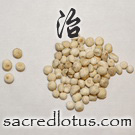 Ban Xia9 gWarm Herbs that Transform Phlegm-Cold
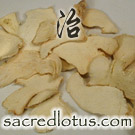 Gan Jiang9 gWarm the Interior and Expel Cold
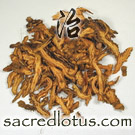 Huang Lian3 gClear Heat and Dry Dampness
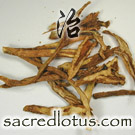 Huang Qin9 gClear Heat and Dry Dampness
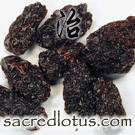 Da Zao12 piecesTonify Qi
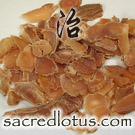 Ren Shen9 gTonify Qi
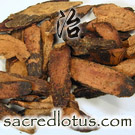 Zhi Gan Cao9 gTonify Qi
Preparation & dosage
How is Ban Xia Xie Xin Tang prepared?
Ban Xia Xie Xin Tang is prepared as a decoction from processed Ban Xia together with the other six herbs, classically simmered and re-boiled in two stages, then divided into three warm doses. Zhang Zhongjing's original method (Shang Han Lun) called for the seven ingredients to be boiled down in water to a reduced volume, strained, and then boiled once more before dividing the liquid into three servings — a two-stage cooking method distinct from a single simmer.
In modern practice the herbs are simmered together as a standard decoction for roughly 20–30 minutes. Only processed (zhi) Ban Xia is used — never the raw, more irritating form — consistent with standard dispensing practice for this herb across every formula that contains it.
Source: classical preparation method (Shang Han Lun) and modern decoction practice cross-referenced against multiple online sources and Bensky & Barolet, Formulas & Strategies. Traditional-use framing; not medical advice.
Safety — read before use
What are the cautions for Ban Xia Xie Xin Tang?
This formula is a harmonizing prescription for a specific mixed cold-heat pattern — it is not appropriate for pure excess heat, pure cold, or a hard/painful epigastric mass, and it relies on processed rather than raw Ban Xia. Matching the pattern correctly (a soft, non-tender fullness with mixed cold-heat signs) rather than treating it as a general “upset stomach” is central to its traditional use.
- Not for hard, painful epigastric accumulation — a firm, tender mass (as addressed by formulas such as Da Xian Xiong Tang) indicates fluid-heat binding rather than the soft, non-tender pi this formula treats.
- Not for pure cold or pure heat patterns — the formula is specifically built for cold and heat mixed together; a purely cold epigastric pain or a purely hot/bleeding presentation calls for a different, unmixed formula.
- Ban Xia (Pinellia) processing: only the processed (zhi) form is used in this and all standard formulas; raw Pinellia is irritating to the throat and traditionally listed among the herbs said to be incompatible with aconite (Wu Tou/Fu Zi)-containing formulas under the “eighteen antagonisms” — the two are traditionally not combined.
- Pregnancy: traditionally used with caution given Ban Xia's descending, phlegm-transforming action; use should be supervised by a qualified practitioner.
- Zhi Gan Cao (licorice) content: as with other licorice-containing formulas, long-term or high-dose use is traditionally cautioned in the presence of edema, hypertension, or low potassium, and licorice is known to interact with certain corticosteroid and diuretic medications.
Source: cautions cross-referenced against multiple online sources and Bensky & Barolet, Formulas & Strategies (contraindications; eighteen antagonisms); Sacred Lotus sources & references confirm the formula's Ban Xia and Gan Cao content. Reference note, not medical advice.
Originally Appeared In:
- On Cold Damage (Shang Han Lun)
Notes:
How does Ban Xia Xie Xin Tang differ from Sheng Jiang Xie Xin Tang and Gan Cao Xie Xin Tang?
Ban Xia Xie Xin Tang is one of three closely related “Xie Xin Tang” formulas from the Shang Han Lun that share the same seven-herb skeleton but shift the lead ingredient to match a slightly different variant of the same mixed cold-heat pi pattern. All three arose from the same clinical scenario: a Shaoyang-stage disorder mistakenly purged, damaging Spleen-Stomach qi and trapping cold and heat together in the middle jiao.
- vs Sheng Jiang Xie Xin Tang (Fresh Ginger Decoction to Drain the Epigastrium): reduces Gan Jiang and adds a larger dose of fresh Sheng Jiang, shifting emphasis toward a pi with more pronounced fluid accumulation — watery, foul-smelling belching, borborygmus, and diarrhea from food and fluid stagnating alongside the qi disorder.
- vs Gan Cao Xie Xin Tang (Licorice Decoction to Drain the Epigastrium): increases Zhi Gan Cao to the leading dose, for a case where repeated (rather than single) mistaken purgation has more severely depleted middle qi, producing more pronounced diarrhea, restlessness, and a more agitated presentation.
- vs Xie Xin Tang / San Huang Xie Xin Tang (Da Huang, Huang Lian, Huang Qin): despite the shared “Xie Xin Tang” name, this is a structurally unrelated, purely bitter-cold purgative formula for reckless heat-forced bleeding or damp-heat pi, with no qi-tonifying herbs and no Ban Xia — it addresses pure excess heat, not the mixed cold-heat, deficiency-tinged pattern this formula treats.
Classical source: Shang Han Lun (Treatise on Cold Damage), attributed to Zhang Zhongjing, Han dynasty — the formula appears in the discussion of pi (focal distention) following mistaken purgation of a Shaoyang-stage disorder.
Source: formula-family differentiation cross-referenced against multiple online sources and Bensky & Barolet, Formulas & Strategies; classical attribution from the Shang Han Lun.
Clinical Studies & Research:
Is there modern research on Ban Xia Xie Xin Tang?
Yes — Ban Xia Xie Xin Tang (Banxia Xiexin Decoction) is one of the more extensively studied classical formulas, with a 2025 review identifying 11 categories of clinical application, plus recent clinical and mechanistic studies in gastrointestinal disease. Most modern research centers on gastritis, functional dyspepsia, and other upper-GI conditions consistent with its traditional epigastric-pi indication, alongside newer exploratory work in oncology.
- Clinical and pharmacological review: a 2025 review of literature from 1997–2024 across multiple databases identified 11 major categories of clinical application for the formula, with chronic gastritis, functional dyspepsia, and inflammatory bowel disease among the most studied (PMID 40102869; PMC 11921579; DOI 10.1186/s13020-025-01087-0).
- Advanced colorectal cancer (multicenter placebo-controlled trial): a 2026 multicenter trial of a modified Banxia Xiexin Decoction alongside standard chemotherapy reported extended progression-free and overall survival, improved disease control, and reduced tumor markers versus placebo, with accompanying preclinical work supporting an anti-tumor mechanism (PMID 41619866; DOI 10.1016/j.jep.2026.121292).
- Gastric precancerous lesions (preclinical, mechanism): in a chemically induced rat model, the decoction reduced inflammatory cytokines (TNF-α, IL-1β, IL-6) and restored beneficial gut bacteria such as Lactobacillus, consistent with a gastric-microbiota-modulating mechanism (PMID 41722877).
Sources: PMID 40102869 (PMC 11921579, DOI 10.1186/s13020-025-01087-0); PMID 41619866 (DOI 10.1016/j.jep.2026.121292); PMID 41722877. Research context on modern gastrointestinal and oncology study, not a therapeutic claim for the formula's classical pi indication specifically; the colorectal-cancer trial used a modified formula alongside chemotherapy, not the classical seven-herb prescription alone.
Sources & References
Compiled and edited by Thomas Dehli, Founder & Editor, Sacred Lotus Updated
The information here is referenced from numerous sources — teachers, practitioners, class notes from Five Branches University, the books below, and the published research literature, with citations given as resolvable PubMed identifiers. Where sources disagree, I have flagged the discrepancies directly. If facts couldn't be verified, I have left them out. How we source our content.
Reference information for students and practitioners — not medical advice. Consult a qualified practitioner. Terms of use.
Chinese Formulas Books & References
 https://amzn.to/4fYI3f8
 https://amzn.to/4j55NRA
 https://amzn.to/4gMROyv
 https://amzn.to/4h7msSK