

Chuan Xiong Cha Tiao San (Ligusticum Chuanxiong Powder to be Taken with Green Tea)
Chuan Xiong Cha Tiao San Chuān Xiōng Chá Tiáo Sàn
Ligusticum Chuanxiong Powder to be Taken with Green Tea
- Category
- Formulas that Release the Exterior
- Ingredients
- 8 herbs
Actions
What does Chuan Xiong Cha Tiao San do?
Chuan Xiong Cha Tiao San disperses external wind and relieves headache, using a set of acrid, warm wind-dispersing herbs tempered by green tea so the formula clears the head without being excessively drying or overheating. It treats headache from an external wind invasion — whatever the exact channel or location — by combining channel-specific herbs for different areas of the head with a broadly wind-dispersing base.
- Chuan Xiong (chief): the lead herb for headache in this formula, reaching the vertex and whole head and classically regarded as a primary herb for head pain of any location.
- Bai Zhi, Qiang Huo, Xi Xin, Jing Jie, Fang Feng: a set of wind-dispersing herbs, several with specific channel affinities for particular regions of the head (see description).
- Bo He (largest single dose): aromatic and cooling; vents wind through the exterior and clears the head and eyes, balancing the warmth of the other herbs.
- Gan Cao (envoy): harmonizes the formula.
Source: Sacred Lotus sources & references (composition) + Bensky & Barolet, Formulas & Strategies; Chen & Chen, Chinese Medical Herbology and Pharmacology.
Indications
What is Chuan Xiong Cha Tiao San used for?
Chuan Xiong Cha Tiao San treats headache from an external wind invasion — including wind-cold and wind-heat presentations — with pain that may affect the whole head or localize to the forehead, vertex, temples, or back of the head, typically accompanied by other surface-wind signs.
- Headache of sudden or recurrent onset following exposure to wind or a weather change.
- Pain that may localize to a specific area of the head (forehead, vertex, temples, occiput).
- Nasal congestion, aversion to wind, or mild dizziness.
- A floating pulse and thin white tongue coat, consistent with an external (surface-level) pattern.
- Referenced in classical Chinese medical literature as the most frequently cited formula for headache/migraine of this type.
Source: Sacred Lotus sources & references (pattern/tongue/pulse) + Bensky & Barolet, Formulas & Strategies; PMID 36386198 (classical-literature data-mining analysis).
Ingredients
8 substances in Chuan Xiong Cha Tiao San — each links to its full herb monograph.
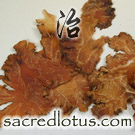 Chuan Xiong12 gInvigorate Blood and Remove Stagnation
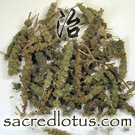 Jing Jie12 gWarm, Spicy Herbs that Release the Exterior
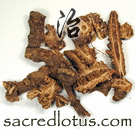 Qiang Huo6 gWarm, Spicy Herbs that Release the Exterior
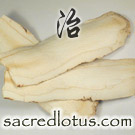 Bai Zhi6 gWarm, Spicy Herbs that Release the Exterior
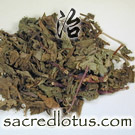 Bo He24 gCool, Spicy Herbs that Release the Exterior
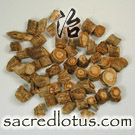 Fang Feng4.5 gWarm, Spicy Herbs that Release the Exterior
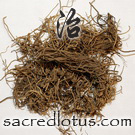 Xi Xin3 gWarm, Spicy Herbs that Release the Exterior
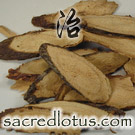 Gan Cao6 gTonify Qi
Preparation & dosage
How is Chuan Xiong Cha Tiao San prepared?
As its name states, this formula is a powder (san) traditionally taken together with green tea rather than plain water — either the herbs are ground to a fine powder and taken by the spoonful with a brewed green tea infusion, or, in modern practice, decocted with a small amount of green tea added toward the end. Bo He, being aromatic and volatile, is traditionally added late in the cooking process (or briefly steeped) so its dispersing, clearing properties are not lost to prolonged heat.
Reference relative amounts: Bo He 24 g, Jing Jie 12 g, Chuan Xiong 12 g, Qiang Huo 6 g, Bai Zhi 6 g, Gan Cao 6 g, Fang Feng 4.5 g, Xi Xin 3 g.
Source: Sacred Lotus sources & references (amounts) + Bensky & Barolet, Formulas & Strategies (preparation method).
Safety — read before use
What are the cautions for Chuan Xiong Cha Tiao San?
Chuan Xiong Cha Tiao San is a dispersing formula for external wind headache and is not appropriate for headache from internal causes — Liver yang rising, qi or Blood deficiency, or Kidney deficiency — where its acrid, warm, dispersing herbs would aggravate rather than help. It is also not intended for prolonged or repeated use, as its drying, dispersing nature can deplete qi and Blood over time.
- Xi Xin (Asarum) is a restricted-dose herb in many regulatory frameworks because of aristolochic-acid-related safety concerns associated with the Aristolochiaceae family; classical practice itself long cautioned that decocted Xi Xin “does not exceed one qian [about 3 g].” This is a public-safety reference, not administration guidance.
- Pregnancy: contains a Blood-invigorating herb (Chuan Xiong) and strongly dispersing herbs; use only under professional guidance.
- Chronic or recurrent headache without a clear external-wind onset (sudden onset with a wind/weather trigger, floating pulse) should be properly diagnosed rather than treated with a surface-dispersing formula.
Source: Bensky & Barolet, Formulas & Strategies (pattern cautions); regulatory/safety literature on Asarum species (aristolochic acid), summarized as public-safety reference.
Originally Appeared In:
- Imperial Grace Formulary of the Tai Ping Era (Tai Ping Hui Min He Ji Ju Fang)
Notes:
How does Chuan Xiong Cha Tiao San differ from Jiu Wei Qiang Huo Tang?
Chuan Xiong Cha Tiao San is focused specifically on headache, with its channel-guiding herb selection built around regions of the head, whereas related wind-dispersing formulas are built for body-wide presentations.
- vs Jiu Wei Qiang Huo Tang: that formula disperses wind-cold-dampness for whole-body aching and headache together, with a broader damp-resolving emphasis, rather than this formula’s head-specific, tea-tempered approach.
- Common wind-heat modification: adding Ju Hua and Man Jing Zi (and reducing the warmer dispersing herbs) is a well-known adaptation for headache with more pronounced heat signs, such as red eyes.
Classical source: the formula is recorded in the Song-dynasty imperial formulary Tai Ping Hui Min He Ji Ju Fang (Formulas of the Peaceful Benevolent Dispensary), one of the most influential formula compilations in the Chinese medical tradition. A modern data-mining analysis of classical Chinese medical literature identified it as the single most frequently cited formula for migraine-type headache (PMID 36386198). Common modification: add Gao Ben for pain concentrated at the vertex.
Source: Bensky & Barolet, Formulas & Strategies (classical source, differentiation, modifications); PMID 36386198.
Clinical Studies & Research:
Is there modern research on Chuan Xiong Cha Tiao San?
Direct clinical-trial evidence on this specific formula is limited; the clearest modern evidence is a data-mining analysis of classical Chinese medical literature confirming its historical prominence for migraine. That analysis systematically mined classical-text records for herbs and formulas used against migraine-type headache, and found Chuan Xiong Cha Tiao San to be the most frequently recorded formula for the condition, with its chief herb Chuan Xiong the single most frequently used herb, across the surveyed literature (PMID 36386198).
This is historical-literature evidence of longstanding clinical use rather than a modern randomized trial, and is presented here as context on the formula’s standing in the tradition, not as a therapeutic claim.
Source: PMID 36386198. Research context only; not a therapeutic claim.
Sources & References
Compiled and edited by Thomas Dehli, Founder & Editor, Sacred Lotus Updated
The information here is referenced from numerous sources — teachers, practitioners, class notes from Five Branches University, the books below, and the published research literature, with citations given as resolvable PubMed identifiers. Where sources disagree, I have flagged the discrepancies directly. If facts couldn't be verified, I have left them out. How we source our content.
Reference information for students and practitioners — not medical advice. Consult a qualified practitioner. Terms of use.
Chinese Formulas Books & References
 https://amzn.to/4fYI3f8
 https://amzn.to/4j55NRA
 https://amzn.to/4gMROyv
 https://amzn.to/4h7msSK