

Die Da Wan (Trauma Pill)
Actions
What does Die Da Wan do?
Die Da Wan invigorates the blood, transforms blood stasis, and moves qi through the tissue layers to reduce swelling and stop pain after a traumatic injury. It is a fast-acting patent "hit pill" — traditionally taken immediately after a blow, fall, sprain, or other blunt trauma — built around a strong blood-moving core supported by an unusual qi-and-fluid-dispersing herb, Ma Huang, used here for its ability to open the space between skin, flesh, and muscle rather than for its more familiar exterior-releasing action.
The eight ingredients divide by role (this site’s own record does not flag chief/deputy/assistant roles, so this breakdown follows dose-weighted, function-based analysis in the convention Bensky & Barolet use for patent formulas):
- Chiefs: Ru Xiang (60g) invigorates blood, moves qi, and reduces swelling and pain at the site of injury; Ma Huang (60g), the two largest-dose herbs, drives qi and fluid through the skin-flesh-muscle layers to clear the local blockage trauma creates.
- Deputies: Mo Yao pairs with Ru Xiang in TCM's classic resin duo for blood stasis and pain; Xue Jie invigorates blood, stops bleeding, and reduces swelling; Tu Bie Chong and Zi Ran Tong break blood stasis and specifically target sinew and bone repair.
- Assistants: Dang Gui and Chuan Xiong nourish and move the blood, replenishing what the stronger stasis-breaking herbs disperse so the formula does not injure healthy blood.
This formula carries no Gan Cao (licorice) or other harmonizing envoy, which is typical of strong patent "hit pills" meant for brief, acute use rather than prolonged internal dosing — see cautions.
Source: this site’s own composition record + role-analysis convention per Bensky & Barolet, Formulas & Strategies, applied to this site’s own record-confirmed 8-herb composition. Traditional-use framing; not medical advice.
Indications
What is Die Da Wan used for?
Die Da Wan treats blood stagnation from traumatic injury — the bruising, swelling, and fixed, distending pain that follow a fall, blow, sprain, or other acute physical trauma. It is a first-line "hit pill" taken in the immediate aftermath of an injury, before stasis has a chance to settle.
Classic presentation:
- Local signs: bruising and discoloration, swelling, and pain that is fixed in location and worsens with pressure or movement — the hallmark of blood stasis rather than simple qi stagnation.
- Typical injuries: sprains, contusions, and soft-tissue trauma from falls, blows, or sports/martial-arts impact; also used adjunctively for closed fractures once a fracture has been medically set.
Source: this site’s own pattern record ("Blood Stagnation from Traumatic Injury") + multiple online sources + this site’s own record (citing the Quan Guo Zhong Cheng Yao Chu Fang Ji, "Collection of Chinese Herbal Prepared Medicines"). Traditional-use framing; not medical advice.
Western Uses:
What is Die Da Wan used for in modern practice?
In modern practice Die Da Wan is referenced by TCM practitioners and martial-arts/sports-medicine communities as an over-the-counter "trauma pill" for acute soft-tissue injury — sprains, bruising, and blunt-force impact — and, once a fracture has been medically reduced, as a traditional adjunct alongside orthopedic care rather than a replacement for it.
These biomedical correlates describe the formula's traditional use, not a claim that it treats any diagnosed condition. No clinical trials of this specific 8-herb patent formula were located; modern research instead exists on several of its individual ingredients (see research). Any injury with suspected fracture, internal bleeding, or head trauma requires prompt medical evaluation before any herbal remedy is used.
Source: traditional-use correlates summarized from multiple online sources and martial-arts trauma-medicine literature; reference only, not a treatment claim.
Ingredients
8 substances in Die Da Wan — each links to its full herb monograph.
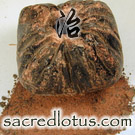 Xue Jie30 gInvigorate Blood and Remove Stagnation
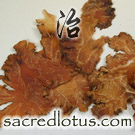 Chuan Xiong30 gInvigorate Blood and Remove Stagnation
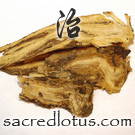 Dang Gui30 gTonify Blood
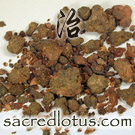 Mo Yao30 gInvigorate Blood and Remove Stagnation
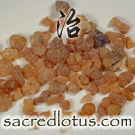 Ru Xiang60 gInvigorate Blood and Remove StagnationNo specimen photographZi Ran Tong30 gInvigorate Blood and Remove Stagnation
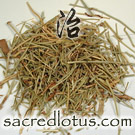 Ma Huang60 gWarm, Spicy Herbs that Release the Exterior
Preparation & dosage
How is Die Da Wan prepared?
The eight herbs are ground to a fine, even powder and bound with honey into small pills — the classic "honey pill" (mi wan) format used for patent formulas meant to be taken as-is rather than decocted.
- Grind all herbs into an even powder; bind with honey and form into pills.
- Take with warm water or rice wine, per the reference dosage.
Source: this site’s own preparation record + multiple online sources. Reference only, not a treatment protocol.
Honey pills (mi wan), approx. 3g each. Reference: take 1-2 pills, 1-2 times a day, with warm water or rice wine, for a short acute course only (traditionally a few days). Not for children; reduce or avoid per practitioner guidance given the Ma Huang content. Reference only, not a prescription.
Safety — read before use
What are the cautions for Die Da Wan?
Die Da Wan is a strong, fast-acting formula meant for brief, acute use only — it is not a general tonic and should not be taken long-term. Its combination of potent blood-invigorating resins, a stasis-breaking insect and mineral, and Ma Huang carries real safety considerations beyond the classic pregnancy contraindication.
- Pregnancy: contraindicated. Contains multiple strong blood-invigorating herbs (Ru Xiang, Mo Yao, Chuan Xiong, Dang Gui) that can provoke uterine contraction or bleeding.
- Contains Ma Huang (ephedra): avoid with hypertension, cardiac arrhythmia, heart disease, or on MAO inhibitors or other stimulant medications — ephedra alkaloids have been temporally linked to stroke, myocardial infarction, and sudden death in adverse-event reports, and ephedrine-alkaloid dietary supplements are banned from retail sale in the United States (raw Ma Huang remains available as a prescribed/dispensed TCM herb, not as a supplement). This is a public-safety fact about the raw herb, not a claim about this specific patent formula's safety record.
- Not for suspected internal bleeding, head trauma, or before a fracture has been medically evaluated: the blood-invigorating action is inappropriate where bleeding needs to be controlled rather than dispersed.
- Bleeding risk / drug interactions: use caution with anticoagulant or antiplatelet medication (e.g., warfarin, aspirin) given the formula's blood-invigorating resins.
- Short course only: traditionally limited to a few days of acute use; not for children, and not for prolonged or repeated dosing without practitioner guidance.
Source: this site’s own cautions record + Samenuk et al., Mayo Clinic Proceedings, on ma huang/ephedrine cardiovascular adverse events (PMID 11795249) + professional TCM herb-dispensary references. Traditional-use framing; not medical advice.
Originally Appeared In:
- Collection of Chinese Herbal Prepared Medicines (Quan Guo Zhong Cheng Yao Chu Fang Ji)
Notes:
Is Die Da Wan the same as other formulas called "Die Da Wan," or as Qi Li San?
No — several different formulas share the name "Die Da Wan" ("fall-hit pill"), and this entry documents only the 8-herb honey-pill version matching this site’s own composition record. A larger, 24-herb "Die Da Wan" also circulates (chiefs Xu Duan and San Qi, no Ma Huang), and "Dieda Qili Tablets" (跌打七厘片) is a related but distinct patent product built on the Qi Li San lineage. Do not assume interchangeability between these products.
- vs the 24-herb "Die Da Wan": that version leads with Xu Duan (sinew/bone repair) and San Qi (stops bleeding while dispersing stasis) and omits Ma Huang; it is a broader injury-recovery formula rather than an acute hit-pill.
- vs Qi Li San (Seven-Ingredient Powder): a related trauma powder built around Xue Jie as chief, commonly compounded with Bing Pian and other aromatics for topical or internal use; formulas in this family are not identical and are not freely substitutable.
Source: cross-comparison of multiple online sources against this site’s own record-confirmed 8-herb composition. Traditional-use framing; not medical advice.
Clinical Studies & Research:
Is there modern research on Die Da Wan?
No clinical trials of this specific 8-herb patent formula were located in PubMed. Modern evidence instead exists at the level of its key trauma-medicine ingredients — the blood-invigorating resins, the stasis-breaking mineral, and their combined anti-inflammatory/wound-healing action — which is presented here as ingredient-level pharmacology, not as evidence for the assembled formula.
- Zi Ran Tong (pyrite)-containing patent medicines and fracture healing: a systematic review and meta-analysis of 29 randomized controlled trials found pyrite-containing Chinese patent medicines improved total effective rate, callus growth, and bone union versus controls, with no serious adverse effects reported (PMID 38256337).
- Xue Jie (Resina Draconis) and wound healing: an animal-model study found the ethanolic extract produced significantly better wound contraction and skin-breaking strength than control (PMID 23762154).
- Ru Xiang + Mo Yao (frankincense + myrrh) combination: a mechanism review describes their classic pairing and summarizes anti-inflammatory, analgesic, and wound-healing pharmacology when combined (PMID 36471996); a separate study found the pair suppressed inflammatory markers (TNF-alpha, PGE2, IL-2) via the MAPK pathway in an arthritis model (PMID 26329643).
Sources: PubMed 38256337; PubMed 23762154; PubMed 36471996; PubMed 26329643. Ingredient-level research context, not a therapeutic claim for the assembled formula; direct clinical trial evidence on Die Da Wan itself remains absent.
Sources & References
Compiled and edited by Thomas Dehli, Founder & Editor, Sacred Lotus Updated
The information here is referenced from numerous sources — teachers, practitioners, class notes from Five Branches University, the books below, and the published research literature, with citations given as resolvable PubMed identifiers. Where sources disagree, I have flagged the discrepancies directly. If facts couldn't be verified, I have left them out. How we source our content.
Reference information for students and practitioners — not medical advice. Consult a qualified practitioner. Terms of use.
Chinese Formulas Books & References
 https://amzn.to/4fYI3f8
 https://amzn.to/4j55NRA
 https://amzn.to/4gMROyv
 https://amzn.to/4h7msSK