

Fang Ji Huang Qi Tang (Stephania and Astragalus Decoction)
Fang Ji Huang Qi Tang
Stephania and Astragalus Decoction
- Category
- Formulas that Expel Dampness
- Ingredients
- 6 herbs
Actions
What does Fang Ji Huang Qi Tang do?
Fang Ji Huang Qi Tang augments qi, strengthens the Spleen, stabilizes the exterior (wei qi, defensive qi), promotes urination, and dispels wind-damp (“wind-water”) from the body’s surface and joints. It treats a combination pattern: an underlying deficiency of wei qi that has let wind-dampness lodge at the exterior, rather than either problem alone.
The six ingredients divide by role:
- Chief pair: Huang Qi (tonifies qi, secures/stabilizes the exterior, and promotes the movement of water) and Han Fang Ji — Stephania tetrandra — (expels wind-dampness, disinhibits urination, and alleviates joint pain). Together they address both the qi deficiency and the wind-damp obstructing it.
- Deputy: Bai Zhu strengthens the Spleen, augments qi, and dries dampness, reinforcing Huang Qi’s qi-tonifying and exterior-stabilizing action.
- Assistants: Sheng Jiang and Da Zao harmonize construction (ying) and defense (wei) qi and support Huang Qi at the exterior.
- Envoy: Zhi Gan Cao harmonizes the formula and aids Spleen qi.
Source: Sacred Lotus sources & references + Bensky & Barolet, Formulas & Strategies (chief/deputy/assistant/envoy analysis). Traditional-use framing; not medical advice.
Indications
What is Fang Ji Huang Qi Tang used for?
Fang Ji Huang Qi Tang treats wei-qi (defensive-qi) deficiency complicated by wind-damp lodged at the exterior — the classic “wind-water” edema pattern from the Jin Gui Yao Lue, also applied to wind-damp painful obstruction (Bi syndrome) where an underlying qi deficiency lets damp settle in the joints.
Its classic clinical presentation:
- Wei-qi deficiency signs: heavy, profuse sweating (spontaneous sweating that worsens with exertion) and marked aversion to wind or drafts.
- Wind-damp signs: a heavy sensation in the body, edema that is most pronounced below the waist and worsens with prolonged sitting or standing, and swollen, achy joints.
Tongue and pulse: a pale tongue with a white coat, and a floating pulse — classically described as floating yet also soft/deficient, reflecting the underlying qi deficiency beneath the exterior wind-damp.
Source: Sacred Lotus sources & references on pattern/tongue/pulse + Bensky & Barolet, Formulas & Strategies. Traditional-use framing; not medical advice.
Western Uses:
What is Fang Ji Huang Qi Tang used for in modern practice?
In modern practice Fang Ji Huang Qi Tang is referenced for joint swelling/pain and lower-body fluid retention patterns consistent with its traditional qi-deficiency-with-wind-damp presentation. Practitioners have traditionally applied it to conditions such as rheumatoid arthritis, edema associated with nephrotic syndrome or chronic kidney disease, and knee osteoarthritis with swelling — contexts where Western medicine recognizes joint inflammation or proteinuria/fluid retention.
These biomedical correlates are offered as a reference to the formula’s traditional use, not as a claim that it treats any disease. Contemporary study is largely preclinical/mechanistic (see research). Any use for a diagnosed condition belongs with a qualified practitioner and appropriate medical care.
Source: traditional-use correlates summarized from Bensky & Barolet, Formulas & Strategies; reference only, not a treatment claim.
Ingredients
6 substances in Fang Ji Huang Qi Tang — each links to its full herb monograph.
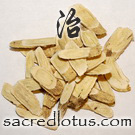 Huang Qi3.8 gTonify Qi
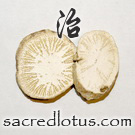 Han Fang Ji3 gRegulate Water and Drain Dampness
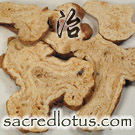 Bai Zhu2.3 gTonify Qi
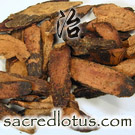 Zhi Gan Cao1.5 gTonify Qi
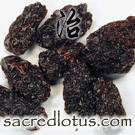 Da Zao1 PieceTonify Qi
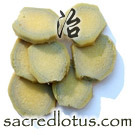 Sheng Jiang4 piecesWarm, Spicy Herbs that Release the Exterior
Preparation & dosage
How is Fang Ji Huang Qi Tang prepared?
Fang Ji Huang Qi Tang is decocted with Sheng Jiang and Da Zao and traditionally taken warm. The Jin Gui Yao Lue’s original instructions describe taking the decoction and then sitting or lying wrapped warmly; a sensation like insects crawling under the skin below the waist, sometimes with a feeling of coolness there, was traditionally regarded as a sign the wind-damp was being dispersed, and continued gentle warmth was used to support the process.
Source: Jin Gui Yao Lue (source text) + Bensky & Barolet, Formulas & Strategies (preparation notes). Traditional-use framing; not medical advice.
Decoction with Sheng Jiang and Da Zao. Reference relative amounts (per Sacred Lotus sources & references, consistent with the classic Jin Gui Yao Lue ratio): Huang Qi 3.8 g; Han Fang Ji 3 g; Bai Zhu 2.3 g; Zhi Gan Cao 1.5 g; Sheng Jiang 4 slices; Da Zao 1 piece. Reference only.
Safety — read before use
What are the cautions for Fang Ji Huang Qi Tang?
The single most important caution is herb identity: the Fang Ji in this formula must be Han Fang Ji (Stephania tetrandra) — never Guang Fang Ji (Aristolochia fangchi or other Aristolochia species). The two herbs share only a Pinyin name; Aristolochia species contain aristolochic acid, a confirmed nephrotoxin and human carcinogen, and are banned or restricted in most countries.
Discrepancy/safety note: older Western and some commercial sourcing has, at times, substituted or mislabeled Aristolochia species as “Fang Ji.” This is not a variant of the formula — it is a documented sourcing error. A 1990s Belgian weight-loss clinic preparation confused Han Fang Ji with Aristolochia fangchi, producing over 100 cases of rapid-onset end-stage renal disease and a high rate of associated urothelial (urinary-tract) cancer among those patients (Nortier et al., New England Journal of Medicine, 2000; PMID 10841870). Confirm any Fang Ji source is verified Stephania tetrandra.
- Not for edema/exterior conditions dominated by excess or heat without an underlying wei-qi deficiency — this is a deficiency-based formula, milder and slower-acting than formulas built for excess wind-damp or damp-heat.
- Pregnancy: use only under professional guidance, given the formula’s diuretic and exterior-regulating action.
- Dosing/duration: Fang Ji (tetrandrine-containing) is generally used short-term at standard formula doses; avoid prolonged high-dose self-use.
Source: Bensky & Barolet, Formulas & Strategies (formula cautions) + Nortier JL et al., N Engl J Med 2000, PMID 10841870 (species-substitution nephrotoxicity). Traditional-use framing; not medical advice.
Originally Appeared In:
- Essentials from the Golden Cabinet (Jin Gui Yao Lue)
Notes:
How is Fang Ji Huang Qi Tang different from Yu Ping Feng San and Fang Ji Fu Ling Tang?
Fang Ji Huang Qi Tang adds wind-damp-dispelling and diuretic action to a qi-tonizing, exterior-stabilizing base — the feature that separates it from formulas that only secure the exterior or only move water.
- vs Yu Ping Feng San: Yu Ping Feng San also tonifies qi to stabilize wei qi and stop spontaneous sweating, but has no Fang Ji and no wind-damp-dispelling or diuretic action. Choose Fang Ji Huang Qi Tang when sweating and wind-aversion are accompanied by body heaviness, edema, or joint swelling.
- vs Fang Ji Fu Ling Tang: both pair Fang Ji with Huang Qi, but Fang Ji Fu Ling Tang adds Fu Ling and Gui Zhi to move water trapped at the skin (“skin edema”/pi shui), emphasizing generalized surface edema over wind-damp joint pain.
Common modifications: add Fu Ling and Yi Yi Ren for more pronounced dampness; add Chi Xiao Dou for more pronounced edema; add Rou Gui or Fu Zi when cold signs are present; increase Huang Qi for more marked qi deficiency and sweating.
Source: Bensky & Barolet, Formulas & Strategies (formula comparisons and modifications).
Clinical Studies & Research:
Is there modern research on Fang Ji Huang Qi Tang?
Yes, but it is mostly preclinical — rodent pharmacology, network-pharmacology, and mechanistic studies rather than large clinical trials. A rodent study of FJHQT extract (standardized to ~2.5 mg/g tetrandrine) found dose-dependent antinociceptive and anti-inflammatory effects, and reported no hematological, biochemical, or histological abnormalities after 28 days of repeated dosing, suggesting a favorable safety margin at the doses tested. Separate network-pharmacology and in-vivo work has explored mechanisms relevant to rheumatoid arthritis and nephrotic syndrome.
- Pain/inflammation and safety (rodent): dose-dependent antinociceptive and anti-inflammatory effects with no toxicity signals after 28-day repeated dosing (PMID 25652206).
- Rheumatoid arthritis (mechanistic/preclinical): network pharmacology with molecular docking and in-vitro validation of candidate mechanisms (PMID 38614265; PMC 11270556).
- Nephrotic syndrome (preclinical): network pharmacology and in-vivo validation exploring renoprotective mechanisms (PMID 35722158).
- COPD, modified formula (preclinical): a modified version studied for reducing neutrophil recruitment via IL-33 downregulation (PMID 40517917).
Separately, the well-documented aristolochic acid nephropathy/urothelial carcinoma outbreak traced to species substitution of Guang Fang Ji for Han Fang Ji (PMID 10841870) is a sourcing/identification issue, not a property of correctly prepared Stephania-based Fang Ji Huang Qi Tang — see cautions.
Sources: PubMed 25652206; PubMed 38614265; PMC 11270556; PubMed 35722158; PubMed 40517917; PubMed 10841870. Research context, not a therapeutic claim; direct clinical trial evidence remains limited.
Sources & References
Compiled and edited by Thomas Dehli, Founder & Editor, Sacred Lotus Updated
The information here is referenced from numerous sources — teachers, practitioners, class notes from Five Branches University, the books below, and the published research literature, with citations given as resolvable PubMed identifiers. Where sources disagree, I have flagged the discrepancies directly. If facts couldn't be verified, I have left them out. How we source our content.
Reference information for students and practitioners — not medical advice. Consult a qualified practitioner. Terms of use.
Chinese Formulas Books & References
 https://amzn.to/4fYI3f8
 https://amzn.to/4j55NRA
 https://amzn.to/4gMROyv
 https://amzn.to/4h7msSK