

Gan Cao Gan Jiang Tang (Licorice and Ginger Decoction)
Gan Cao Gan Jiang Tang
Licorice and Ginger Decoction
- Category
- Formulas that Warm Interior Cold
- Subcategory
- Formulas that Warm the Middle and Dispel Cold
- Ingredients
- 2 herbs
Actions
What does Gan Cao Gan Jiang Tang do?
Gan Cao Gan Jiang Tang (Licorice and Ginger Decoction) warms and restores Spleen and Lung yang — it warms the middle to dispel interior cold and warms the Lungs to transform the thin, watery phlegm-fluids that collect when Lung yang can no longer control fluid metabolism. It is one of the most fundamental yang-warming pairs in the Chinese herbal repertoire, forming the warming core that Li Zhong Wan (add Ren Shen, Bai Zhu) and Si Ni Tang (add Fu Zi) build on.
This site’s own record records only two ingredients, at a 2:1 ratio (12 g : 6 g), matching the classical Shang Han Lun proportion of 4 liang to 2 liang:
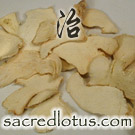
- Chief — Gan Jiang (Dried Ginger Rhizome, 6 g; spicy, hot; Heart, Lung, Spleen, Stomach channels): directly warms the middle and the Lung, dispels interior cold, and restores yang qi — the herb that defines the formula’s warming direction even though it is dosed lower than its partner.
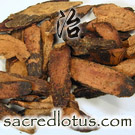
- Deputy — Zhi Gan Cao (Honey Fried Licorice Root, 12 g; sweet, warm; traditionally said to enter all twelve channels): dosed at double Gan Jiang’s amount to strongly tonify Spleen/middle qi, giving yang a substantial foundation to recover on, and to moderate Gan Jiang’s acrid-hot dryness so it does not further deplete fluids — the classical “sweet and acrid combine to generate yang” (xin gan hua yang) principle.
Together the pair warms yang gently rather than aggressively, which is why it suits a patient already weakened by illness or mistreatment rather than one in acute yang collapse.
Source: this site’s own composition record (Zhi Gan Cao 12 g, Gan Jiang 6 g; properties/channels from the herb records) + Bensky & Barolet, Formulas & Strategies; role assignment cross-referenced against multiple online sources. Traditional-use framing; not medical advice.
Indications
What is Gan Cao Gan Jiang Tang used for?
Gan Cao Gan Jiang Tang treats Spleen-and-Lung yang deficiency cold — it is a dual-source classical formula, appearing both in the Shang Han Lun (clause 29) and in the Jin Gui Yao Lue’s Lung Atrophy (fei wei) chapter, so it covers two related classical presentations.
- “Cold in the Lung” (Jin Gui Yao Lue): spitting of copious, clear, frothy, dilute saliva or sputum without cough and without thirst, often with dizziness; the text notes urinary frequency or incontinence may accompany it “because the upper [Lung] is too deficient to control the lower.”
- Restoring yang after mistreatment (Shang Han Lun clause 29): after an improper sweating therapy injures yang (and, in the fuller clause, yin as well), producing cold limbs and a dry throat, Gan Cao Gan Jiang Tang restores yang first; the companion formula Shao Yao Gan Cao Tang (see our entry) follows to nourish yin and relieve any residual calf/sinew cramping.
- General Spleen/Stomach deficiency cold: extended by later clinicians to epigastric cold pain, poor appetite, and clear/loose stool from a weak, under-warmed middle.
Tongue and pulse: this site’s own record records this formula’s tongue as “pale moist tongue with no coat” and the pulse as “frail” — both consistent with deficiency-cold rather than heat or excess.
Source: this site’s own pattern/tongue/pulse record + Jin Gui Yao Lue (Lung Atrophy chapter) + Shang Han Lun (clause 29) as summarized in Bensky & Barolet, Formulas & Strategies. Traditional-use framing; not medical advice.
Western Uses:
Is Gan Cao Gan Jiang Tang used in modern practice?
The unmodified two-herb formula itself has little dedicated modern clinical-trial literature — most modern research on this herb pair studies it as a component embedded in larger, more heavily-researched formulas built on the same base (Li Zhong Wan, Si Ni Tang) rather than as a standalone treatment. A 2017 HPLC-DAD chemistry study did analyze the two-herb decoction directly, finding that both the ratio of the two herbs and their total dosage measurably change the profile of active compounds (gingerols, shogaol, glycyrrhizin and related flavonoids) produced.
A three-herb modification, Shen Cao Gan Jiang Tang (Radix Glycyrrhizae + Rhizoma Zingiberis + Ren Shen), was tested in a 2024 multicenter randomized trial for non-severe COVID-19 and showed faster symptom resolution than standard care alone. Because it adds Ren Shen, it is a distinct, modified formula rather than the classical pair itself — offered here as related context, not as evidence for the two-herb formula. None of this is a treatment claim; any use for a diagnosed condition belongs with a qualified practitioner.
Source: PubMed 28588638 (two-herb chemistry study); PubMed 39006557 (modified three-herb formula, COVID-19 RCT). Reference only, not a treatment claim.
Ingredients
2 substances in Gan Cao Gan Jiang Tang — each links to its full herb monograph.
Preparation & dosage
How is Gan Cao Gan Jiang Tang prepared?
Prepared as a simple water decoction of the two herbs, taken warm. This site’s own preparation record records this as a straightforward decoction; classically the formula is described as gentle enough to use in a patient already weakened by illness or by mistaken prior treatment, in keeping with its role as a foundational warming pair rather than an aggressive intervention.
Source: this site’s own preparation record + Bensky & Barolet, Formulas & Strategies.
Decoction. Reference relative amounts (this site’s own record): Zhi Gan Cao 12 g; Gan Jiang 6 g. Matches the classical Shang Han Lun / Jin Gui Yao Lue ratio of 4 liang Zhi Gan Cao to 2 liang Gan Jiang (2:1). Reference only, not a prescription.
Safety — read before use
What are the cautions for Gan Cao Gan Jiang Tang?
The main documented concern is the same as for any formula carrying a meaningful dose of Zhi Gan Cao: sustained or high-dose licorice can cause glycyrrhizin-related pseudoaldosteronism — hypokalemia, hypertension, and edema — particularly with prolonged daily use rather than short courses. (A published case report of severe hypokalemia requiring correction was documented for Shakuyaku-kanzo-to, a related formula also built on a substantial Zhi Gan Cao dose; the same licorice-safety logic applies here.)
- Monitor potassium with prolonged use, especially alongside diuretics, corticosteroids, or digoxin, or in patients with hypertension, renal, or cardiac disease.
- Classical incompatibility: Gan Cao is traditionally listed as incompatible with Da Ji, Gan Sui, Yuan Hua, and Hai Zao (the “eighteen incompatible medicinals,” shi ba fan) and should not be combined with them.
- Pattern fit: this is a deficiency-cold warming formula; it is not appropriate for heat patterns, yin deficiency with heat signs, or excess/damp-heat presentations.
- Severity ceiling: for severe yang collapse — frigid limbs, a faint/imperceptible pulse — this formula is insufficient on its own; the classical escalation is Si Ni Tang (add Fu Zi).
- Pregnancy: as with any warming interior formula, use only under a qualified practitioner’s supervision.
Source: PubMed 21384669 (licorice/Zhi Gan Cao hypokalemia case report, related formula); Bensky & Barolet, Formulas & Strategies (pattern fit, classical incompatibilities, Si Ni Tang escalation). Traditional-use framing; not medical advice.
Originally Appeared In:
- Essentials from the Golden Cabinet (Jin Gui Yao Lue)
Notes:
How is Gan Cao Gan Jiang Tang related to other formulas?
Gan Cao Gan Jiang Tang is the two-herb warming core that several larger Shang Han Lun / Jin Gui Yao Lue formulas are built on, so it is best understood as both a formula in its own right and a foundational module.
- Si Ni Tang (add Fu Zi): the escalation for yang deficiency severe enough to cause frigid extremities and a faint pulse — life-threatening yang failure reaching the Heart and Kidney, beyond what the two-herb pair alone addresses.
- Li Zhong Wan (add Ren Shen and Bai Zhu): broadens the same warming pair into a full Spleen/Stomach-tonifying formula for middle-burner deficiency cold with diarrhea and abdominal pain.
- Gan Cao Gan Jiang Fu Ling Bai Zhu Tang (also called Shen Zhuo Tang, add Fu Ling and Bai Zhu): the Jin Gui Yao Lue modification for cold-damp settling in the lower back (“Kidney zhuo”), redirecting the same warming pair toward damp resolution rather than Lung/Spleen yang alone.
- Shao Yao Gan Cao Tang (see our entry): the Shang Han Lun clause 29 companion formula — where mistreatment has damaged both yang and yin, Gan Cao Gan Jiang Tang restores yang first and Shao Yao Gan Cao Tang follows to nourish yin and relieve sinew spasm.
Source: Bensky & Barolet, Formulas & Strategies (Shang Han Lun / Jin Gui Yao Lue formula relationships).
Clinical Studies & Research:
Is there modern research on Gan Cao Gan Jiang Tang?
Direct clinical-trial research on the unmodified two-herb formula is limited; the strongest directly-relevant study is a 2017 chemistry paper, with the closest clinical evidence coming from a modified three-herb derivative.
- Compatibility/dosage chemistry (direct): an HPLC-DAD study simultaneously measured 8 bioactive compounds (6-gingerol, 8-gingerol, 6-shogaol, liquiritin, liquiritigenin, isoliquiritin, isoliquiritigenin, glycyrrhizic acid) across five Gancao-Ganjiang-Tang formulations with varying herb ratios and doses, finding that both compatibility (ratio) and dosage significantly changed total compound content — supporting the classical premise that the specific ratio of the pair matters (PMID 28588638, Evidence-Based Complementary and Alternative Medicine, 2017).
- Modified three-herb formula, COVID-19 (indirect): Shen Cao Gan Jiang Tang — Gan Cao Gan Jiang Tang plus Ren Shen — was tested in a multicenter, randomized, open-label trial of 300 non-severe COVID-19 patients and reduced median time to symptom resolution (9 vs 13 days) and total symptom score versus standard care alone, with no reported adverse events (PMID 39006557, Cureus, 2024). This is evidence for the modified formula, not the classical two-herb pair.
Sources: PubMed 28588638; PubMed 39006557. Research context, not a therapeutic claim; the COVID-19 trial concerns a modified (three-herb) derivative, not this formula’s exact composition.
Sources & References
Compiled and edited by Thomas Dehli, Founder & Editor, Sacred Lotus Updated
The information here is referenced from numerous sources — teachers, practitioners, class notes from Five Branches University, the books below, and the published research literature, with citations given as resolvable PubMed identifiers. Where sources disagree, I have flagged the discrepancies directly. If facts couldn't be verified, I have left them out. How we source our content.
Reference information for students and practitioners — not medical advice. Consult a qualified practitioner. Terms of use.
Chinese Formulas Books & References
 https://amzn.to/4fYI3f8
 https://amzn.to/4j55NRA
 https://amzn.to/4gMROyv
 https://amzn.to/4h7msSK