

Liu Yi San (Six to One Powder)
Liu Yi San
Six to One Powder
- Category
- Formulas that Clear Heat
- Subcategory
- Formulas that Relieve Summerheat
- Ingredients
- 2 herbs
Actions
What does Liu Yi San do?
Liu Yi San (Six-to-One Powder) clears summerheat and leaches out dampness by promoting urination. It is one of the simplest formulas in the Chinese materia medica — just two herbs in a fixed 6:1 ratio — built so that a single cooling, draining herb can do its work without depleting the body's own qi and fluids in the process.
The two ingredients divide by role:
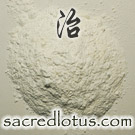
- Chief: Hua Shi (Talcum), 6 parts. Sweet, bland, and cold, entering the Stomach and Bladder channels. It clears heat, dispels summerheat, and drains dampness by promoting urination — giving the pathogen (heat and damp together) a way out through the urine rather than letting it linger in the interior.
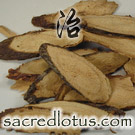
- Deputy/envoy: Gan Cao (Licorice), 1 part. Sweet and neutral, it harmonizes the middle burner and tempers Hua Shi's cold, sinking, and draining nature so the formula does not injure Stomach qi. Combined with Hua Shi it also helps generate fluids, offsetting the fluid loss that comes with diuresis and summer sweating.
The result is a formula that drains damp-heat through urination while protecting — rather than depleting — qi and body fluids, which is why it is considered gentle enough for everyday summer use in the tradition.
Source: Sacred Lotus sources & references + Bensky & Barolet, Formulas & Strategies (chief/deputy analysis, category: Formulas that Relieve Summerheat). Traditional-use framing; not medical advice.
Indications
What is Liu Yi San used for?
Liu Yi San treats summerheat combined with dampness — the classic hot-weather pattern in which externally contracted summerheat is compounded by damp obstructing the lower burner (Bladder). It is the base formula the tradition reaches for when heat and dampness are lodged together and need to be drained out through the urine.
Its classic clinical presentation:
- Heat signs: fever, thirst, and irritability (vexation) from summerheat disturbing the interior.
- Dampness signs: a generalized heavy sensation in the body and limbs, and diarrhea or watery, loose stools occurring in summer.
- Damp-heat in the lower burner: scanty, dark urine, reflecting damp-heat pouring downward into the Bladder.
Tongue and pulse: in Sacred Lotus, the tongue coat is thin, yellow, and greasy; the pulse is rapid and soggy (ru mai) — both classic signs of heat combined with dampness.
Source: Sacred Lotus sources & references on pattern/tongue/pulse + Bensky & Barolet, Formulas & Strategies. Traditional-use framing; not medical advice.
Western Uses:
What is Liu Yi San used for in modern practice?
In modern practice Liu Yi San is referenced for hot-weather malaise with urinary discomfort and summer diarrhea — contexts practitioners have traditionally matched to its summerheat-and-dampness pattern, such as heat-related fatigue with thirst, scanty or uncomfortable urination, and loose stools brought on by summer heat and damp.
These biomedical correlates are offered as a reference to the formula’s traditional use, not as a claim that it treats any diagnosed condition (heatstroke, urinary tract infection, or gastroenteritis, for example, all require appropriate medical evaluation). Dedicated modern clinical trials of Liu Yi San as a formula are limited; the available modern literature instead concerns its two individual components (see research).
Source: traditional-use correlates summarized from Bensky & Barolet, Formulas & Strategies; reference only, not a treatment claim.
Ingredients
2 substances in Liu Yi San — each links to its full herb monograph.
Preparation & dosage
How is Liu Yi San prepared?
Liu Yi San is traditionally taken as a fine powder, not decocted whole. Hua Shi and Gan Cao are ground and mixed at a 6:1 ratio, then taken 9–18 g at a time, stirred into warm water.
- As a powder (classic method): 9–18 g of the mixed powder per dose, taken with warm water.
- As a decoction: if decocted, Hua Shi is wrapped in a cheesecloth bag before adding to the pot, since as a mineral it does not decoct cleanly on its own.
Source: Sacred Lotus sources & references + Bensky & Barolet, Formulas & Strategies.
Classic powder ratio: Hua Shi (Talcum) 6 parts to Gan Cao (Licorice) 1 part, ground fine. Standard dose 9-18 g of powder per administration, taken with warm water. If prepared as a decoction, wrap Hua Shi in a cheesecloth bag before adding to the pot. Reference only; short-course use for an active summerheat-dampness pattern, not for prolonged daily use.
Safety — read before use
What are the cautions for Liu Yi San?
Liu Yi San is a cold, draining formula meant for short-term use in true summerheat-dampness patterns, not as a general diuretic or long-term tonic. Because Hua Shi makes up the bulk of the formula, its cooling and fluid-draining action can injure Spleen qi or further deplete body fluids if used where dampness or heat is not actually present, or if continued too long.
- Avoid or use cautiously in cases of Spleen qi deficiency, spermatorrhea, polyuria, or where body fluids are already damaged by heat — the draining, bland-cold nature of Hua Shi can aggravate all of these.
- Pregnancy: use with caution given Hua Shi's strongly draining, downward-moving action.
- Not for prolonged, uninterrupted use. A Taiwanese population-based cohort study of oral talc exposure via Chinese herbal medicine (n ~605,652) found a higher hazard ratio for stomach cancer among long-term talc-exposed patients compared with unexposed patients (adjusted HR 2.13, 95% CI 1.54–2.94); the authors note this is cohort-level association, not proof of causation, and does not describe short-course, appropriately dosed use of a single formula like Liu Yi San. It nonetheless reinforces the classical caution against extended or repeated use, and underscores sourcing pharmaceutical-grade, asbestos-free Hua Shi.
- Gan Cao caveat: Gan Cao is only one part of six here, but licorice's glycyrrhizin can cause pseudoaldosteronism (fluid retention, hypertension, hypokalemia) with high-dose or prolonged intake — relevant mainly to extended courses or the higher-Gan-Cao variant formulas, not a single short course of Liu Yi San itself.
Note: classical sources treat Liu Yi San as a mild, short-term summer remedy safe for frequent seasonal use; the modern epidemiological data on chronic oral talc exposure (above) speaks to long-term/repeated Chinese-herbal-medicine talc intake generally, not to this specific formula or dose. Both points are kept here because the underlying ingredient (Hua Shi) is the same and the caution is clinically relevant, even though the study did not evaluate Liu Yi San as such.
Source: Sacred Lotus-aligned herb cautions for Hua Shi and Gan Cao + Bensky & Barolet, Formulas & Strategies + PubMed 30823367 (talc/Chinese herbal medicine cohort study) + PubMed 34604277 (licorice-induced pseudoaldosteronism review). Traditional-use framing; not medical advice.
Originally Appeared In:
- Direct Investigations of Formulas for Cold Induced Disorders (Shang Han Zhi Ge Fang Lun)
Notes:
How does Liu Yi San relate to Yi Yuan San, Bi Yu San, and its other variants?
Liu Yi San is the base formula for a small family of "summerheat" powders that add a single herb to the same 6:1 Hua Shi–Gan Cao core to steer it toward a related pattern. Recognizing Liu Yi San inside these variants is the fastest way to tell them apart:
- Yi Yuan San (Benefit-the-Source Powder): Liu Yi San plus a small amount of Zhu Sha (Cinnabar). Adds a heart-clearing, spirit-calming action for summerheat-dampness accompanied by vexation, agitation, or insomnia alongside scanty urination. Because cinnabar (mercury sulfide) carries recognized toxicity risk, contemporary practice frequently omits it or substitutes a non-mineral spirit-calming herb.
- Bi Yu San (Jasper Powder): Liu Yi San plus Qing Dai (Indigo). Adds heat-clearing and detoxifying action for summerheat-dampness with additional heat-toxin or Liver-heat signs, such as red eyes, sore throat or mouth, or blood in the stool.
- Ji Su San (Peppermint Powder): Liu Yi San plus Bo He (Mint). Adds a mild, wind-dispersing, exterior-releasing action for summerheat-dampness complicated by external wind — e.g., accompanying headache or mild chills alongside the urinary and digestive symptoms.
In each case the 6:1 Hua Shi-to-Gan Cao core is unchanged; only the added herb shifts the formula's emphasis.
Source: Sacred Lotus sources & references + Bensky & Barolet, Formulas & Strategies (Liu Yi San variant group).
Clinical Studies & Research:
Is there modern research on Liu Yi San?
Dedicated modern clinical or pharmacological studies of Liu Yi San as a combined formula are scarce; most available modern research instead examines its two individual ingredients. The most directly relevant modern data concerns the safety profile of oral talc (Hua Shi) exposure via Chinese herbal medicine, plus a substantial literature on licorice's (Gan Cao's) pharmacology.
- Talc / Hua Shi (safety, most directly relevant): a Taiwanese population-based cohort study of Chinese-herbal-medicine users found oral talc exposure (without asbestos) associated with an elevated hazard ratio for stomach cancer versus unexposed patients (adjusted HR 2.13, 95% CI 1.54–2.94, p<0.001) (PMID 30823367; DOI 10.3390/ijerph16050717). This is cohort-level association evidence, specific to long-term/repeated talc exposure across CHM use generally — not a study of Liu Yi San or of short-course, appropriately dosed use.
- Licorice / Gan Cao (general pharmacology): a review of licorice's anti-inflammatory activity summarizes its traditional use, isolated active compounds, and modern clinical and safety data (PMID 27650551).
- Licorice / Gan Cao (safety): a narrative review of licorice-induced pseudoaldosteronism describes the glycyrrhizin-driven mechanism (11β-HSD2 inhibition) and clinical risk factors for high-dose or prolonged licorice intake (PMID 34604277).
Sources: PubMed 30823367 (DOI 10.3390/ijerph16050717); PubMed 27650551; PubMed 34604277. Research context on the formula's components, not a therapeutic claim for the combined formula; formula-level clinical evidence for Liu Yi San itself was not located and is not asserted.
Sources & References
Compiled and edited by Thomas Dehli, Founder & Editor, Sacred Lotus Updated
The information here is referenced from numerous sources — teachers, practitioners, class notes from Five Branches University, the books below, and the published research literature, with citations given as resolvable PubMed identifiers. Where sources disagree, I have flagged the discrepancies directly. If facts couldn't be verified, I have left them out. How we source our content.
Reference information for students and practitioners — not medical advice. Consult a qualified practitioner. Terms of use.
Chinese Formulas Books & References
 https://amzn.to/4fYI3f8
 https://amzn.to/4j55NRA
 https://amzn.to/4gMROyv
 https://amzn.to/4h7msSK