

Qiang Huo Sheng Shi Tang (Notopterygium Decoction to Overcome Dampness)
Qiang Huo Sheng Shi Tang
Notopterygium Decoction to Overcome Dampness
- Category
- Formulas that Expel Dampness
- Subcategory
- Formulas that Dispel Wind-Dampness
- Ingredients
- 7 herbs
Actions
What does Qiang Huo Sheng Shi Tang do?
Qiang Huo Sheng Shi Tang (Notopterygium Decoction to Overcome Dampness) releases the exterior and dispels wind-damp, unblocking the channels to relieve pain. It is built almost entirely from acrid, warm, wind-dispersing herbs that gently open the surface, carrying wind-dampness out through a light sweat rather than draining it downward or drying it internally.
The seven ingredients divide by role:
- Chiefs: Qiang Huo and Du Huo together dispel wind-damp and relieve pain throughout the entire body — Qiang Huo is directed toward the upper body, head, neck, and upper back (the Tai Yang channel), while Du Huo reaches the lower back and legs, so the pair covers wind-damp pain from head to foot.
- Deputies: Fang Feng broadly expels wind-damp and assists the release of the exterior; Gao Ben ascends specifically to the vertex, targeting occipital headache and stiffness of the nape.
- Assistants: Chuan Xiong invigorates the blood and moves qi, addressing headache and keeping the dispersing herbs from stagnating; Man Jing Zi is light and ascending, clearing wind from the head and relieving the sensation of heaviness.
- Envoy: Zhi Gan Cao harmonizes the other herbs and moderates their acrid, drying nature.
Source: Sacred Lotus sources & references + Bensky & Barolet, Formulas & Strategies (chief/deputy/assistant/envoy analysis). Traditional-use framing; not medical advice.
Indications
What is Qiang Huo Sheng Shi Tang used for?
Qiang Huo Sheng Shi Tang treats wind-damp attacking the exterior and the channels — a pattern from external exposure (cold, damp weather, drafts) rather than an internally generated condition. Because wind-damp lodges at the body’s surface and along the channels of the head, neck, and back, the classic presentation is heaviness and aching rather than a sharp, fixed pain.
Its classic clinical presentation:
- Head and body: a heavy, aching sensation throughout the head and body, as though wrapped or weighted down.
- Neck and back: stiff, aching neck and upper back with difficulty turning the head or torso.
- Exterior signs: mild fever with chills (chills typically more pronounced), general aversion to wind, usually without sweating.
Tongue and pulse: the tongue has a white coat; the pulse is floating, reflecting an external, still-superficial pattern.
Source: Sacred Lotus sources & references on pattern/tongue/pulse + Bensky & Barolet, Formulas & Strategies. Traditional-use framing; not medical advice.
Western Uses:
What is Qiang Huo Sheng Shi Tang used for in modern practice?
In modern practice, Qiang Huo Sheng Shi Tang’s wind-damp pattern is traditionally correlated with the common cold accompanied by body aches, tension-type headache, and stiff-neck/cervical-spondylosis presentations, as well as early-stage wind-damp painful obstruction (Bi syndrome) — conditions Western medicine may describe as rheumatoid or osteoarthritis, ankylosing spondylitis, or cervical spondylosis, where pain and stiffness are aggravated by cold, damp, or windy weather.
These biomedical correlates are offered as a reference to the formula’s traditional use, not as a claim that it treats any diagnosed disease. Contemporary study of it remains largely preclinical and mechanistic (see research). Any use for a diagnosed condition belongs with a qualified practitioner and appropriate medical care.
Source: traditional-use correlates summarized from Bensky & Barolet, Formulas & Strategies, and Chen & Chen, Chinese Medical Herbology and Pharmacology; reference only, not a treatment claim.
Ingredients
7 substances in Qiang Huo Sheng Shi Tang — each links to its full herb monograph.
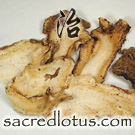 Du Huo6-9 gDispel Wind-Dampness
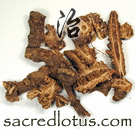 Qiang Huo6-9 gWarm, Spicy Herbs that Release the Exterior
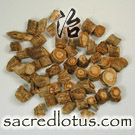 Fang Feng3-4.5 gWarm, Spicy Herbs that Release the Exterior
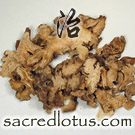 Gao Ben3-4.5 gWarm, Spicy Herbs that Release the Exterior
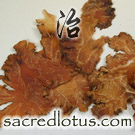 Chuan Xiong3-4.5 gInvigorate Blood and Remove Stagnation
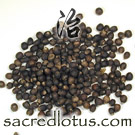 Man Jing Zi2-3 gCool, Spicy Herbs that Release the Exterior
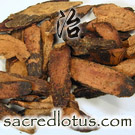 Zhi Gan Cao3-4.5 gTonify Qi
Preparation & dosage
How is Qiang Huo Sheng Shi Tang prepared?
Qiang Huo Sheng Shi Tang is prepared as a water decoction and traditionally taken warm to support its exterior-releasing, mildly sweat-inducing action; a light sweat is the classical marker that the wind-damp is being carried out through the surface.
Source: Bensky & Barolet, Formulas & Strategies (classical decoction method for exterior-releasing formulas).
Water decoction, taken warm. Reference relative amounts: Qiang Huo, Du Huo 6-9 g each; Gao Ben, Fang Feng, Chuan Xiong, Zhi Gan Cao 3-4.5 g each; Man Jing Zi 2-3 g. Reference only; not a prescription.
Safety — read before use
What are the cautions for Qiang Huo Sheng Shi Tang?
Qiang Huo Sheng Shi Tang is built almost entirely from acrid, warm, exterior-releasing herbs, so it is meant for a genuine external wind-damp pattern and only for a limited course. Used outside that pattern, or continued too long, its dispersing action can injure qi and fluids rather than help.
- Not for deficiency: avoid, or use only with modification, in patients with underlying qi, blood, or yin deficiency — the formula has no tonifying herbs and can further deplete a weak constitution.
- Not for damp-heat: unsuitable where wind-damp has transformed into heat (red, hot, swollen joints) without added heat-clearing herbs.
- Short-course use: intended for the acute exterior stage; prolonged use of strongly dispersing, drying herbs is generally avoided.
- Pregnancy: contains Chuan Xiong, a blood-invigorating herb — use only under professional guidance.
Source: Bensky & Barolet, Formulas & Strategies, and Chen & Chen, Chinese Medical Herbology and Pharmacology (cautions for acrid, dispersing exterior-releasing formulas). Traditional-use framing; not medical advice.
Originally Appeared In:
- Clarifying Doubts About Injury from Internal and External Causes (Nei Wai Shang Bian Huo Lun)
Notes:
How is Qiang Huo Sheng Shi Tang different from related wind-damp formulas, and how is it modified?
Qiang Huo Sheng Shi Tang is a purely dispersing formula for acute, uncomplicated exterior wind-damp — it carries no tonifying or heat-clearing herbs, which sets it apart from its close relatives.
- vs Jiu Wei Qiang Huo Tang: both use Qiang Huo, Fang Feng, and Chuan Xiong to release exterior wind-cold-damp, but Jiu Wei Qiang Huo Tang adds Huang Qin and Sheng Di Huang to clear concurrent interior heat (thirst, a bitter taste) — choose it when heat has already formed; choose Qiang Huo Sheng Shi Tang when the pattern is still purely wind-damp.
- vs Juan Bi Tang: Juan Bi Tang treats a more chronic painful obstruction with underlying qi-and-blood deficiency and adds tonifying herbs (e.g., Huang Qi, Dang Gui); Qiang Huo Sheng Shi Tang is for the acute, still-external stage in an otherwise strong constitution.
- vs Du Huo Ji Sheng Tang: Du Huo Ji Sheng Tang is reserved for long-standing wind-damp Bi with Liver-Kidney and qi-blood deficiency (older or weaker patients); Qiang Huo Sheng Shi Tang suits a recent, acute presentation.
Classical modification: Li Dongyuan’s original text notes that when heaviness and cold-damp settle more deeply in the low back and spine, wine-prepared Han Fang Ji and Fu Zi may be added to warm and drain damp from the lower body.
Source: Bensky & Barolet, Formulas & Strategies (formula comparisons); Li Dongyuan, Nei Wai Shang Bian Huo Lun (Clarifying Doubts About Injury from Internal and External Causes), summarized via secondary formula references. Traditional-use framing; not medical advice.
Clinical Studies & Research:
Is there modern research on Qiang Huo Sheng Shi Tang?
Yes, but it is entirely preclinical and computational so far — network-pharmacology, molecular-docking, and animal studies exploring anti-inflammatory and analgesic mechanisms, mostly framed around rheumatoid arthritis and osteoarthritis. No randomized controlled clinical trials of the formula itself were found.
- Animal study (analgesic/anti-inflammatory): in mice, the decoction reduced acetic-acid-induced writhing by up to 45.8% and ear-swelling (inflammation) by up to 54.6% in a dose-dependent manner, with effects linked to suppression of MAPK/CREB signaling (PMID 34710556, Journal of Ethnopharmacology, 2022).
- Network pharmacology (rheumatoid arthritis + osteoarthritis): identified 153 candidate active compounds and ten hub targets acting through osteoclast differentiation and NF-κB/TNF signaling, proposed as a shared ("homotherapy for heteropathy") mechanism across both conditions (PMID 33035753, Computational Biology and Chemistry, 2020).
- Network pharmacology + molecular docking (rheumatoid arthritis): identified 128 active compounds and 87 targets, with docking simulations pointing to TP53, VEGFA, TNF, EGFR, and NOS3 as key targets of interest (PMID 34527739, BioMed Research International, 2021).
Sources: PubMed 34710556; PubMed 33035753; PubMed 34527739. Research context, not a therapeutic claim; direct clinical trial evidence is currently lacking.
Sources & References
Compiled and edited by Thomas Dehli, Founder & Editor, Sacred Lotus Updated
The information here is referenced from numerous sources — teachers, practitioners, class notes from Five Branches University, the books below, and the published research literature, with citations given as resolvable PubMed identifiers. Where sources disagree, I have flagged the discrepancies directly. If facts couldn't be verified, I have left them out. How we source our content.
Reference information for students and practitioners — not medical advice. Consult a qualified practitioner. Terms of use.
Chinese Formulas Books & References
 https://amzn.to/4fYI3f8
 https://amzn.to/4j55NRA
 https://amzn.to/4gMROyv
 https://amzn.to/4h7msSK