

Sang Xing Tang (Mulberry leaf and Apricot Kernel Decoction)
Sang Xing Tang
Mulberry leaf and Apricot Kernel Decoction
- Category
- Formulas that Treat Dryness
- Ingredients
- 6 herbs
Actions
What does Sang Xing Tang do?
Sang Xing Tang (“Mulberry Leaf & Apricot Kernel Decoction”) gently disperses warm-dryness from the Lung’s exterior while moistening the Lung and restoring its descending function. It is a light, cooling-moistening formula: Sang Ye (mulberry leaf) with Dan Dou Chi (fermented soybean) releases the mild warm-dry pathogen from the surface, Xing Ren (apricot kernel) restores the downward flow of Lung qi to stop cough, and moistening, phlegm-transforming herbs relieve the dryness and clear a trace of heat.
- Disperses warm-dryness — Sang Ye with Dan Dou Chi vents the light, warm-dry pathogen from the exterior.
- Restores Lung descent, stops cough — Xing Ren directs Lung qi downward.
- Moistens dryness — Bei Sha Shen (glehnia) generates fluids and moistens the Lung.
- Clears slight heat, transforms phlegm — Zhi Zi (gardenia) drains mild heat while Zhe Bei Mu (fritillaria) transforms sticky phlegm.
Source: Sacred Lotus formula record (composition confirmed); Bensky & Barolet, Chinese Herbal Medicine: Formulas & Strategies. Traditional-use framing; not medical advice.
Indications
What is Sang Xing Tang used for?
Sang Xing Tang is used for warm-dryness attacking the Lung — the dry-weather cough of early autumn — where a light, warm, drying pathogen has consumed the Lung’s fluids. The hallmark is a dry cough with little or no sputum (or scanty, sticky, hard-to-expectorate phlegm), a dry throat, nose, and mouth, thirst, and often a mild fever or headache. The tongue is red with a dry, thin, white coat and the pulse is floating and rapid.
- Dry cough — no sputum, or scanty sticky phlegm that is hard to bring up.
- Dryness signs — dry throat, dry nose and mouth, thirst.
- Mild exterior heat — a slight fever, sometimes headache, from the warm-dry pathogen.
- Dry tongue & floating pulse — red tongue with a dry, thin, white coat; a floating, rapid pulse.
Source: Sacred Lotus formula record (tongue: red, dry thin white coat; pulse: floating rapid); Bensky & Barolet, Formulas & Strategies; Wu Ju-tong, Wen Bing Tiao Bian.
Western Uses:
How is Sang Xing Tang used in modern practice?
Modern practitioners reach for Sang Xing Tang for dry, unproductive coughs that fit the warm-dryness pattern — typically in dry, warm weather or heated indoor environments. It is pattern-matched to conditions such as acute bronchitis, upper-respiratory infections, dry pharyngitis or laryngitis, and the tail end of a cold when a dry, tickly cough lingers — used only when the dryness-with-mild-heat picture is present. A 2022 mechanistic study explicitly frames the formula’s “warm dryness” target as equivalent to acute bronchitis (see research).
Source: Bensky & Barolet, Formulas & Strategies (modern applications); PubMed 35691159 (warm-dryness framed as acute bronchitis). Pattern-based, traditional-use framing; not a treatment claim.
Ingredients
6 substances in Sang Xing Tang — each links to its full herb monograph.
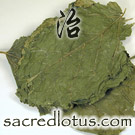 Sang Ye3 gCool, Spicy Herbs that Release the Exterior
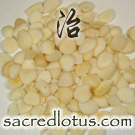 Xing Ren4.5 gRelieve Coughing and Wheezing
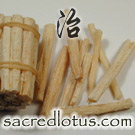 Bei Sha Shen6 gTonify Yin
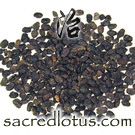 Dan Dou Chi3 gCool, Spicy Herbs that Release the Exterior
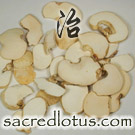 Zhe Bei Mu3 gCool and Transform Phlegm-Heat
 Zhi Zi3 gDrain Fire
Preparation & dosage
How is Sang Xing Tang prepared?
Sang Xing Tang ("Mulberry Leaf and Apricot Kernel Decoction") is prepared as a light, briefly-cooked water decoction (tang) of Sang Ye, Zhi Zi, Dan Dou Chi, Xing Ren, Zhe Bei Mu and Bei Sha Shen — a gentle formula for warm-dryness harming the Lung, so it is not boiled hard or long.
The classical doses are small and modern practice often increases them 2–3 fold. (Some editions, e.g. Bensky, also list a small amount of pear peel / Li Pi as a moistening finishing ingredient.) Available as granules.
Source: Sacred Lotus sources & references (composition and preparation note) + Bensky & Barolet, Formulas & Strategies.
Traditional decoction (Wen Bing Tiao Bian): Sang Ye 3 g, Xing Ren 4.5 g, Bei Sha Shen 6 g, Zhe Bei Mu 3 g, Dan Dou Chi 3 g, Zhi Zi 3 g (Bensky also lists Li Pi / pear skin 3 g). Taken as a decoction; modern dosing is often increased two- to three-fold. Reference only — not a prescription.
Safety — read before use
Are there cautions with Sang Xing Tang?
Sang Xing Tang is a light, gentle formula specific to warm-dryness with only mild heat — it is not strong enough for high fever or fully developed Lung heat, and it is wrong for cool-dryness or for cough from cold-phlegm or dampness. Because it disperses and only lightly moistens, it suits a short course in the early, exterior stage; once dryness has injured Lung yin more deeply, richer yin- and fluid-nourishing formulas are more appropriate.
- Not for strong heat — inadequate when Lung heat is pronounced with high fever and thick yellow sputum.
- Not for cool-dryness — that pattern needs a warmer, acrid-dispersing formula (see notes).
- Not for damp or cold-phlegm cough — the moistening herbs are counterproductive there.
Source: Bensky & Barolet, Formulas & Strategies (cautions & comparisons). Not medical advice — consult a qualified practitioner.
Originally Appeared In:
- Systematic Differentiation of Warm Diseases (Wen Bing Tiao Bian)
Notes:
How does Sang Xing Tang differ from Xing Su San and other dryness formulas?
The pivotal contrast is warm-dryness versus cool-dryness — the two faces of autumn dryness. Sang Xing Tang treats warm-dryness (early autumn, dryness plus mild warmth): dry cough, dry throat, thirst, a slight fever, a red dry tongue — so it is cool and moistening. Xing Su San treats cool-dryness (late autumn, dryness plus wind-cold): cough with clear thin sputum, chills, headache, no sweating, a dry but not red tongue — so it is warm and acrid-dispersing. Matching the wrong one (warming a warm-dry pattern, or cooling a cool-dry one) worsens the cough.
- vs Xing Su San — cool-dryness (dryness + wind-cold); warm and acrid, it disperses cold and transforms phlegm.
- vs Sang Ju Yin — wind-heat rather than dryness: cough with fever and mild thirst, but without the marked dryness of throat and nose.
- vs Qing Zao Jiu Fei Tang — more severe, deeper dryness with greater heat and Lung qi/yin damage; it clears and moistens far more strongly.
Modifications: when heat is more pronounced, cooling herbs are emphasized; when dryness has consumed more Lung yin, more fluid-generating, yin-moistening herbs are added — each adjusted to the pattern.
Discrepancy — the eighth ingredient: Bensky’s Formulas & Strategies lists an added 3 g of Li Pi (Fructus Pyri) — pear skin — which does not appear in his Materia Medica; the Sacred Lotus record notes this and identifies it as pear skin. Because sources differ on whether pear skin belongs in the formula, we present the six core herbs as primary and flag Li Pi as an optional, moistening addition.
Source: Bensky & Barolet, Formulas & Strategies (dryness-formula comparisons; Li Pi note); Wu Ju-tong, Wen Bing Tiao Bian (warm-dryness vs cool-dryness).
Clinical Studies & Research:
Is there modern research on Sang Xing Tang?
Direct modern research is very limited, and what exists is preclinical rather than clinical. The most relevant study is a 2022 investigation combining network pharmacology, metabolomics, and a smoke-induced acute-bronchitis rat model, which framed Sang Xing decoction as a classic prescription for “warm dryness” — treated as equivalent to acute bronchitis in modern terms. It reported that the formula appeared to reduce inflammation by regulating the PI3K/Akt/NF-κB pathway and to lessen oxidative stress through glutamine/glutamate metabolism (PMID 35691159, Biomedicine & Pharmacotherapy). No robust human clinical-trial evidence for the classical formula was found in this review; absence of clinical trials is stated as such, not as proof of ineffectiveness.
Source: PubMed 35691159 (Sun X et al., Biomed Pharmacother 2022; Sang Xing decoction in smoke-induced acute bronchitis). Preclinical research context, not a therapeutic claim.
Sources & References
Compiled and edited by Thomas Dehli, Founder & Editor, Sacred Lotus Updated
The information here is referenced from numerous sources — teachers, practitioners, class notes from Five Branches University, the books below, and the published research literature, with citations given as resolvable PubMed identifiers. Where sources disagree, I have flagged the discrepancies directly. If facts couldn't be verified, I have left them out. How we source our content.
Reference information for students and practitioners — not medical advice. Consult a qualified practitioner. Terms of use.
Chinese Formulas Books & References
 https://amzn.to/4fYI3f8
 https://amzn.to/4j55NRA
 https://amzn.to/4gMROyv
 https://amzn.to/4h7msSK