

Shi Xiao San (Sudden Smile Powder)
Actions
What does Shi Xiao San do?
Shi Xiao San invigorates the blood, dispels stasis, disperses accumulation, and stops pain. It is one of the smallest and best-known formulas in Chinese medicine — just two herbs, used in equal parts and traditionally taken with warm vinegar or wine to strengthen their blood-moving action.
The two herbs work as a coordinate pair rather than a strict chief/deputy hierarchy:
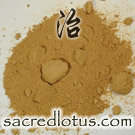
- Wu Ling Zhi (Trogopterori Faeces) — warm, bitter-sweet, enters the Liver channel blood level; powerfully disperses congealed, stagnant blood and unblocks the vessels, directly relieving stabbing pain.
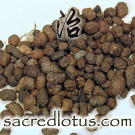
- Pu Huang (Typhae Pollen) — neutral, sweet; invigorates blood circulation in its raw form, while stir-fried (charred) Pu Huang adds a gentle hemostatic action — so the pair moves blood without provoking excess bleeding.
Vinegar or wine is used in preparation because both are traditionally understood to guide the herbs into the blood level and enhance their stasis-dispersing effect.
Source: this site’s own composition record + Bensky & Barolet, Formulas & Strategies (herb roles and preparation rationale). Traditional-use framing; not medical advice.
Indications
What is Shi Xiao San used for?
Shi Xiao San treats sharp, stabbing, fixed-location pain caused by blood stasis — classically in the lower abdomen, epigastrium, or chest — pain that is typically worse with pressure and improves once the stagnant blood is dispersed.
Its classic clinical applications:
- Gynecology: dysmenorrhea with dark, clotted menstrual blood; postpartum abdominal pain from retained lochia (incomplete discharge of postpartum blood).
- Epigastric/abdominal pain: stabbing pain from blood stasis in the Stomach or abdomen.
- Chest pain: stasis-type chest pain (a traditional-use correlate sometimes discussed alongside angina-type presentations — see the Western Uses section).
Tongue and pulse: a purple tongue, sometimes with stasis spots or ecchymotic patches; a wiry and choppy (or wiry and tight) pulse — the classic signature of blood stasis.
Source: Bensky & Barolet, Formulas & Strategies; cross-referenced against multiple online sources. Traditional-use framing; not medical advice.
Western Uses:
What is Shi Xiao San used for in modern practice?
In modern practice, Shi Xiao San's blood-stasis pain pattern is referenced for primary dysmenorrhea, endometriosis- and adenomyosis-related pelvic pain, retained-lochia postpartum pain, and blood-stasis-type chest/epigastric pain — contexts where Western medicine recognizes menstrual pain, pelvic inflammatory/adhesive conditions, or ischemic chest pain (angina).
These biomedical correlates are offered as a reference to the formula’s traditional use, not as a claim that it treats any diagnosed disease. Contemporary study is still largely preclinical — animal models and mechanistic (network-pharmacology) work rather than large human trials of the two-herb formula itself (see research). Any use for a diagnosed condition belongs with a qualified practitioner and appropriate medical care.
Source: traditional-use correlates summarized from Bensky & Barolet, Formulas & Strategies, and practitioner formula references; reference only, not a treatment claim.
Ingredients
2 substances in Shi Xiao San — each links to its full herb monograph.
Preparation & dosage
How is Shi Xiao San prepared?
Traditionally, equal amounts of Wu Ling Zhi and Pu Huang are ground into an even powder and taken as a wrapped-powder decoction: about 6 g of the powder is first simmered briefly in strong vinegar to a paste, then boiled with wine or water and taken warm, usually before meals.
- Grind equal amounts of Wu Ling Zhi and Pu Huang into an even powder.
- Take a 6 g dose with warm vinegar or white wine.
- Can also be prepared as a standard decoction (commonly 9–15 g of each herb).
Source: this site’s own preparation notes + Bensky & Barolet, Formulas & Strategies. Traditional-use framing; not medical advice.
Equal parts Wu Ling Zhi and Pu Huang. Traditional powder: about 6 g per dose, taken with warm vinegar or white wine. As a decoction: commonly 9-15 g of each herb. Reference only; not a prescription.
Safety — read before use
What are the cautions for Shi Xiao San?
Shi Xiao San is contraindicated in pregnancy. Both Wu Ling Zhi and Pu Huang strongly invigorate blood and are traditionally held to risk provoking uterine contraction, so the formula is avoided in pregnant patients.
- Pregnancy: contraindicated — both herbs actively move blood.
- Spleen/Stomach deficiency: use cautiously; Wu Ling Zhi's strong odor and taste can irritate a weak digestion.
- Not for bleeding without stasis: the formula is meant for pain from static (stagnant) blood, not for active bleeding where no stasis is present.
- Classical herb incompatibility: Ren Shen (Ginseng) is traditionally listed as incompatible with Wu Ling Zhi in the "Eighteen Antagonisms and Nineteen Incompatibilities" (十九畏) — the two are traditionally not combined.
Source: Bensky & Barolet, Formulas & Strategies (pregnancy/digestive cautions); classical incompatibility per the traditional "Nineteen Incompatibilities" list, cross-checked against practitioner formula references. Traditional-use framing; not medical advice.
Originally Appeared In:
- Imperial Grace Formulary of the Tai Ping Era (Tai Ping Hui Min He Ji Ju Fang)
Notes:
How does Shi Xiao San relate to other blood-stasis formulas?
Shi Xiao San is the minimal, two-herb "core" of blood-stasis pain relief — the Wu Ling Zhi/Pu Huang pair reappears, expanded with more herbs, inside several larger formulas.
- vs Shao Fu Zhu Yu Tang: Shao Fu Zhu Yu Tang includes Wu Ling Zhi and Pu Huang alongside warming, qi-moving herbs (Xiao Hui Xiang, Gan Jiang, Rou Gui, Yan Hu Suo, Mo Yao) for lower-abdominal dysmenorrhea with cold and more pronounced qi stagnation — choose it over plain Shi Xiao San when cold signs are present.
- Combined with Jin Ling Zi San: Shi Xiao San is classically paired with Jin Ling Zi San (Chuan Lian Zi + Yan Hu Suo) for epigastric or hypochondriac pain that combines qi stagnation with blood stasis.
- vs Sheng Hua Tang: Sheng Hua Tang is a broader postpartum-recovery formula (warms the uterus, invigorates blood, tonifies); Shi Xiao San is simpler and more narrowly focused on acute stasis pain.
Common modifications: add Yan Hu Suo and Chuan Lian Zi for accompanying qi stagnation; add Yi Mu Cao, Dang Gui, and Chuan Xiong for postpartum retained lochia; add Gan Jiang and Xiao Hui Xiang when cold congeals the blood; combine with Si Wu Tang when underlying blood deficiency is also present.
Source: Bensky & Barolet, Formulas & Strategies (formula comparisons); cross-referenced against multiple online sources.
Clinical Studies & Research:
Is there modern research on Shi Xiao San?
Modern research on Shi Xiao San is largely preclinical — animal models of gynecological blood-stasis pain and mechanistic (network-pharmacology) studies — rather than large human clinical trials of the plain two-herb formula. The findings are consistent with its traditional use for blood-stasis pain and inflammation, but should be read as research context, not treatment evidence.
- Endometriosis (rat model): Shi Xiao San reduced inflammatory cytokines (IL-1β, TNF-α, IL-6) in ectopic tissue and lowered pain-related TRPV1 expression in the dorsal root ganglion, correlating with reduced pain behavior (PMID 35182668).
- Adenomyosis (mouse model): Shi Xiao San reduced myometrial infiltration and nodule number, alleviated generalized hyperalgesia, and normalized plasma corticosterone at higher doses, with effects comparable to danazol (PMID 32765781).
- Mechanism (network pharmacology + molecular docking): identified candidate active compounds and targets for Shi Xiao San in blood-stasis syndrome, with in vitro/in vivo validation pointing to a VEGFA/AKT1/eNOS/COX-2 pathway (PMID 36179951).
Sources: PubMed 35182668; PubMed 32765781; PubMed 36179951. Research context, not a therapeutic claim; direct human clinical-trial evidence for the two-herb formula remains limited.
Sources & References
Compiled and edited by Thomas Dehli, Founder & Editor, Sacred Lotus Updated
The information here is referenced from numerous sources — teachers, practitioners, class notes from Five Branches University, the books below, and the published research literature, with citations given as resolvable PubMed identifiers. Where sources disagree, I have flagged the discrepancies directly. If facts couldn't be verified, I have left them out. How we source our content.
Reference information for students and practitioners — not medical advice. Consult a qualified practitioner. Terms of use.
Chinese Formulas Books & References
 https://amzn.to/4fYI3f8
 https://amzn.to/4j55NRA
 https://amzn.to/4gMROyv
 https://amzn.to/4h7msSK