

Si Ni Tang (Frigid Extremities Decoction)
Si Ni Tang
Frigid Extremities Decoction
- Category
- Formulas that Warm Interior Cold
- Subcategory
- Formulas that Rescue Devastated Yang
- Ingredients
- 3 herbs
Actions
What does Si Ni Tang do?
Si Ni Tang rescues devastated Yang and restores Yang from collapse, warming the interior to expel profound cold and reviving a pulse that has become faint or imperceptible.
- Rescues devastated Yang — reverses the collapse pattern in which the body's warming, animating Yang qi has become critically depleted.
- Warms the interior and expels cold — dispels pervasive internal cold from the Spleen, Stomach, and Kidney.
- Restores the pulse — the classical aim (fu mai, "return the pulse") when Yang collapse leaves the pulse faint, deep, or barely perceptible.
Source: Bensky & Barolet, Chinese Herbal Medicine: Formulas & Strategies; Chen & Chen, Chinese Herbal Formulas and Applications; classical formula from the Shang Han Lun (Treatise on Cold Damage), attributed to Zhang Zhongjing.
Indications
What is Si Ni Tang used for?
Si Ni Tang is used for Yang collapse with very cold limbs, aversion to cold, and a faint or minute pulse — the classical Shaoyin cold-collapse pattern of Kidney Yang deficiency with internal cold.
- Very cold extremities with marked aversion to cold and a desire to lie curled up
- Watery diarrhea containing undigested food, and vomiting without thirst
- Profuse cold sweating, a pale or dusky complexion, and extreme fatigue or somnolence
- A faint, deep, or barely perceptible pulse signaling impending Yang collapse (in severe cases, near-fainting)
Source: Bensky & Barolet, Chinese Herbal Medicine: Formulas & Strategies; Chen & Chen, Chinese Herbal Formulas and Applications.
Western Uses:
What conditions is Si Ni Tang used for in modern practice?
Si Ni Tang is the classical rescue formula for devastated (collapsed) yang — the near-shock picture of cold limbs, a faint pulse, exhaustion and profuse diarrhoea/vomiting — so it is referenced for cold-collapse and severe deficiency states: prostration/collapse, acute myocardial infarction, cardiac insufficiency, acute or chronic gastroenteritis with vomiting and diarrhoea, hypopituitarism, hypothyroidism, adrenal insufficiency, and intractable arthritis.
A critical safety note: many of these are life-threatening emergencies. Acute myocardial infarction (heart attack), circulatory collapse, and an adrenal (Addisonian) crisis demand immediate emergency medical care — historically Si Ni Tang was a rescue decoction, but in the modern world its correlates map to conditions that require the emergency room, not self-treatment. Traditional/integrative-use correlates only, emphatically not a treatment claim or a reason to delay emergency care.
Source: Sacred Lotus sources & references (pattern) + Bensky & Barolet, Formulas & Strategies; biomedical correlates as reference only. Not medical advice.
Ingredients
3 substances in Si Ni Tang — each links to its full herb monograph.
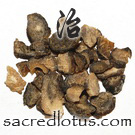 Fu Zi6-9 gWarm the Interior and Expel Cold
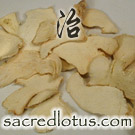 Gan Jiang4.5 gWarm the Interior and Expel Cold
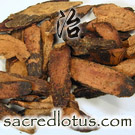 Zhi Gan Cao6 gTonify Qi
Preparation & dosage
How is Si Ni Tang prepared?
Si Ni Tang is a decoction in which Fu Zi is cooked first, then Gan Jiang and Zhi Gan Cao are added, following the classical Shang Han Lun method of a small, urgently-dosed formula.
- Fu Zi is decocted alone first — commonly 30–60 minutes depending on dose — before the remaining herbs are added and cooked together; this pre-cooking step is standard practice for reducing the toxic aconitine alkaloids in Fu Zi while preserving its warming effect.
- Gan Cao is used honey-fried (Zhi Gan Cao) rather than raw, per formulary convention, which enhances its Qi-tonifying and moderating action.
- The classical formula is small in volume and taken warm, reflecting its original use as an urgent measure for collapse rather than a routine tonic decoction.
Source: Bensky & Barolet, Chinese Herbal Medicine: Formulas & Strategies; Chen & Chen, Chinese Herbal Formulas and Applications.
Safety — read before use
What are the cautions for Si Ni Tang?
Si Ni Tang is contraindicated in pregnancy, in true-heat-with-false-cold patterns, and in cold limbs caused by Qi stagnation or Blood deficiency rather than Yang collapse — and it contains Fu Zi, a toxic, restricted aconite herb that requires professional processing and supervision.
- Not for false cold from true heat — cold extremities can also arise from heat so extreme it is trapped internally (true heat, false cold); administering a hot, Yang-rescuing formula in that setting would aggravate the underlying heat.
- Not for Qi stagnation or Blood deficiency — cold limbs from Liver Qi constraint (see Si Ni San, below) or from Blood deficiency have a different mechanism and do not call for Yang-rescuing herbs.
- Contraindicated in pregnancy — Fu Zi is a strongly acrid, hot, toxic herb generally avoided in pregnancy.
- Fu Zi (aconite) is a toxic, government-restricted herb — it contains aconitine-type diester alkaloids that are cardiotoxic and neurotoxic in excess. It requires specific pre-processing (paozhi) to reduce its toxicity, prolonged first-decoction, and dispensing/use only under the supervision of a qualified, licensed practitioner. This is provided as public-safety reference information, not as guidance for self-administration.
Source: Bensky & Barolet, Chinese Herbal Medicine: Formulas & Strategies; Chen & Chen, Chinese Herbal Formulas and Applications.
Originally Appeared In:
- On Cold Damage (Shang Han Lun)
Notes:
How does Si Ni Tang differ from Si Ni San?
Si Ni Tang and Si Ni San share a near-identical name but treat opposite mechanisms behind the same symptom, cold limbs — confusing them is a genuine clinical safety risk.
- Si Ni Tang (Frigid Extremities Decoction: Fu Zi, Gan Jiang, Zhi Gan Cao) treats cold limbs from Yang collapse — a critical, potentially life-threatening deficiency in which the body's warming Yang qi has failed — and is built to rescue Yang with strongly hot, tonifying herbs.
- Si Ni San (Frigid Extremities Powder: Chai Hu, Zhi Shi, Bai Shao, Zhi Gan Cao) treats cold limbs from Liver Qi constraint obstructing the Spleen and Stomach, blocking Yang qi from reaching the extremities even though Yang itself is not deficient — and is built to course Qi and relieve constraint, with no hot, Yang-tonifying herbs at all.
- Clinically these are opposite in nature: Si Ni Tang's pattern shows a faint/deep pulse, marked aversion to cold, and diarrhea with undigested food, while Si Ni San's pattern shows a wiry pulse and signs of constrained Qi rather than collapse. Giving a Qi-coursing formula for true Yang collapse — or a hot Yang-rescuing formula for simple Qi constraint — would fail to address (or could aggravate) the actual pattern.
What is the classical source of Si Ni Tang?
Si Ni Tang is a classical formula from the Shang Han Lun (Treatise on Cold Damage), attributed to the Han-dynasty physician Zhang Zhongjing, where it is used for Shaoyin-stage cold-collapse patterns.
What are common modifications of Si Ni Tang?
- Tong Mai Si Ni Tang (Unblock the Pulse Frigid Extremities Decoction) — increases the Fu Zi and Gan Jiang dosage for more severe Yang collapse, including cases with false heat symptoms appearing above (a red face) while the body remains cold below.
- Si Ni Jia Ren Shen Tang (Frigid Extremities Decoction plus Ginseng) — adds Ren Shen for Yang collapse complicated by significant fluid and Qi loss, such as after severe vomiting or diarrhea.
Source: Bensky & Barolet, Chinese Herbal Medicine: Formulas & Strategies; Chen & Chen, Chinese Herbal Formulas and Applications; Shang Han Lun (Treatise on Cold Damage).
Clinical Studies & Research:
Is there modern research on Si Ni Tang?
Animal studies on Si Ni Tang (the classic three-herb Fu Zi–Gan Jiang–Zhi Gan Cao formula) suggest cardioprotective effects after myocardial infarction, an area of active but still preliminary pharmacological research. This research provides scientific context only; it does not establish a specific human therapeutic claim.
- In a rat model of heart failure after myocardial infarction, Si Ni Tang treatment improved left ventricular ejection fraction and related echocardiographic measures of cardiac function, alongside reduced markers of renin-angiotensin-aldosterone system activation.
Sources: PMID 30050591.
Sources & References
Compiled and edited by Thomas Dehli, Founder & Editor, Sacred Lotus Updated
The information here is referenced from numerous sources — teachers, practitioners, class notes from Five Branches University, the books below, and the published research literature, with citations given as resolvable PubMed identifiers. Where sources disagree, I have flagged the discrepancies directly. If facts couldn't be verified, I have left them out. How we source our content.
Reference information for students and practitioners — not medical advice. Consult a qualified practitioner. Terms of use.
Chinese Formulas Books & References
 https://amzn.to/4fYI3f8
 https://amzn.to/4j55NRA
 https://amzn.to/4gMROyv
 https://amzn.to/4h7msSK