

Tao He Cheng Qi Tang (Peach Pit Decoction to Order the Qi)
Tao He Cheng Qi Tang
Peach Pit Decoction to Order the Qi
- Category
- Formulas that Invigorate the Blood
- Ingredients
- 5 herbs
Actions
What does Tao He Cheng Qi Tang do?
Tao He Cheng Qi Tang breaks up Blood stasis and purges heat-accumulation from the lower burner, treating the classical "blood amassment" (xu xue) pattern in which unresolved external heat sinks inward and binds with static Blood in the lower abdomen. It is built specifically to address heat and Blood stasis together, not either alone.
- Breaks Blood stasis and moves static Blood — Tao Ren invigorates Blood and softens masses; Gui Zhi warms and unblocks the Blood vessels.
- Purges heat-accumulation and drains it downward — Da Huang and Mang Xiao soften hardened stool and expel the bound heat through the bowel.
- Settles manic agitation arising from heat harassing the Blood — clearing the heat-Blood binding calms the disturbed shen described in the classical presentation.
Source: cross-referenced against multiple online sources; Bensky & Barolet, Formulas & Strategies; classical formulation from the Shang Han Lun (Treatise on Cold Damage, Zhang Zhongjing, ~200 CE).
Indications
What is Tao He Cheng Qi Tang used for?
Tao He Cheng Qi Tang is used for Blood stasis combined with Heat in the lower burner — the classical "blood amassment" (xu xue) pattern — most often described as a Tai Yang cold-damage disorder in which unresolved heat transmits inward and binds with Blood in the lower abdomen or pelvis. A hallmark of the pattern is that the mind stays clear even when behavior looks manic.
- Lower abdominal (lower burner) fullness, hardness, and fixed, stabbing pain, classically worse at night.
- Manic or agitated behavior — restlessness, irritability, or behaving "as if manic" — while cognition and orientation remain otherwise intact.
- Amenorrhea, or scanty, dark, clotted menstrual blood; retained lochia after childbirth.
- Constipation with dark or black-tinged stool from old, static Blood mixing with the bound heat.
- Traumatic Blood stasis presenting with lower-abdominal or pelvic pain and constipation.
Source: cross-referenced against multiple online sources; Bensky & Barolet, Formulas & Strategies; Shang Han Lun.
Western Uses:
What conditions is Tao He Cheng Qi Tang used for in modern practice?
Tao He Cheng Qi Tang breaks up blood stasis with heat accumulating in the lower burner (a purgative, blood-moving formula), so it is referenced for stasis-and-heat conditions of the lower abdomen and pelvis: irregular menstruation, painful periods (dysmenorrhoea), absent periods (amenorrhoea), acute pelvic inflammatory disease, retained lochia, and intestinal obstruction.
It is chosen for the blood-stasis-with-heat pattern, not for a diagnosis. Pelvic inflammatory disease and intestinal obstruction require prompt medical care (obstruction is a surgical emergency); this is a strong purgative/blood-moving formula that is contraindicated in pregnancy and belongs in a practitioner's hands. Traditional-use correlates only, not a treatment claim.
Source: Sacred Lotus sources & references + Bensky & Barolet, Formulas & Strategies (pattern framed from the formula's established blood-stasis-with-heat indication; the DB pattern field for this formula is empty — flagged). Biomedical correlates as reference only. Not medical advice.
Ingredients
5 substances in Tao He Cheng Qi Tang — each links to its full herb monograph.
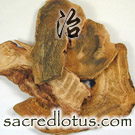 Da Huang12 gPurgatives
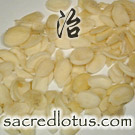 Tao Ren12-15 gInvigorate Blood and Remove Stagnation
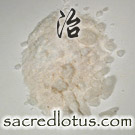 Mang Xiao6 gPurgatives
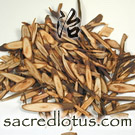 Gui Zhi6 gWarm, Spicy Herbs that Release the Exterior
 Zhi Gan Cao6 gTonify Qi
Preparation & dosage
How is Tao He Cheng Qi Tang prepared?
Tao He Cheng Qi Tang is taken as a decoction: Tao Ren, Da Huang, Gui Zhi, and Zhi Gan Cao are simmered together and strained, and Mang Xiao is then dissolved into the warm strained liquid off the heat rather than boiled — the same principle used across the Cheng Qi family to preserve its softening, moistening action.
- Herb preparation — Tao Ren is classically hulled and de-tipped (the skin and point removed) before use, and Gui Zhi has its bark/skin trimmed.
- Cooking — Tao Ren, Da Huang, Gui Zhi, and Zhi Gan Cao are decocted together in water and strained.
- Mang Xiao — dissolved into the strained, still-warm decoction once it is off the heat, since prolonged boiling is held to weaken its purgative and softening action.
Classical instruction was to take the decoction warm before meals in a modest portion, watching for a bowel movement or the passage of dark, static Blood as the sign the stasis is clearing, rather than dosing to a fixed course regardless of response.
Source: cross-referenced against multiple online sources; Bensky & Barolet, Formulas & Strategies; Shang Han Lun.
Safety — read before use
What are the cautions for Tao He Cheng Qi Tang?
Tao He Cheng Qi Tang is strongly contraindicated in pregnancy — it combines a Blood-invigorating, stasis-breaking herb (Tao Ren) with strong purgatives (Da Huang, Mang Xiao) and is traditionally regarded as capable of provoking miscarriage. The following points are widely noted as neutral public-safety reference, not administration guidance.
- Contraindicated in pregnancy — the combined Blood-breaking and purgative action is considered unsafe for pregnant patients.
- Not for Blood-deficiency amenorrhea — sources caution against use for menstrual irregularity or absent menses that arise from Blood deficiency rather than confirmed stasis and heat.
- Not for Spleen/Stomach deficiency-cold — caution is advised in chronic diarrhea, frailty, or the elderly, absent a true excess presentation.
- Reserved for confirmed Blood-heat stasis with excess signs — it is not described as a general-purpose laxative or Blood mover.
- Short-term use — classical sources describe stopping the formula once the stasis clears and stool passes, not continuing it.
Source: cross-referenced against multiple online sources; Bensky & Barolet, Formulas & Strategies; Shang Han Lun.
Originally Appeared In:
- On Cold Damage (Shang Han Lun)
Notes:
How does Tao He Cheng Qi Tang differ from related formulas?
Tao He Cheng Qi Tang is Tiao Wei Cheng Qi Tang (Da Huang, Mang Xiao, Zhi Gan Cao) with Tao Ren and Gui Zhi added, extending a heat-purging formula so it also breaks up Blood stasis — the defining relationship among the Shang Han Lun's blood-amassment and Cheng Qi formulas.
- Tiao Wei Cheng Qi Tang (Regulate the Stomach and Order the Qi Decoction) — the base formula this one is built from; alone it purges heat-accumulation and dryness but has no specific Blood-invigorating action, making it appropriate for Yangming heat-dryness without Blood stasis.
- Di Dang Tang (Resistance Decoction) — another Shang Han Lun blood-amassment formula, but stronger and more purely Blood-breaking (Shui Zhi, Meng Chong, Tao Ren, Da Huang, without Mang Xiao, Gui Zhi, or Gan Cao); reserved for deeper, more firmly fixed stasis with a harder abdominal mass and more pronounced manic agitation than Tao He Cheng Qi Tang addresses.
- Xue Fu Zhu Yu Tang — a later (Qing dynasty) Blood-stasis formula targeting the chest and upper body rather than the lower burner, and it does not purge via the bowel the way the lower-burner blood-amassment formulas do.
- Classical source and lineage — from Zhang Zhongjing's Shang Han Lun (Treatise on Cold Damage, ~200 CE), Tai Yang chapter, blood-amassment (xu xue) section, describing the pattern that develops when unresolved Tai Yang cold damage transmits inward and heat binds with Blood in the lower burner some days after onset.
Source: cross-referenced against multiple online sources; Bensky & Barolet, Formulas & Strategies; Shang Han Lun.
Clinical Studies & Research:
Is there modern research on Tao He Cheng Qi Tang?
Modern research on Tao He Cheng Qi Tang (also romanized Taohe-Chengqi or TaoHeChengQi decoction) has moved beyond its classical gynecological/psychiatric indication into preclinical models of organ fibrosis and Blood-stasis-related pathology, exploring mechanisms rather than testing the traditional presentation directly. This research is presented as scientific context on traditional use, not a therapeutic claim.
- An animal-model study reported that the decoction attenuated indicators of chronic renal failure, including renal injury, fibrosis, and oxidative stress, via regulation of the PHD2/UCP1 and RIPK3/AKT/TGF-beta pathways.
- A network-pharmacology study combined with in vitro and in vivo validation examined the decoction's extract against renal fibrosis, identifying bioactive constituents and proposing PI3K/AKT/mTOR and HIF-1alpha/VEGF pathway involvement.
- A metabolomics study in a rat model of intracerebral hemorrhage reported that the decoction reduced secondary brain injury, associating the effect with markers of amino-acid, lipid, and energy metabolism.
Sources: PMID 40112631; PMID 32372953; PMID 34012394 — preclinical studies presented as scientific context on the formula's broader pharmacological profile, not evidence for its classical indication.
Sources & References
Compiled and edited by Thomas Dehli, Founder & Editor, Sacred Lotus Updated
The information here is referenced from numerous sources — teachers, practitioners, class notes from Five Branches University, the books below, and the published research literature, with citations given as resolvable PubMed identifiers. Where sources disagree, I have flagged the discrepancies directly. If facts couldn't be verified, I have left them out. How we source our content.
Reference information for students and practitioners — not medical advice. Consult a qualified practitioner. Terms of use.
Chinese Formulas Books & References
 https://amzn.to/4fYI3f8
 https://amzn.to/4j55NRA
 https://amzn.to/4gMROyv
 https://amzn.to/4h7msSK