

Yi Huang Tang (Change Yellow (Discharge) Decoction)
Yi Huang Tang
Change Yellow (Discharge) Decoction
- Category
- Formulas that Stabilize and Bind
- Subcategory
- Formulas that Stabilize the Womb
- Ingredients
- 5 herbs
Actions
What does Yi Huang Tang do?
Yi Huang Tang ("Change Yellow Decoction") tonifies the Spleen and Kidney while astringing and clearing damp-heat from the Ren Mai (Directing Vessel). It treats yellow vaginal discharge by simultaneously shoring up the underlying deficiency and draining the pathogenic dampness and heat that discolor and thicken it — heavy-dose tonifying/astringent herbs paired with lighter-dose heat-clearing, damp-draining herbs.
The five ingredients divide by role:
- Chief: Shan Yao and Qian Shi, used in equal heavy doses (dry-fried), both tonify the Spleen and Kidney and astringe essence and discharge — the formula’s core deficiency-tonifying, leukorrhea-stopping pair.
- Deputy: Bai Guo (crushed Ginkgo kernel) reinforces the astringent action of the chief herbs and helps clear damp-heat, directing the formula’s effect toward the Ren Mai.
- Assistant: Huang Bai clears Kidney fire and dries damp-heat in the lower burner; because the Kidney and Ren Mai are internally connected, clearing Kidney fire helps resolve the heat driving the discharge.
- Envoy: Che Qian Zi drains dampness downward through urination, giving the pathogenic damp-heat an exit route.
Source: Sacred Lotus sources & references + Fu Qing-Zhu’s Gynecology (Fu Qing Zhu Nü Ke), the formula’s original source, cross-checked against published contemporary formula-reference analyses (chief/deputy/assistant/envoy roles; role data is not recorded for this formula).
Indications
What is Yi Huang Tang used for?
Yi Huang Tang treats yellow, thick, sticky, foul-smelling vaginal discharge (leukorrhea) arising from Kidney and Spleen deficiency with damp-heat pooling in the Ren Mai. Fu Qing-Zhu, who created the formula, described the discharge as resembling the color of strong, thick yellow tea — the presentation the formula’s name ("Change Yellow") is built around.
- Core presentation: persistent, heavy, yellow or yellow-white vaginal discharge that is viscous and foul-smelling.
- Accompanying signs: generalized weakness reflecting the underlying Spleen/Kidney deficiency that allows damp-heat to accumulate in the lower burner.
Tongue and pulse: a pale tongue with a thin white coat, and a soft, slippery pulse that may be submerged — signs pointing to underlying deficiency more than to overt heat, consistent with Fu Qing-Zhu’s strategy of heavily treating the root deficiency while only lightly clearing the damp-heat branch.
Source: Sacred Lotus sources & references on pattern/tongue/pulse + Fu Qing-Zhu’s Gynecology (Fu Qing Zhu Nü Ke). Traditional-use framing; not medical advice.
Western Uses:
What is Yi Huang Tang used for in modern practice?
In modern practice Yi Huang Tang is referenced for damp-heat-type vaginal discharge presentations — practitioners have traditionally applied its pattern to conditions such as vaginitis, cervicitis, and chronic pelvic inflammatory disease where discharge is yellow, thick, and persistent, contexts where Western medicine recognizes infectious or inflammatory leukorrhea.
These biomedical correlates are offered as a reference to the formula’s traditional use, not as a claim that it treats any diagnosed disease. Contemporary study of the formula itself is limited and mostly pharmaceutical or preclinical (see research). Any use for a diagnosed gynecological condition belongs with a qualified practitioner and appropriate medical care.
Source: traditional-use correlates summarized from published contemporary TCM formula-reference summaries; reference only, not a treatment claim.
Ingredients
5 substances in Yi Huang Tang — each links to its full herb monograph.
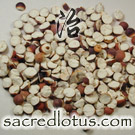 Qian Shi30 gdry-friedAstringe, Stabilize, Bind
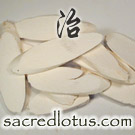 Shan Yao30 gdry-friedTonify Qi
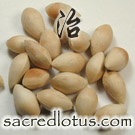 Bai Guo10 kernalscrushedAstringe, Stabilize, Bind
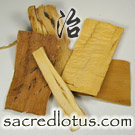 Huang Bai6 gClear Heat and Dry Dampness
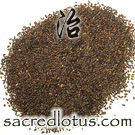 Che Qian Zi3 gRegulate Water and Drain Dampness
Preparation & dosage
How is Yi Huang Tang prepared?
Yi Huang Tang is taken as a decoction. Shan Yao and Qian Shi are dry-fried before decocting to strengthen their astringent, Spleen-supporting action; Bai Guo (Ginkgo kernel) is crushed before use.
Source: Sacred Lotus sources & references, consistent with Fu Qing-Zhu’s Gynecology.
Decoction. Reference relative amounts: Shan Yao (dry-fried) 30 g; Qian Shi (dry-fried) 30 g; Huang Bai 6 g; Che Qian Zi 3 g; Bai Guo (crushed) 10 kernels. Reference only.
Safety — read before use
What are the cautions for Yi Huang Tang?
Yi Huang Tang is formulated specifically for yellow, damp-heat-type discharge and is not intended for other kinds of vaginal discharge — it is not the right choice for white, clear, or thin discharge from Spleen deficiency and cold-damp alone (Wan Dai Tang territory, see notes), nor for discharge without an underlying deficiency component.
- Bai Guo (Ginkgo kernel) requires correct preparation and dosing: raw or excessive ginkgo-seed intake is a recognized cause of ginkgotoxin-related poisoning (nausea, vomiting, seizures), reported disproportionately in children; the formula’s crushed, cooked, limited-count dosing reflects traditional practice for safer use, and any deviation should be guided by a qualified practitioner.
- Pregnancy and nursing: use only under professional guidance.
- Not for pure excess damp-heat without deficiency, or for acute presentations with high fever, which call for stronger heat-clearing strategies.
Source: contemporary clinical formula reference (contraindication against other discharge types) + ginkgo-seed toxicity literature, Kajiyama et al., Pediatrics 2002 (PMID 11826216). Traditional-use framing; not medical advice.
Originally Appeared In:
- Women's Diseases According to Fu Qing Zhu (Fu Qing Zhu Nu Ke)
Notes:
How is Yi Huang Tang different from Wan Dai Tang?
Both are Fu Qing-Zhu formulas for vaginal discharge, but they treat opposite discharge colors and different root patterns. Wan Dai Tang ("Stop Discharge Decoction") treats white, watery discharge from Spleen deficiency and Liver-qi constraint with cold-damp; Yi Huang Tang treats yellow, thick discharge from Kidney/Spleen deficiency with damp-heat. Discharge color and the presence or absence of heat signs are the deciding factor between the two.
- vs Wan Dai Tang: choose Wan Dai Tang for white or clear thin discharge without heat signs; choose Yi Huang Tang when the discharge is yellow, thick, and foul-smelling.
Source: published contemporary formula-reference comparisons of the paired Fu Qing-Zhu formulas Wan Dai Tang and Yi Huang Tang.
Clinical Studies & Research:
Is there modern research on Yi Huang Tang?
Modern research on Yi Huang Tang itself is limited and mostly pharmaceutical or preclinical rather than clinical-outcome trials. Studies have focused on standardizing and reformulating the classical decoction — quality-control fingerprinting to identify its marker compounds and reformulation as a vaginal gel for local delivery — plus one mechanistic study of a modified derivative formula.
- Quality standardization: HPLC fingerprint analysis of 32 Yi-Huang Decoction batches identified marker compounds including berberine (consistent with the Huang Bai component) and verbascoside, and optimized the decoction process (PMID 29648711).
- Delivery reformulation: a thermosensitive in-situ vaginal gel version of Yi Huang Tang showed faster mucosal adhesion than a conventional gel in release-property testing (PMID 32237511).
- Modified-derivative mechanism (preclinical): JieZe-1, a formula added/subtracted from Yi Huang Tang, inhibited herpes simplex virus type 2 adhesion and penetration in vaginal epithelial cells (PMID 31743766).
Sources: PubMed 29648711; PubMed 32237511; PubMed 31743766. Research context, not a therapeutic claim; direct clinical-trial evidence for the classical formula itself remains limited.
Sources & References
Compiled and edited by Thomas Dehli, Founder & Editor, Sacred Lotus Updated
The information here is referenced from numerous sources — teachers, practitioners, class notes from Five Branches University, the books below, and the published research literature, with citations given as resolvable PubMed identifiers. Where sources disagree, I have flagged the discrepancies directly. If facts couldn't be verified, I have left them out. How we source our content.
Reference information for students and practitioners — not medical advice. Consult a qualified practitioner. Terms of use.
Chinese Formulas Books & References
 https://amzn.to/4fYI3f8
 https://amzn.to/4j55NRA
 https://amzn.to/4gMROyv
 https://amzn.to/4h7msSK