

Zhen Wu Tang (True Warrior Decoction)
Actions
What does Zhen Wu Tang do?
Zhen Wu Tang warms and tonifies Kidney and Spleen Yang so the body can once again transform and move fluids, draining the Water-Damp that has accumulated as a result. In Chinese medicine physiology, Kidney Yang is the "fire" that powers the Spleen's transformation of fluids and the Bladder's qi transformation; when that fire is too weak, water is not moved or excreted normally and instead pools in the tissues, sinks into the limbs, or floods upward to disturb the Heart and the clear orifices of the head.
- Warms Kidney Yang — restores the source fire that drives fluid metabolism.
- Strengthens Spleen Yang and qi — supports the Spleen's role in transforming and transporting fluids.
- Drains Water and transforms Dampness — moves accumulated fluid out through urination.
- Stops trembling and quivering of muscles — addresses the myokymia (jumping/twitching of muscles) described in the Shang Han Lun as a sign of Yang failing to warm the tissues while fluids overflow.
Source: Shang Han Lun (Zhang Zhongjing); Bensky & Barolet, Formulas & Strategies.
Indications
What is Zhen Wu Tang used for?
Zhen Wu Tang is used for generalized or dependent edema, heaviness and pain of the limbs, dizziness, and palpitations that arise from Spleen and Kidney Yang deficiency allowing fluids to overflow rather than being transformed and excreted normally. The classic presentation is a chronically cold, Yang-deficient person whose water metabolism has broken down at its root.
- Generalized body edema, especially swelling that is worse in the lower body or comes and goes with activity
- Heaviness, aching, or a sensation of coldness in the limbs and lower back
- Dizziness or a spinning/unsteady sensation, worse on standing (fluid disturbing the clear yang)
- Palpitations, and a sensation of throbbing beneath the epigastrium
- Scant, difficult urination with no thirst (fluids are pooling, not depleted)
- Loose stools or watery diarrhea, abdominal pain, and a cold aversion
- Twitching or trembling of the muscles ("run shun," described in the Shang Han Lun) in cases where Yang deficiency has followed excessive sweating
Source: Shang Han Lun; Bensky & Barolet, Formulas & Strategies; Chen & Chen, Chinese Herbal Formulas and Applications.
Western Uses:
What conditions is Zhen Wu Tang used for in modern practice?
Zhen Wu Tang warms Kidney (and Spleen) yang to control pathogenic water (oedema, heavy aching limbs, dizziness, palpitations and loose stools from yang failing to move fluids), so it is referenced across fluid-retention and yang-deficiency conditions: chronic nephritis, rheumatic valvular heart disease, congestive heart failure, liver cirrhosis, chronic enteritis, intestinal tuberculosis, Ménière's disease, primary hypertension, primary hyperaldosteronism, hypothyroidism, rheumatoid arthritis, and oedema.
The thread is the yang-deficiency-with-water pattern, not any one diagnosis. Heart failure, cirrhosis, and kidney disease are serious conditions requiring medical diagnosis and management, and new or worsening oedema always needs assessment. This formula is a traditional adjunct, not a substitute. Traditional-use correlates only, not a treatment claim.
Source: Sacred Lotus sources & references (pattern) + Bensky & Barolet, Formulas & Strategies; biomedical correlates as reference only. Not medical advice.
Ingredients
5 substances in Zhen Wu Tang — each links to its full herb monograph.
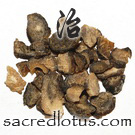 Fu Zi9 gWarm the Interior and Expel Cold
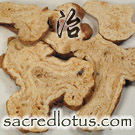 Bai Zhu6 gTonify Qi
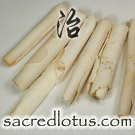 Fu Ling9 gRegulate Water and Drain Dampness
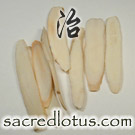 Bai Shao9 gTonify Blood
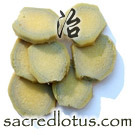 Sheng Jiang9 gWarm, Spicy Herbs that Release the Exterior
Preparation & dosage
How is Zhen Wu Tang prepared?
Zhen Wu Tang is a decoction (tang): the five herbs are simmered together in water, the dregs strained out, and the liquid taken warm, traditionally in three divided doses over a day, as specified in the Shang Han Lun. Fu Zi is used only in its processed (prepared) form — never as raw aconite — and, per standard formulary practice for aconite-containing decoctions, is typically decocted first and for an extended time before the remaining herbs are added, a step aimed at reducing its toxic alkaloid content; this is a preparation detail governed by a qualified practitioner or pharmacy and is noted here for reference, not as instruction for self-administration.
Sheng Jiang is used fresh and sliced, consistent with its role of dispersing fluids and assisting Fu Zi's warmth, rather than the dried, more purely interior-warming form (Gan Jiang) sometimes substituted in modified versions of the formula.
Source: Shang Han Lun; Bensky & Barolet, Formulas & Strategies.
Safety — read before use
What are the cautions for Zhen Wu Tang?
Zhen Wu Tang is not appropriate for Yin-deficient Heat patterns or for Damp-Heat, and it contains Fu Zi (processed aconite), an herb that is toxic in its raw state and restricted to prepared, practitioner-supervised use in essentially every jurisdiction that regulates it. Matching pattern to formula matters here specifically because the formula is built around a hot, Yang-tonifying chief herb.
- Contraindicated in Yin deficiency with Heat signs (e.g., night sweats, malar flushing, red tongue with little coating) — the formula's warming, drying tendency would aggravate these.
- Contraindicated in Damp-Heat patterns, where added heat would worsen the underlying condition.
- Fu Zi (Aconiti Radix Lateralis Praeparata) is derived from aconite, a plant whose raw/unprocessed form is toxic; regulatory bodies in most countries restrict its sale and use to processed material dispensed or prescribed under professional supervision. This is noted here as public-safety reference information only, not as guidance for sourcing, processing, or administering the herb.
- Formulas containing Fu Zi are generally avoided in pregnancy; use of this formula, as with any formula containing restricted or potent ingredients, should be directed by a qualified, licensed practitioner.
Source: Bensky & Barolet, Formulas & Strategies; Chen & Chen, Chinese Herbal Formulas and Applications.
Originally Appeared In:
- On Cold Damage (Shang Han Lun)
Notes:
What is the classical source of Zhen Wu Tang?
Zhen Wu Tang comes from the Shang Han Lun (Treatise on Cold Damage), compiled by Zhang Zhongjing around 220 CE, where it appears in two contexts: for Yang deficiency with water overflow arising on its own, and for the same pattern developing after excessive sweating or purging has damaged Yang and allowed fluids to accumulate. Its name — "True Warrior," referring to a mythological guardian deity associated with water and the north — reflects its classical role as a formula that "controls water," bringing an overflowing fluid metabolism back under command.
How does Zhen Wu Tang differ from Wu Ling San?
Wu Ling San treats a shallower, Tai Yang-stage disruption of the Bladder's qi transformation — often with a lingering exterior condition and thirst — while Zhen Wu Tang treats a deeper, chronic failure of Kidney and Spleen Yang itself, with no thirst and more pronounced systemic cold signs. Wu Ling San's Gui Zhi mildly warms and releases the exterior while Ze Xie, Zhu Ling, Fu Ling, and Bai Zhu promote urination; it restores the Bladder's ability to transform fluids without directly tonifying Kidney Yang. Zhen Wu Tang goes further, using Fu Zi to rebuild the underlying Yang fire, and is indicated for more advanced, systemic Water-Damp overflow — generalized edema, palpitations, and dizziness — rather than the more localized water accumulation with thirst and possible low-grade fever seen with Wu Ling San.
How does Zhen Wu Tang differ from Ling Gui Zhu Gan Tang?
Ling Gui Zhu Gan Tang addresses a milder Spleen Yang deficiency with Phlegm-fluid accumulating in the middle burner and chest, causing dizziness, palpitations, and epigastric fullness, whereas Zhen Wu Tang addresses a more severe Kidney-and-Spleen Yang deficiency with water overflowing throughout the body. Ling Gui Zhu Gan Tang uses Gui Zhi and Fu Ling to warm and move fluid at the Spleen/middle-burner level and does not contain Fu Zi, making it a gentler formula for localized fluid retention (tan yin) around the epigastrium and chest. Zhen Wu Tang's inclusion of Fu Zi to tonify Kidney Yang, and of Bai Shao to protect Yin as the formula drains water, reflects a deeper and more generalized presentation — whole-body edema and limb heaviness rather than chest/epigastric fluid and cough.
Are there well-known modifications of Zhen Wu Tang?
The Shang Han Lun itself appends a set of classical modifications for accompanying symptoms, and later clinicians have added others for more severe cold or qi deficiency; none of these additional herbs are part of the base formula recorded in this database. These are noted here for reference to the historical formula only.
Source: Shang Han Lun; Bensky & Barolet, Formulas & Strategies; Chen & Chen, Chinese Herbal Formulas and Applications.
Clinical Studies & Research:
Is there modern research on Zhen Wu Tang?
Modern research on Zhen Wu Tang (Zhenwu decoction) has focused mainly on chronic heart failure and diabetic/chronic kidney disease, two conditions that overlap substantially with its classical Kidney-Yang-deficiency-with-water-overflow pattern; results are preliminary and reported mostly as adjuncts to standard care, not as replacements for it.
- A 2018 systematic review protocol assessed the evidence base for Zhenwu decoction as a treatment for chronic heart failure, noting that multiple randomized trials existed in the Chinese-language literature but that quality and reporting varied, underscoring the need for standardized review (PMID 30024553).
- A meta-analysis of 13 randomized controlled trials (1,347 patients) found that Zhenwu decoction combined with conventional Western medicine improved overall clinical response rates and reduced 24-hour urine protein and serum creatinine compared with conventional treatment alone in diabetic nephropathy, though creatinine clearance did not differ significantly (PMID 36387355).
- A laboratory (cell-model) study identified dozens of chemical constituents in Zhenwu decoction extract and found protective effects against high-glucose/high-lipid-induced kidney cell damage, proposing albiflorin (a Bai Shao constituent) as one mediator of these effects via modulation of EGFR/Akt signaling (PMID 37523837).
These studies support biological plausibility and clinical interest in modern cardiac and renal contexts consistent with the formula's traditional water-metabolism indication, but do not establish it as a treatment for any specific diagnosed disease; formula selection should always be based on individual pattern differentiation by a qualified practitioner.
Sources: PMID 30024553; PMID 36387355; PMID 37523837.
Sources & References
Compiled and edited by Thomas Dehli, Founder & Editor, Sacred Lotus Updated
The information here is referenced from numerous sources — teachers, practitioners, class notes from Five Branches University, the books below, and the published research literature, with citations given as resolvable PubMed identifiers. Where sources disagree, I have flagged the discrepancies directly. If facts couldn't be verified, I have left them out. How we source our content.
Reference information for students and practitioners — not medical advice. Consult a qualified practitioner. Terms of use.
Chinese Formulas Books & References
 https://amzn.to/4fYI3f8
 https://amzn.to/4j55NRA
 https://amzn.to/4gMROyv
 https://amzn.to/4h7msSK