

Zhi Shi Xiao Pi Wan (Immature Bitter Orange Pill to Reduce Focal Distension)
Zhi Shi Xiao Pi Wan
Immature Bitter Orange Pill to Reduce Focal Distension
- Category
- Formulas that Reduce Food Stagnation
- Subcategory
- Formulas that Reduce Food Stagnation
- Ingredients
- 10 herbs
Actions
What does Zhi Shi Xiao Pi Wan do?
Zhi Shi Xiao Pi Wan reduces focal distension (pi) by moving stagnant qi, clearing a complex of heat and cold, and strengthening a weak Spleen. It is built for a mixed presentation — underlying Spleen-Stomach qi deficiency with qi stagnation, food accumulation, and simultaneous heat and cold signs — so it tonifies and disperses, and warms and clears, all at once.
The ten ingredients divide by role:
- Chiefs: Zhi Shi (breaks up stagnant qi and reduces focal distension) and Huang Lian (clears heat and dries dampness) together direct the formula at the epigastric fullness and any heat component.
- Deputies: Hou Po moves qi and reduces fullness; Ban Xia dries dampness and dissipates nodulation; Ren Shen, Bai Zhu, and Fu Ling tonify Spleen qi and drain dampness, addressing the underlying deficiency that lets stagnation take hold.
- Assistants: Gan Jiang warms the middle and offsets Huang Lian’s coldness, forming the cold-heat pair that treats a mixed pattern; Mai Ya reduces food stagnation.
- Envoy: Zhi Gan Cao harmonizes the other herbs and supports the Spleen.
Source: Sacred Lotus sources & references + Bensky & Barolet, Formulas & Strategies (chief/deputy/assistant/envoy analysis). Traditional-use framing; not medical advice.
Indications
What is Zhi Shi Xiao Pi Wan used for?
Zhi Shi Xiao Pi Wan treats focal distension (pi zheng) arising from Spleen deficiency complicated by qi stagnation and a mix of heat and cold — a fullness in the epigastrium and abdomen that is uncomfortable but not painful to firm pressure, distinguishing it from an accumulation of solid excess.
Its classic clinical presentation:
- Focal distension: masses or a sensation of fullness and blockage below the heart/in the epigastrium and abdomen, with possible distending pain.
- Spleen-deficiency signs: poor appetite, lassitude, and fatigue from underlying Spleen-Stomach weakness.
- Mixed cold-heat/food-stagnation signs: the combination of Huang Lian (heat) and Gan Jiang (cold) in the formula reflects a simultaneous heat and cold complex, often with food not properly digested.
Tongue and pulse: Sacred Lotus records a wiry pulse; a pale tongue with a white coating is the classically described presentation.
Source: Sacred Lotus sources & references on pattern/pulse + Bensky & Barolet, Formulas & Strategies. Traditional-use framing; not medical advice.
Western Uses:
What is Zhi Shi Xiao Pi Wan used for in modern practice?
In modern practice Zhi Shi Xiao Pi Wan (also transliterated Zhishi Xiaopi decoction/pill) is referenced for functional dyspepsia and, in some formulations, diabetic gastroparesis — contexts where Western medicine recognizes epigastric fullness, early satiety, poor appetite, and delayed gastric emptying, corresponding to the formula’s traditional focal-distension pattern.
These biomedical correlates are offered as a reference to the formula’s traditional use, not as a claim that it treats any disease. Clinical trial evidence to date is of modest quality (see research). Any use for a diagnosed condition belongs with a qualified practitioner and appropriate medical care.
Source: traditional-use correlates summarized from Bensky & Barolet, Formulas & Strategies, cross-checked against PubMed clinical literature; reference only, not a treatment claim.
Ingredients
10 substances in Zhi Shi Xiao Pi Wan — each links to its full herb monograph.
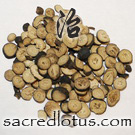 Zhi Shi15 gRegulate the Qi
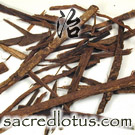 Hou Po12 ghoney-friedAromatic Herbs that Transform and Dissolve Dampness
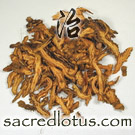 Huang Lian15 gClear Heat and Dry Dampness
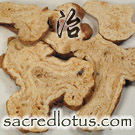 Bai Zhu6 gTonify Qi
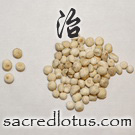 Ban Xia9 gWarm Herbs that Transform Phlegm-Cold
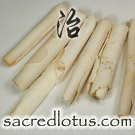 Fu Ling6 gRegulate Water and Drain Dampness
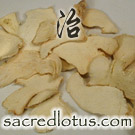 Gan Jiang3 gWarm the Interior and Expel Cold
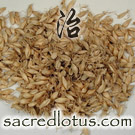 Mai Ya6 gRelieve Food Stagnation
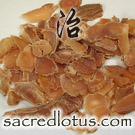 Ren Shen9 gTonify Qi
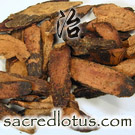 Zhi Gan Cao6 gTonify Qi
Preparation & dosage
How is Zhi Shi Xiao Pi Wan prepared?
Traditionally the ten herbs are ground to a fine powder and formed into pills (wan), though the formula is also commonly prepared as a decoction (tang/San) in contemporary clinical use. As a pill, it is typically taken with warm water; as a decoction, the herbs are boiled together and the strained liquid taken warm.
Source: Bensky & Barolet, Formulas & Strategies; traditional preparation, reference only.
Reference relative amounts (as pill or decoction): Zhi Shi 15 g; Huang Lian 15 g; Hou Po 12 g (honey-fried); Ban Xia 9 g; Ren Shen 9 g; Bai Zhu, Fu Ling, Mai Ya, Zhi Gan Cao 6 g each; Gan Jiang 3 g. As a pill, commonly 6-9 g taken with warm water, up to three times daily. Reference only.
Safety — read before use
What are the cautions for Zhi Shi Xiao Pi Wan?
Zhi Shi Xiao Pi Wan is formulated for a mixed deficiency-and-stagnation, cold-and-heat pattern, so it is not appropriate for simple excess or purely heat or purely cold presentations. Because it combines qi-moving, heat-clearing, and warming herbs, it should be matched carefully to the underlying pattern rather than used generically for any epigastric discomfort.
- Not for pure excess: formulas built for straightforward food or qi stagnation without underlying Spleen deficiency are generally more direct.
- Digestive fit matters: as with other Spleen-tonifying, qi-regulating formulas, dosing is generally adjusted to how well the presentation matches the mixed cold-heat, deficiency-stagnation picture.
- Professional guidance: because it contains both warming (Gan Jiang) and heat-clearing (Huang Lian) herbs, use under a qualified TCM practitioner’s supervision is advisable.
Source: Bensky & Barolet, Formulas & Strategies (cautions for cold-heat complex focal-distension formulas). Traditional-use framing; not medical advice.
Originally Appeared In:
- Secrets from the Orchid Chamber (Lan Shi Mi Cang)
Notes:
How is Zhi Shi Xiao Pi Wan different from Zhi Zhu Wan and Ban Xia Xie Xin Tang?
Zhi Shi Xiao Pi Wan can be understood as Zhi Zhu Wan (Zhi Shi + Bai Zhu, the classic Spleen-deficiency-with-food-stagnation pair) expanded with the cold-heat-complex, qi-tonifying strategy of the Xie Xin Tang family. Choose it over the simpler formulas when both a heat-cold complex and Spleen qi deficiency accompany the focal distension.
- vs Zhi Zhu Wan: Zhi Zhu Wan (Zhi Shi + Bai Zhu alone) is used for milder Spleen-deficiency-with-food-stagnation distension without a pronounced heat-cold complex; Zhi Shi Xiao Pi Wan adds Huang Lian, Gan Jiang, Hou Po, Ban Xia, Ren Shen, Fu Ling, and Mai Ya to address a more complex mixed pattern.
- vs Ban Xia Xie Xin Tang: both pair a heat-clearing herb (Huang Lian) with a warming herb (Gan Jiang) to treat a cold-heat complex causing epigastric fullness; Zhi Shi Xiao Pi Wan places more emphasis on qi stagnation and food accumulation, adding Zhi Shi, Hou Po, and Mai Ya to move qi and reduce food stagnation more strongly.
Source: Bensky & Barolet, Formulas & Strategies (formula-family comparisons within the Li Dongyuan Spleen-Stomach tradition).
Clinical Studies & Research:
Is there modern research on Zhi Shi Xiao Pi Wan?
Yes — mostly clinical meta-analyses of Chinese randomized trials on functional dyspepsia and diabetic gastroparesis, with generally positive but modest-quality evidence. A 2024 meta-analysis of 21 RCTs found Zhishixiaopi decoction more effective than Western-medicine controls at improving the total effective rate for functional dyspepsia symptoms, though it found no significant difference in gastric-emptying measures or serum hormone levels, and called for larger, higher-quality trials. A separate network meta-analysis of TCM decoctions for diabetic gastroparesis ranked Zhishi Xiaopi Decoction highest among compared regimens for normalizing somatostatin levels and improving gastric emptying rate.
- Functional dyspepsia (clinical meta-analysis): 21 RCTs found improved total effective rate vs. Western medicine (OR 3.54); no significant difference in gastric emptying or hormone levels (PMID 38809916).
- Diabetic gastroparesis (network meta-analysis): Zhishi Xiaopi Decoction ranked 1st for normalizing somatostatin and for gastric emptying rate among compared TCM decoctions and Western medicine (PMID 37035221 / PMC 10075042).
Sources: PubMed 38809916; PubMed 37035221 (PMC 10075042). Research context, not a therapeutic claim; direct high-quality clinical trial evidence remains limited.
Sources & References
Compiled and edited by Thomas Dehli, Founder & Editor, Sacred Lotus Updated
The information here is referenced from numerous sources — teachers, practitioners, class notes from Five Branches University, the books below, and the published research literature, with citations given as resolvable PubMed identifiers. Where sources disagree, I have flagged the discrepancies directly. If facts couldn't be verified, I have left them out. How we source our content.
Reference information for students and practitioners — not medical advice. Consult a qualified practitioner. Terms of use.
Chinese Formulas Books & References
 https://amzn.to/4fYI3f8
 https://amzn.to/4j55NRA
 https://amzn.to/4gMROyv
 https://amzn.to/4h7msSK