

Bai Ye Tang (Biota Twig Decoction)
Bai Ye Tang
Biota Twig Decoction
- Category
- Formulas that Stop Bleeding
- Subcategory
- Formulas that Tonify and Stop Bleeding
- Ingredients
- 3 herbs
Actions
What does Bai Ye Tang do?
Bai Ye Tang (Biota Twig Decoction) warms the Middle Burner and Spleen yang to restore the Spleen’s ability to hold blood within the vessels, stopping bleeding that arises from cold and deficiency rather than from heat. It is one of the simplest of Zhang Zhong-jing’s Jin Gui Yao Lue bleeding formulas, built from just three herbs that combine warming action with astringent, hemostatic action.
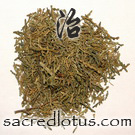
- Chief: Ce Bai Ye (biota leaf/twig) is a principal hemostatic herb, traditionally processed — often charred — to strengthen its astringent, bleeding-stopping action.
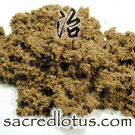
- Deputy: Ai Ye (mugwort leaf) warms the channels and the uterus specifically, and stops bleeding, particularly bleeding from the lower body.
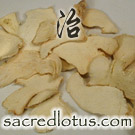
- Deputy/assistant: Gan Jiang (dried ginger, often substituted with Pao Jiang, blast-fried ginger) warms Spleen yang directly, addressing the root cause — a cold, yang-deficient Spleen that has lost its hold on the blood.
Source: Jin Gui Yao Lue; Bensky & Barolet, Formulas & Strategies (chief/deputy analysis). Traditional-use framing; not medical advice.
Indications
What is Bai Ye Tang used for?
Bai Ye Tang treats bleeding — classically vomiting of blood, though later commentators extend it to blood in the stool and uterine bleeding — caused by Spleen-yang deficiency and cold impairing the Spleen’s ability to govern and hold blood in its vessels. The bleeding itself tends to be pale or dilute rather than bright red, and is accompanied by clear signs of cold and deficiency rather than heat.
- Bleeding presentations: hematemesis (vomiting blood) in the original Jin Gui Yao Lue context; later formulary sources also apply it to blood in the stool and to uterine bleeding when the underlying pattern is cold-deficiency.
- Accompanying cold-deficiency signs: cold limbs, a pale complexion, low energy, and an absence of heat signs — no thirst, no restlessness, no red tongue.
- Tongue: pale with a thin coating, consistent with a cold, deficient Middle Burner rather than heat forcing blood from the vessels.
Source: Jin Gui Yao Lue; Sacred Lotus sources & references (diagnostic profile); Bensky & Barolet, Formulas & Strategies. Traditional-use framing; not medical advice.
Ingredients
3 substances in Bai Ye Tang — each links to its full herb monograph.
Preparation & dosage
How is Bai Ye Tang prepared?
Bai Ye Tang is a decoction of Ce Bai Ye, Gan Jiang, and Ai Ye; Gan Jiang is commonly substituted with Pao Jiang (blast-fried, blackened ginger), and the herbs are traditionally processed toward charring to strengthen their astringent, hemostatic action. Charring (“carbonizing”) a hemostatic herb is a standard Chinese pharmacy technique used across many bleeding formulas, since the process itself increases astringency independent of the herb’s original temperature.
The original Jin Gui Yao Lue text for Bai Ye Tang includes a fourth ingredient, ma tong zhi (fresh horse dung juice), used to help direct the bleeding downward. This ingredient is impractical in modern practice and is omitted from most contemporary formularies as well as from our formula’s composition, which reflects the standard modern three-herb version.
Source: Jin Gui Yao Lue; Sacred Lotus sources & references (preparation notes); Bensky & Barolet, Formulas & Strategies.
Safety — read before use
What are the cautions for Bai Ye Tang?
Bai Ye Tang is built for bleeding from cold and deficiency; it is the wrong formula, and can make matters worse, when bleeding is from heat. Bright red or forcefully flowing blood, a red tongue, a rapid pulse, thirst, or other heat signs point to a heat-pattern hemorrhage, which calls for a cooling hemostatic formula (for example Shi Hui San, Huai Hua San, or Xiao Ji Yin Zi) instead — the warming herbs in Bai Ye Tang would aggravate a heat-type bleed.
- Heat-pattern bleeding: contraindicated; see above.
- Gan Jiang/Pao Jiang: a warming herb generally avoided, or used only with caution, wherever heat signs are present.
- Any unexplained, heavy, or persistent bleeding — vomited blood, blood in the stool, or uterine bleeding — should be medically evaluated to rule out conditions requiring biomedical diagnosis and treatment; this formula is not a substitute for that workup.
Source: Bensky & Barolet, Formulas & Strategies (contraindication in heat-pattern bleeding). Traditional-use framing; not medical advice.
Originally Appeared In:
- Essentials from the Golden Cabinet (Jin Gui Yao Lue)
Notes:
How does Bai Ye Tang differ from Huang Tu Tang and from heat-clearing bleeding formulas like Shi Hui San?
Bai Ye Tang, Huang Tu Tang, and heat-clearing hemostatic formulas all stop bleeding, but they represent three different mechanisms and are not interchangeable.
- vs Huang Tu Tang: Huang Tu Tang treats the same basic Spleen-yang-deficiency, cold-impaired-blood-holding pattern, but adds Sheng Di Huang, E Jiao, Huang Qin, Bai Zhu, and Fu Long Gan to nourish blood and check the dryness of the warming herbs — it is the more built-out formula for more chronic bleeding with pronounced blood deficiency, while Bai Ye Tang is the simpler, more purely warming formula.
- vs Jiao Ai Tang: Jiao Ai Tang shares Ai Ye but is built around Chong- and Ren-vessel deficiency causing uterine bleeding, adding Dang Gui, Chuan Xiong, Sheng Di Huang, Bai Shao, and E Jiao for a more nourishing, less purely warming strategy.
- vs heat-clearing hemostatics (Shi Hui San, Huai Hua San, Xiao Ji Yin Zi): these formulas cool the blood to stop bleeding driven by heat forcing blood recklessly out of the vessels — the diagnostic and therapeutic opposite of Bai Ye Tang’s cold-deficiency pattern. Mistaking one pattern for the other and choosing the wrong formula can worsen the bleeding.
Source: Bensky & Barolet, Formulas & Strategies (comparative formula analysis).
Clinical Studies & Research:
Is there modern research on Bai Ye Tang?
No dedicated clinical or laboratory study of the three-herb combination was found; the available modern pharmacology instead studies its chief herb, Ce Bai Ye (Platycladi cacumen), on its own. Laboratory work using spectrum-effect relationship analysis isolated a compound the researchers named “cecarbon” from heat-processed Platycladi cacumen flavonoid extract and found it produced a dose-dependent hemostatic effect in animal testing (PMID 26393545); separate research specifically studied the charred/carbonized form of the herb, as used in Bai Ye Tang’s traditional processing, and identified an ethyl-acetate-soluble fraction as its active hemostatic component in a rat bleeding model (PMID 25509305). These findings support the plausibility of Ce Bai Ye’s traditional hemostatic use at the single-herb level; they do not constitute a clinical trial of Bai Ye Tang as a formula.
Sources: PubMed 26393545; PubMed 25509305. Ingredient-level research context only; not a formula-level clinical claim.
Sources & References
Compiled and edited by Thomas Dehli, Founder & Editor, Sacred Lotus Updated
The information here is referenced from numerous sources — teachers, practitioners, class notes from Five Branches University, the books below, and the published research literature, with citations given as resolvable PubMed identifiers. Where sources disagree, I have flagged the discrepancies directly. If facts couldn't be verified, I have left them out. How we source our content.
Reference information for students and practitioners — not medical advice. Consult a qualified practitioner. Terms of use.
Chinese Formulas Books & References
 https://amzn.to/4fYI3f8
 https://amzn.to/4j55NRA
 https://amzn.to/4gMROyv
 https://amzn.to/4h7msSK