

Shi Hui San (Ten Partially Charred Substances Powder)
Shi Hui San
Ten Partially Charred Substances Powder
- Category
- Formulas that Stop Bleeding
- Subcategory
- Formulas that Clear Heat and Stop Bleeding
- Ingredients
- 10 herbs
Actions
What does Shi Hui San do?
Shi Hui San cools the blood and stops bleeding, with a secondary action of draining excess fire. It is an emergency formula for sudden, severe hemorrhage caused by heat recklessly forcing blood out of the vessels — all ten ingredients are individually charred (stir-fried until scorched but not reduced to ash, "charred yet retaining their nature") before being combined, a processing step believed to sharpen their astringent, hemostatic action while keeping some of each herb’s original cooling property.
The ten charred herbs divide by role:
- Chief: Da Ji and Xiao Ji — the paired thistles that cool the blood and arrest bleeding, effective for hemorrhage from the upper body generally.
- Deputies: Ce Bai Ye, Bai Mao Gen, He Ye, and Qian Cao Gen reinforce the blood-cooling, hemostatic action; He Ye also raises clear yang so heat is not driven further upward, and Bai Mao Gen clears heat and gives it an outlet through urination.
- Assistants: Zhi Zi and Da Huang drain excess fire downward (via urine and stool respectively), addressing the root heat rather than only the bleeding; Mu Dan Pi cools the blood while gently moving it, guarding against the stasis that astringent, charred herbs can otherwise cause.
- Envoy: Zong Lu Pi is strongly astringent and directs the formula’s hemostatic action; the classical vehicle — fresh lotus-root or radish juice with a little ground ink stick — traditionally reinforces the cooling and astringing effect.
Source: this site’s own composition record + chief/deputy/assistant/envoy analysis cross-referenced against multiple online sources (Bensky & Barolet-style structure). Traditional-use framing; not medical advice.
Indications
What is Shi Hui San used for?
Shi Hui San treats acute, reckless bleeding from the upper body caused by fire/heat forcing blood from the vessels — classically vomiting of blood (hematemesis), coughing or spitting of blood (hemoptysis), and nosebleed (epistaxis). It is framed in the source literature as an emergency, short-course formula for sudden and copious hemorrhage, not a formula for chronic or slow bleeding.
Its classic clinical presentation:
- Bleeding character: sudden onset, often profuse, blood typically bright or deep red (a heat/excess color, distinguished from the pale, watery bleeding of qi or yang deficiency).
- Accompanying heat signs: a flushed face, thirst, restlessness, and a sensation of heat may be present alongside the bleeding.
- Tongue and pulse: a red tongue and a rapid, forceful (often rapid-slippery) pulse, consistent with excess heat in the blood.
Source: this site’s own composition record + multiple online sources. Traditional-use framing; not medical advice.
Western Uses:
What is Shi Hui San used for in modern practice?
In modern practice Shi Hui San is referenced historically for hemorrhage correlating to conditions such as upper-gastrointestinal bleeding (hematemesis), bleeding from the respiratory tract (hemoptysis, historically associated with conditions like pulmonary tuberculosis or bronchiectasis), and nosebleed — contexts where Western medicine recognizes acute blood loss from the upper body. These biomedical correlates describe the formula’s traditional use only, not a claim that it treats any diagnosed disease.
Because hematemesis, hemoptysis, and significant epistaxis can be signs of a serious or life-threatening condition, any such bleeding warrants prompt medical evaluation; this formula's traditional emergency use does not substitute for that. Contemporary study of the formula itself (as opposed to its individual, well-studied ingredients) is sparse — see research.
Source: traditional-use correlates summarized from multiple online sources; reference only, not a treatment claim.
Ingredients
10 substances in Shi Hui San — each links to its full herb monograph.
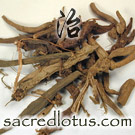 Da Ji9 gStop BleedingNo specimen photographXiao Ji15 gCool the Blood
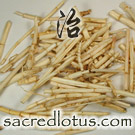 Bai Mao Gen30 gStop Bleeding
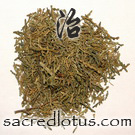 Ce Bai Ye9 gStop Bleeding
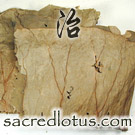 He Ye9 gClear and Relieve Summerheat
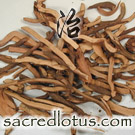 Qian Cao Gen12 gStop Bleeding
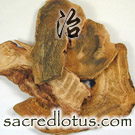 Da Huang9 gPurgatives
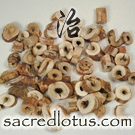 Mu Dan Pi9 gCool the Blood
 Zhi Zi12 gDrain FireNo specimen photographZong Lu Pi6 gStop Bleeding
Preparation & dosage
How is Shi Hui San prepared?
Classically, each of the ten herbs is individually stir-fried until charred on the surface (but not reduced to ash) before being ground together into a fine powder. The powder (traditionally 9–15 g) is then stirred into fresh lotus-root juice or white radish (luobo) juice with a small amount of aged ink stick ground into the liquid, and taken cold as an emergency dose for acute bleeding.
In current clinical practice the fresh-juice-and-ink vehicle is often impractical, so the ten herbs (at the reference gram amounts) are more commonly prepared as a standard water decoction instead, sometimes with some or all of the herbs still lightly charred to preserve the astringent, hemostatic emphasis.
Source: preparation method cross-referenced against multiple online sources (translated classical instruction). Reference only, not medical advice.
Reference amounts (as in this site’s own record, matching the standard citation for this formula): Bai Mao Gen 30 g; Xiao Ji 15 g; Qian Cao Gen, Zhi Zi 12 g; Da Ji, He Ye, Ce Bai Ye, Da Huang, Mu Dan Pi 9 g; Zong Lu Pi 6 g. Classical form: char each herb, grind to a fine powder, and take 9-15 g stirred into fresh lotus-root or radish juice with a little ground ink, cold. Modern practice commonly substitutes a decoction at the same relative amounts. Reference only, not a prescription.
Safety — read before use
What are the cautions for Shi Hui San?
Shi Hui San is formulated for bleeding from heat/excess and is inappropriate for bleeding due to cold or deficiency — chronic, low-volume, dark or pale bleeding with cold limbs, a pale tongue, or a weak/thin pulse calls for a warming or qi-tonifying approach instead, not this cooling, purgative formula.
- Emergency framing: significant hematemesis, hemoptysis, or nosebleed can signal a serious underlying condition and warrants prompt medical evaluation; this is a traditional emergency formula, not a substitute for that care.
- Not for prolonged use: the bitter, cold, and (via Da Huang) purgative nature of the formula can burden the Spleen and Stomach; once acute bleeding is controlled, treatment is traditionally shifted to a formula addressing the underlying pattern.
- Pregnancy: contains Da Huang (purgative, blood-moving) and blood-invigorating herbs (Mu Dan Pi, Qian Cao Gen) — use only under professional guidance.
- Digestive fit: the cold, draining nature of the formula may cause loose stools or digestive discomfort, particularly with weak digestion.
Source: cautions pattern typical of cooling, purgative hemostatic formulas, cross-referenced against multiple online sources. Traditional-use framing; not medical advice.
Originally Appeared In:
- Miraculous Book of Ten Remedies (Shi Yao Shen Shu)
Notes:
How is Shi Hui San different from Si Sheng Wan and other bleeding formulas?
Shi Hui San and Si Sheng Wan (Four Fresh Herbs Pill) treat the same basic pattern — reckless bleeding from blood heat — but take opposite processing approaches. Si Sheng Wan uses just four herbs (Sheng Di Huang, Sheng Ce Bai Ye, Sheng He Ye, Sheng Ai Ye) entirely fresh/raw, relying on their unprocessed cooling strength; Shi Hui San uses ten herbs that are all individually charred first, trading some raw cooling power for a stronger astringent, hemostatic effect. In practice Shi Hui San is generally reserved for more urgent, heavier bleeding.
- vs Si Sheng Wan: choose Si Sheng Wan when fresh herbs are available and the bleeding pattern is more purely one of blood heat without as pressing a need for astringent hemostasis; choose Shi Hui San for more severe or profuse bleeding where charred, astringent herbs are wanted.
- vs Huai Hua San: Huai Hua San targets bleeding from the lower body (intestinal/hemorrhoidal bleeding with damp-heat) rather than the upper-body hemorrhage (hematemesis, hemoptysis, epistaxis) that Shi Hui San addresses — the two are chosen by location and accompanying pattern, not interchanged.
- Charring rationale ("tan bu cun xing"): the traditional principle behind charring hemostatic herbs is that scorching intensifies astringency and hemostatic action while the herb is meant to still retain some of its original medicinal nature; modern pharmacology has begun investigating how this heat processing changes the chemistry (e.g., tannin content) of charred herbs (see research).
Source: multiple online sources for composition/comparison; charring-principle framing informed by modern processing research (see research, PMID 31401925).
Clinical Studies & Research:
Is there modern research on Shi Hui San?
Direct clinical research on the classical ten-herb formula itself is sparse; most relevant modern work studies either the charring process shared by its ingredients or a modified version of the formula for an unrelated condition. A pharmacology review has examined how carbonizing (charring) traditional Chinese herbs — the processing step applied to all ten ingredients of Shi Hui San — is understood to enhance hemostatic effect, and ingredient-specific work has modeled the active components of charred Mu Dan Pi (Moutan Cortex), one of the formula's ten herbs, against hemorrhagic-disease targets.
- Charring/carbonization mechanism (review): a review of charred traditional Chinese herbs and how carbonization is thought to yield a hemostatic effect (PMID 31401925) — directly relevant to Shi Hui San's defining "ten partially-charred" preparation, though not a study of the formula itself.
- Mu Dan Pi charcoal (network pharmacology, preclinical): a network-pharmacology analysis estimating the active ingredients of charred Moutan Cortex and their potential targets in hemorrhagic disease (PMID 30828075) — Mu Dan Pi is one of the ten herbs in Shi Hui San.
- Modified Shi Hui San, unrelated indication (preclinical): a 2025 study found a modified Shi Hui San decoction (different composition/ratios from the classical emergency formula) ameliorated DSS-induced experimental colitis in mice by reducing inflammation and oxidative stress and rebalancing gut microbiota (PMID 40112896) — this tests a modified formula for ulcerative colitis, not the classical bleeding indication, and results are from a mouse model.
Sources: PubMed 31401925; PubMed 30828075; PubMed 40112896. Research context on the charring process and related/modified formulas, not clinical evidence for the classical formula's traditional bleeding indication; not a therapeutic claim.
Sources & References
Compiled and edited by Thomas Dehli, Founder & Editor, Sacred Lotus Updated
The information here is referenced from numerous sources — teachers, practitioners, class notes from Five Branches University, the books below, and the published research literature, with citations given as resolvable PubMed identifiers. Where sources disagree, I have flagged the discrepancies directly. If facts couldn't be verified, I have left them out. How we source our content.
Reference information for students and practitioners — not medical advice. Consult a qualified practitioner. Terms of use.
Chinese Formulas Books & References
 https://amzn.to/4fYI3f8
 https://amzn.to/4j55NRA
 https://amzn.to/4gMROyv
 https://amzn.to/4h7msSK