

Da Bu Yin Wan (Great Tonify the Yin Pill)
Da Bu Yin Wan Dà Bǔ Yīn Wán
Great Tonify the Yin Pill
- Category
- Formulas that Tonify
- Subcategory
- Formulas that Nourish and Tonify the Yin
- Ingredients
- 4 herbs
Actions
What does Da Bu Yin Wan do?
Da Bu Yin Wan (Great Tonify the Yin Pill) enriches Kidney and Liver yin and downbears deficiency fire — the classic “nourish-yin + drain-fire” pairing devised by Zhu Danxi (1281–1358), founder of the Yin-Nourishing School, who held that “yang is often in excess, yin is often insufficient.” It builds substantial yin while simultaneously clearing the empty heat that yin’s failure to anchor yang allows to rise.
The four ingredients divide by role:
- Chief: Shu Di Huang richly nourishes Kidney yin and essence; Gui Ban (tortoise plastron) nourishes yin and, as a mineral-dense shell, anchors floating yang and strengthens the Kidney-governed bones — together the core yin-enriching pair.
- Deputies: Huang Bai (dry-fried) drains fire from the lower burner and clears deficiency heat; Zhi Mu (wine-fried) nourishes yin while clearing fire and moistening dryness — this pair drains the fire that the chief herbs alone cannot reach.
- Assistant/envoy: traditionally formed into pills with pig spinal marrow (a rich, marrow-nourishing yin tonic) and honey, which further enrich yin, bind the powder, and temper the bitter dryness of Huang Bai and Zhi Mu.
Source: Sacred Lotus sources & references + Bensky & Barolet, Formulas & Strategies (chief/deputy/assistant/envoy analysis; nourish-yin/drain-fire strategy). Traditional-use framing; not medical advice.
Indications
What is Da Bu Yin Wan used for?
Da Bu Yin Wan treats Liver-and-Kidney yin deficiency with vigorous (effulgent) deficiency fire — the classic “steaming bone” (gu zheng) disorder in which insufficient yin can no longer anchor yang, so heat rises and stirs from within rather than arriving from outside.
Its classic clinical presentation:
- Steaming-bone heat signs: tidal (afternoon/evening) fever, feverish sensation felt deep in the bones, malar flush, and night sweats.
- Fire disturbing below and above: spontaneous seminal emission, irritability and agitation, and a tendency toward insomnia.
- Kidney/Liver yin-deficiency signs: sore, weak lower back and knees, weakness or atrophy of the legs, and a general sense of debility despite the heat signs.
Tongue and pulse: a red tongue with little or no coating; a pulse that is rapid and forceful (thin-rapid-forceful), most pronounced in the rear/Kidney position.
Source: Sacred Lotus sources & references on pattern/tongue/pulse + Bensky & Barolet, Formulas & Strategies. Traditional-use framing; not medical advice.
Western Uses:
What is Da Bu Yin Wan used for in modern practice?
In modern practice Da Bu Yin Wan is referenced for conditions that present with the traditional yin-deficiency-fire pattern — night sweats, low-grade or afternoon fever, irritability, and heat sensations. Practitioners have traditionally applied this pattern to states such as menopausal hot flashes and night sweats, some presentations of hyperthyroidism/Graves’ disease marked by heat and sweating, and, in contemporary Chinese research, as a candidate herbal intervention studied for neuroprotective effects in Parkinson’s disease models.
These biomedical correlates are offered as a reference to the formula’s traditional use, not as a claim that it treats any disease. Current research on Da Bu Yin Wan itself is preclinical — cell and animal studies of mitochondrial mechanisms (see research) — not human clinical trials. Any use for a diagnosed condition belongs with a qualified practitioner and appropriate medical care.
Source: traditional-use correlates summarized from Bensky & Barolet, Formulas & Strategies; research correlate from PubMed (see research field). Reference only, not a treatment claim.
Ingredients
4 substances in Da Bu Yin Wan — each links to its full herb monograph.
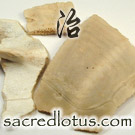 Gui Ban18-22.5 gdeep-friedTonify Yin
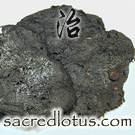 Shu Di Huang18-22.5 gTonify Blood
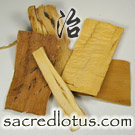 Huang Bai12-15 gdry-friedClear Heat and Dry Dampness
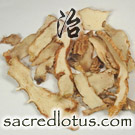 Zhi Mu12-15 gwine-friedDrain Fire
Preparation & dosage
How is Da Bu Yin Wan prepared?
Traditionally, the four herbs are ground to a fine powder and formed into pills with pig spinal marrow and honey — the preparation implied by “Wan” (pill) in the formula’s name. The marrow and honey further enrich yin and moisten, and help offset the dryness of the bitter-cold deputies.
- Processing of individual herbs: Gui Ban is deep-fried (often in vinegar) to make it friable and easier to prepare; Huang Bai is dry-fried and Zhi Mu is wine-fried to moderate their cold, bitter nature.
- Modern practice: also prepared as a decoction (tang) when a faster or stronger effect is needed, with amounts adjusted accordingly; pill form remains traditional for sustained yin-nourishing use.
Source: Sacred Lotus sources & references + Bensky & Barolet, Formulas & Strategies.
Traditionally powdered and formed into pills with pig spinal marrow and honey; also prepared as a decoction in modern practice. Reference relative amounts (from Sacred Lotus sources & references): Shu Di Huang 18-22.5 g; Gui Ban (deep-fried) 18-22.5 g; Huang Bai (dry-fried) 12-15 g; Zhi Mu (wine-fried) 12-15 g. Reference only; not a prescription.
Safety — read before use
What are the cautions for Da Bu Yin Wan?
Da Bu Yin Wan is a rich, bitter-cold formula for deficiency fire, so it is inappropriate where digestion is weak or where cold or excess patterns predominate. Shu Di Huang and Gui Ban are heavy and cloying and can burden a weak Spleen; Huang Bai and Zhi Mu are bitter and cold and can injure Spleen yang and provoke loose stools or poor appetite with prolonged use.
- Avoid (or use only with modification) in Spleen/Stomach deficiency with reduced appetite, loose stools, or a tendency toward diarrhea.
- Not for cold-type (yang) deficiency or for fevers arising from external (exterior) conditions rather than internal yin deficiency.
- Not for long-term unsupervised use: the bitter-cold deputies are traditionally moderated by processing (dry-frying, wine-frying) and by the pill’s honey/marrow base; professional guidance is advised, particularly in pregnancy or for extended courses.
Source: Bensky & Barolet, Formulas & Strategies (cautions for bitter-cold, yin-nourishing formulas). Traditional-use framing; not medical advice.
Originally Appeared In:
- Teachings of Dan Xi (Dan Xi Xin Fa)
Notes:
How is Da Bu Yin Wan different from Zhi Bai Di Huang Wan and Zuo Gui Wan?
Da Bu Yin Wan is distinguished by Gui Ban’s anchoring action, which gives it a stronger, more targeted ability to subdue vigorous deficiency fire than formulas built only around the Rehmannia-based yin tonics.
- vs Zhi Bai Di Huang Wan (Liu Wei Di Huang Wan + Zhi Mu + Huang Bai): that formula nourishes yin across Kidney, Liver, and Spleen more broadly with a milder fire-clearing action; Da Bu Yin Wan is more concentrated on draining vigorous fire and, via Gui Ban, anchoring floating yang — choose it when fire signs (tidal fever, night sweats, irritability) are more pronounced.
- vs Zuo Gui Wan: Zuo Gui Wan purely enriches Kidney yin and essence without draining fire, for yin deficiency with minimal heat signs; Da Bu Yin Wan is chosen instead when deficiency fire is vigorous.
Preparation note: traditionally taken as pills bound with pig spinal marrow and honey (per the formula’s classic construction) rather than as a decoction, since prolonged simmering is not required for the fire-clearing action and the pill form moderates the bitter-cold deputies.
Source: Bensky & Barolet, Formulas & Strategies (formula comparisons and traditional preparation).
Clinical Studies & Research:
Is there modern research on Da Bu Yin Wan?
Yes, but it is preclinical — cell and animal studies, mostly focused on Parkinson’s disease models, rather than human clinical trials. Several studies from Chinese research groups have examined Da-Bu-Yin-Wan (DBYW), alone or paired with the formula Qian-Zheng-San, for effects on mitochondrial function in neurotoxin-induced models of Parkinson’s disease — a modern mechanistic angle on a formula traditionally used for Liver/Kidney yin deficiency with rising fire (a pattern classically associated with tremor and internal wind).
- Mitochondrial dysfunction (preclinical, cell model): DBYW augmented DJ-1-related Akt phosphorylation and improved mitochondrial dysfunction in a cellular Parkinson’s disease model (PMID 30405418; PMC 6200911).
- Mitochondrial dynamics (preclinical, cell model): DBYW combined with Qian-Zheng-San improved mitochondrial mass, membrane potential, and fission/fusion protein expression (Drp1, Fis1, Parkin, Mfn1/2, OPA1) in an MPP+-induced cell model (PMID 31068806; PMC 6491701).
- Neuroprotection (preclinical, mouse model): DBYW combined with Qian-Zheng-San showed neuroprotective effects via mitochondrial ATP-sensitive potassium channels in an MPTP-induced mouse model (PMID 25610480; PMC 4290155).
Sources: PubMed 30405418 / PMC 6200911; PubMed 31068806 / PMC 6491701; PubMed 25610480 / PMC 4290155. Research context, not a therapeutic claim; all cited studies are preclinical (cell/animal), and none establish efficacy for any human disease.
Sources & References
Compiled and edited by Thomas Dehli, Founder & Editor, Sacred Lotus Updated
The information here is referenced from numerous sources — teachers, practitioners, class notes from Five Branches University, the books below, and the published research literature, with citations given as resolvable PubMed identifiers. Where sources disagree, I have flagged the discrepancies directly. If facts couldn't be verified, I have left them out. How we source our content.
Reference information for students and practitioners — not medical advice. Consult a qualified practitioner. Terms of use.
Chinese Formulas Books & References
 https://amzn.to/4fYI3f8
 https://amzn.to/4j55NRA
 https://amzn.to/4gMROyv
 https://amzn.to/4h7msSK