

Zuo Gui Yin (Restore the Left (Kidney) Decoction)
Zuo Gui Yin Zuǒ Guī Yǐn
Restore the Left (Kidney) Decoction
- Category
- Formulas that Tonify
- Subcategory
- Formulas that Nourish and Tonify the Yin
- Ingredients
- 6 herbs
Actions
What does Zuo Gui Yin do?
Zuo Gui Yin (Restore the Left [Kidney] Decoction) enriches Kidney yin and nourishes true yin — a purely tonifying formula devised by the Ming-dynasty physician Zhang Jingyue (Zhang Jiebin, Jingyue Quanshu, 1624) for genuine Kidney-yin deficiency with no significant heat or excess to drain. Zhang held that when deficiency is “pure,” treatment should be pure tonification rather than a mix of tonifying and draining actions.
The six ingredients divide by role:
- Chief: Shu Di Huang richly enriches Kidney yin and nourishes essence and blood — the core yin-building herb of the formula.
- Deputies: Shan Zhu Yu nourishes and astringes Liver-and-Kidney essence; Gou Qi Zi enriches Kidney essence and Liver blood; Shan Yao tonifies Spleen and Kidney yin and helps secure essence — together these support and extend Shu Di Huang’s yin-nourishing action.
- Assistant: Fu Ling leaches dampness and strengthens the Spleen, keeping the rich, cloying tonics from bogging down digestion.
- Envoy: Zhi Gan Cao (honey-fried licorice) harmonizes the formula and moderates its richness.
Source: Sacred Lotus sources & references + Bensky & Barolet, Formulas & Strategies (chief/deputy/assistant/envoy analysis; pure-tonification strategy). Traditional-use framing; not medical advice.
Indications
What is Zuo Gui Yin used for?
Zuo Gui Yin treats true Kidney-yin deficiency — a milder-to-moderate depletion of Kidney yin without the vigorous rising fire seen in more heat-heavy yin-deficiency patterns, making it suited to cases where pure nourishment, not fire-draining, is what's needed.
Its classic clinical presentation:
- Lower-back and Kidney signs: a sore, weak low back, and general debility centered in the low back and knees.
- Sweating: spontaneous sweating and/or night sweats.
- Fluid and dryness signs: dizziness, dry mouth and throat, and thirst.
Tongue and pulse: a peeled, shiny tongue coat (little or no coating, reflecting yin's failure to generate fluids); a thin, rapid pulse.
Source: Sacred Lotus sources & references on pattern/tongue/pulse + Bensky & Barolet, Formulas & Strategies. Traditional-use framing; not medical advice.
Western Uses:
What is Zuo Gui Yin used for in modern practice?
In modern practice Zuo Gui Yin is referenced for conditions that present with the traditional Kidney-yin-deficiency pattern — particularly perimenopausal and menopausal symptoms (hot flashes, night sweats, dryness) associated with declining ovarian hormone production, where practitioners have traditionally applied its yin-nourishing action. Chinese laboratory research has examined the formula's effect on ovarian hormone pathways in aging animal models (see research).
These biomedical correlates are offered as a reference to the formula’s traditional use, not as a claim that it treats any disease. Current research on Zuo Gui Yin itself is preclinical — animal and enzyme-activity studies (see research) — not human clinical trials. Any use for a diagnosed condition, and any combination with prescription medication, belongs with a qualified practitioner and appropriate medical care.
Source: traditional-use correlates summarized from Bensky & Barolet, Formulas & Strategies; research correlates from PubMed (see research field). Reference only, not a treatment claim.
Ingredients
6 substances in Zuo Gui Yin — each links to its full herb monograph.
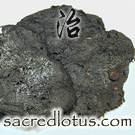 Shu Di Huang6-60 gTonify Blood
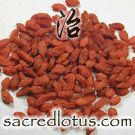 Gou Qi Zi6 gTonify Blood
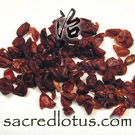 Shan Zhu Yu3-6 gAstringe, Stabilize, Bind
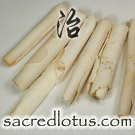 Fu Ling6 gRegulate Water and Drain Dampness
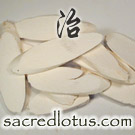 Shan Yao6 gTonify Qi
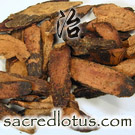 Zhi Gan Cao3 gTonify Qi
Preparation & dosage
How is Zuo Gui Yin prepared?
Zuo Gui Yin is prepared as a decoction (“yin” in the name signals a lighter, more simply simmered preparation than a full “tang” decoction), taken warm. Zhang Jingyue's original instructions call for adjusting the dose of the chief herb, Shu Di Huang, to the severity of the deficiency — using a smaller amount for mild cases and a substantially larger amount for severe depletion, which is reflected in its wide reference range below.
- Modifications (traditional): add Wu Wei Zi to further astringe and secure essence with more pronounced sweating or seminal emission; add Mai Men Dong for more pronounced dryness of the mouth and throat; add Chuan Niu Xi to guide the formula's action to the low back and knees.
Source: Sacred Lotus sources & references + Bensky & Barolet, Formulas & Strategies (preparation and traditional modifications).
Water decoction, taken warm. Reference relative amounts (from Sacred Lotus sources & references): Shu Di Huang 6-60 g (traditionally adjusted to the severity of yin deficiency — smaller for mild cases, much larger for severe depletion); Shan Yao 6 g; Gou Qi Zi 6 g; Fu Ling 6 g; Shan Zhu Yu 3-6 g; Zhi Gan Cao 3 g. Reference only; not a prescription.
Safety — read before use
What are the cautions for Zuo Gui Yin?
Zuo Gui Yin is a rich yin tonic built around Shu Di Huang, so it is inappropriate where digestion is weak or where dampness, phlegm, or food stagnation predominate. Even with Fu Ling and Zhi Gan Cao moderating it, the formula's cloying richness can burden a weak Spleen and slow digestion with prolonged use.
- Avoid or modify in Spleen/Stomach deficiency with poor appetite, abdominal fullness, or loose stools.
- Not for cold (yang) deficiency or for exterior conditions; this is a yin-only tonic with no warming or exterior-releasing action.
- Possible herb–drug interaction: a rat study found the formula induced two liver drug-metabolizing enzymes (CYP2C11, CYP3A1 — human equivalents CYP2C19, CYP3A4), a preclinical signal worth noting for anyone combining it with prescription medication (PMID 36060135).
Source: Bensky & Barolet, Formulas & Strategies (cautions for rich yin-tonifying formulas); PubMed 36060135 (enzyme-interaction signal). Traditional-use framing; not medical advice.
Originally Appeared In:
- Collected Treatises of Jing Yue (Jing Yue Quan Shu)
Notes:
How is Zuo Gui Yin different from Liu Wei Di Huang Wan and Zuo Gui Wan?
Zuo Gui Yin is Zhang Jingyue's purer, tonify-only reworking of Liu Wei Di Huang Wan. Liu Wei Di Huang Wan is built on a “three tonics, three drains” (san bu san xie) structure: Shu Di Huang, Shan Zhu Yu, and Shan Yao tonify, while Ze Xie, Mu Dan Pi, and Fu Ling each drain or offset one of the tonics. Zuo Gui Yin keeps the three tonics and keeps Fu Ling (as a Spleen-supporting assistant rather than a drain), but drops the two more overtly draining/clearing herbs — Ze Xie (drains Kidney/Bladder dampness) and Mu Dan Pi (clears Liver fire) — and adds Gou Qi Zi and Zhi Gan Cao. The net effect is a gentler, purer yin tonic for cases with no significant damp or fire signs to clear, versus Liu Wei Di Huang Wan's broader tonify-and-drain balance.
- vs Liu Wei Di Huang Wan: choose Zuo Gui Yin when yin deficiency is essentially uncomplicated by damp or fire; choose Liu Wei Di Huang Wan when a milder draining/clearing action is still wanted alongside tonification.
- vs Zuo Gui Wan: Zuo Gui Wan (same author) goes further — it removes all three of Liu Wei Di Huang Wan's draining herbs (Ze Xie, Fu Ling, and Mu Dan Pi) and adds stronger essence-building substances (Tu Si Zi, Chuan Niu Xi, and traditionally Gui Ban Jiao and Lu Jiao Jiao), formed into pills for sustained use in more severe or chronic Kidney yin-and-essence deficiency (e.g., marked low-back/knee weakness, seminal emission). Zuo Gui Yin, prepared as a lighter decoction, suits milder or more acute presentations and shorter courses.
Source: Bensky & Barolet, Formulas & Strategies (formula derivation and comparisons); Sacred Lotus sources & references cross-checked against published Zuo Gui Yin/Zuo Gui Wan/Liu Wei Di Huang Wan ingredient lists.
Clinical Studies & Research:
Is there modern research on Zuo Gui Yin?
Yes, but it is preclinical — animal and enzyme-activity studies, mostly on aging/perimenopausal rat models, rather than human clinical trials. Chinese research groups have examined Zuo Gui Yin's (Zuoguiyin's) effect on ovarian hormone-production pathways in naturally aging rats used to model perimenopause, and separately its effect on drug-metabolizing liver enzymes.
- Estradiol production (preclinical, rat model): in naturally aging peri-menopausal rats, medium and high doses of Zuo Gui Yin significantly increased serum estradiol and upregulated ovarian CYP19/P450(arom) expression, via ERα→LRH-1→CYP19 and FSHR→CYP19 pathways (PMID 21134435).
- Ovarian VEGF/SPARC expression (preclinical, rat model): Zuoguiyin reduced elevated VEGF and restored SPARC expression in the aging ovary, proposed as a mechanism for delaying ovarian aging (PMID 20209964).
- Drug-metabolizing enzymes (preclinical, rat model): a cocktail UPLC-MS/MS study found Zuo-Gui Yin Decoction induced CYP2C11 and CYP3A1 activity (human equivalents CYP2C19, CYP3A4) with no significant change to four other CYP450 isoforms tested — relevant to herb–drug interaction risk (PMID 36060135; PMC 9439930).
Sources: PubMed 21134435; PubMed 20209964; PubMed 36060135 / PMC 9439930. Research context, not a therapeutic claim; all cited studies are preclinical (animal/enzyme models) and none establish efficacy for any human disease.
Sources & References
Compiled and edited by Thomas Dehli, Founder & Editor, Sacred Lotus Updated
The information here is referenced from numerous sources — teachers, practitioners, class notes from Five Branches University, the books below, and the published research literature, with citations given as resolvable PubMed identifiers. Where sources disagree, I have flagged the discrepancies directly. If facts couldn't be verified, I have left them out. How we source our content.
Reference information for students and practitioners — not medical advice. Consult a qualified practitioner. Terms of use.
Chinese Formulas Books & References
 https://amzn.to/4fYI3f8
 https://amzn.to/4j55NRA
 https://amzn.to/4gMROyv
 https://amzn.to/4h7msSK