

Da Xian Xiong Tang (Major Sinking Into the Chest Decoction)
Da Xian Xiong Tang
Major Sinking Into the Chest Decoction
- Category
- Formulas that Drain Downward
- Subcategory
- Formulas that Purge Heat Accumulation
- Ingredients
- 3 herbs
Actions
What does Da Xian Xiong Tang do?
Da Xian Xiong Tang drastically purges heat that has bound together with fluids (water/phlegm) in the chest and epigastrium — the classical “Chest Bind” (jié xiōng) pattern. It is one of the most forceful formulas in the Chinese herbal repertoire, combining a toxic drastic hydragogue with two heat-purging minerals to break apart a hard, painful clumping that ordinary purgatives cannot move.
The three ingredients divide by role:
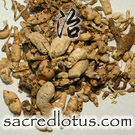
- Chief: Gan Sui (Kansui Root) — a highly toxic, drastic purgative that drives water and phlegm accumulation downward and out through the bowels; it is the herb that specifically targets the fluid component of the binding.
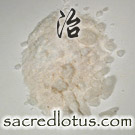
- Deputy: Mang Xiao (Mirabilite/Glauber’s Salt) — a salty, cold mineral that softens hardness and clears heat, dissolving the “bound” quality of the mass.
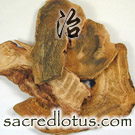
- Assistant/Envoy: Da Huang (Rhubarb) — drains downward, purges accumulated heat, and guides the other two herbs out through the stool.
Da Huang and Mang Xiao together form the purgative core also seen in Da Cheng Qi Tang (without its qi-moving herbs Zhi Shi and Hou Po); Gan Sui is added specifically because ordinary purgation cannot dislodge fluid bound with heat.
Source: Sacred Lotus sources & references + Bensky & Barolet, Formulas & Strategies (chief/deputy/assistant analysis for Chest Bind formulas). Traditional-use, encyclopedia-reference framing; not medical advice.
Indications
What is Da Xian Xiong Tang used for?
Da Xian Xiong Tang addresses “Major Chest Bind” — heat and fluids locked together from the chest down through the abdomen, a pattern described in the Shang Han Lun (Treatise on Cold Damage, Zhang Zhongjing, c. 200 CE) as arising when a surface (Tai Yang) disorder is purged prematurely, driving pathogenic heat inward to bind with pre-existing fluid accumulation.
Its classic clinical presentation:
- Hard, painful distension from the chest/epigastrium down toward the lower abdomen, so severe the area cannot tolerate palpation.
- Constipation, restlessness/irritability, and thirst.
- Tidal (afternoon) fever is noted in the classical description of severe cases.
Tongue and pulse (per Sacred Lotus sources & references): a very dry tongue coat; a submerged, forceful, and tight pulse — signs of heat and fluid bound together in the interior.
Source: Sacred Lotus sources & references on pattern/tongue/pulse + Bensky & Barolet, Formulas & Strategies (Shang Han Lun Chest Bind pattern). Traditional-use, encyclopedia-reference framing; not medical advice.
Western Uses:
What is Da Xian Xiong Tang used for in modern practice?
As a matter of historical and textbook reference, TCM sources describe the classical “Chest Bind” presentation — hard, board-like abdominal distension with pain, constipation, and fever — as resembling acute abdominal emergencies recognized in Western medicine, such as acute pancreatitis, cholecystitis, peritonitis, or intestinal obstruction. This is offered strictly as a reference to how the formula's traditional pattern has been correlated in the literature, not as a claim that Da Xian Xiong Tang treats any of these conditions; all of the correlate conditions are medical emergencies requiring immediate professional care.
Because of the formula’s toxicity and drastic purgative action (see cautions), it is not a self-directed remedy. Direct pharmacological research on Da Xian Xiong Tang as a combined formula is very limited; modern study instead focuses on its chief ingredient, Gan Sui (see research).
Source: traditional-use correlate summarized from TCM formula references (e.g., acute-abdomen correlates cited alongside the classical Chest Bind pattern); reference only, not a treatment claim.
Ingredients
3 substances in Da Xian Xiong Tang — each links to its full herb monograph.
Preparation & dosage
How is Da Xian Xiong Tang prepared?
Da Xian Xiong Tang is decocted with a specific sequence rather than boiled together as a single batch. Da Huang is cooked separately/first; Mang Xiao is then dissolved into the strained decoction; the powdered Gan Sui is stirred in last, and the preparation is taken warm.
Source: Sacred Lotus sources & references, consistent with the classical Shang Han Lun preparation method. Reference description only, not instructions for self-preparation or dosing.
What are the classical reference amounts for Da Xian Xiong Tang?
Published reference ranges (per Sacred Lotus sources & references): Da Huang 9–12 g, Mang Xiao 9–12 g, Gan Sui 1–1.5 g. Because Gan Sui is highly toxic and its therapeutic window is narrow, historical sources describe the dose as taken only until a bowel movement is achieved and then immediately discontinued. This is encyclopedia reference information, not a dosing recommendation — use of this formula is restricted to a qualified, licensed TCM practitioner.
Source: Sacred Lotus ingredient links + Bensky & Barolet, Formulas & Strategies.
Safety — read before use
What are the cautions for Da Xian Xiong Tang?
Da Xian Xiong Tang is one of the most drastic and toxic formulas in the Chinese materia medica, built around Gan Sui (Kansui Root), a highly toxic purgative. These are public-safety reference facts, not administration guidance — this formula is a historical/clinical reference entry, never a self-treatment protocol, and any use belongs exclusively with a qualified, licensed practitioner.
- Toxicity: Gan Sui (Euphorbia kansui) is classified as highly toxic; overdose or misuse is associated with severe gastrointestinal irritation, diarrhea, dehydration, and (in serious cases) respiratory compromise.
- Classical incompatibility: Gan Sui and Gan Cao (licorice) are one of the traditional “eighteen incompatible medicaments” (shí bā fǎn) — they are not combined.
- Contraindicated in pregnancy and in weak, deficient, or debilitated patients.
- Reserved for acute excess conditions only: traditional sources describe stopping the formula as soon as a bowel movement is achieved, with use limited to a very small number of doses; it is not indicated for ordinary or mild constipation.
Source: Sacred Lotus sources & references on cautions + Bensky & Barolet, Formulas & Strategies; Gan Sui/Gan Cao incompatibility per the classical “eighteen incompatible medicaments” and PubMed 27084456 (kansui-licorice dosage-toxicity study). Encyclopedia-reference framing; not medical advice.
Originally Appeared In:
- On Cold Damage (Shang Han Lun)
Notes:
How is Da Xian Xiong Tang different from Xiao Xian Xiong Tang and Da Xian Xiong Wan?
Da Xian Xiong Tang (“Major”) and Xiao Xian Xiong Tang (“Minor”) both treat a “Chest Bind” pattern, but differ sharply in severity and location. Xiao Xian Xiong Tang (Huang Lian, Ban Xia, Gua Lou) treats a milder phlegm-heat binding localized below the heart/epigastrium, painful only on palpation; Da Xian Xiong Tang treats a severe heat-and-water binding spanning chest to lower abdomen, painful even without touch, and requires the drastic purgative Gan Sui.
- vs Xiao Xian Xiong Tang: reserve Da Xian Xiong Tang for the more severe, more extensive binding with marked hardness, distension, and constipation; Xiao Xian Xiong Tang is the far gentler formula for localized phlegm-heat.
- vs Da Xian Xiong Wan: the pill form omits Mang Xiao and adds Ting Li Zi (Lepidium/Descurainia Seed) and Xing Ren (Bitter Apricot Kernel), producing a slower, gentler action used when abdominal pain is less pronounced.
Source: Bensky & Barolet, Formulas & Strategies (Chest Bind formula comparisons); Da Xian Xiong Wan composition cross-checked against published TCM formula references. Encyclopedia-reference framing.
Clinical Studies & Research:
Is there modern research on Da Xian Xiong Tang?
Direct pharmacological or clinical research on Da Xian Xiong Tang as a combined three-herb formula is very limited in PubMed/PMC. Most modern research instead centers on its chief and most hazardous ingredient, Gan Sui (Euphorbia kansui) — particularly how vinegar-processing reduces its toxicity, and how it interacts with licorice (Gan Cao), the herb it is classically forbidden to be combined with.
- Kansui-licorice incompatibility: a dosage-toxicity-efficacy study in malignant-pleural-effusion rats found that increasing the proportion of licorice combined with kansui reduced efficacy and increased toxicity, identifying a "flex point" near a 2:1 to 1:1 kansui:licorice ratio (PMID 27084456).
- Toxicity-reduction processing: vinegar-fried kansui retained diuretic/ascites-reducing activity comparable to crude kansui while improving safety, evaluated via serum/urine metabolomics and network pharmacology (PMID 30544627).
- Gut microbiota and fluid clearance: vinegar-processed kansui reduced ascites and intestinal injury in malignant-ascites rats partly independent of gut microbiota, with probiotics providing a synergistic protective effect (PMID 33091498).
Sources: PubMed 27084456; PubMed 30544627; PubMed 33091498. All studies concern the chief ingredient Gan Sui/Euphorbia kansui, not the combined formula; research context only, not a therapeutic claim.
Sources & References
Compiled and edited by Thomas Dehli, Founder & Editor, Sacred Lotus Updated
The information here is referenced from numerous sources — teachers, practitioners, class notes from Five Branches University, the books below, and the published research literature, with citations given as resolvable PubMed identifiers. Where sources disagree, I have flagged the discrepancies directly. If facts couldn't be verified, I have left them out. How we source our content.
Reference information for students and practitioners — not medical advice. Consult a qualified practitioner. Terms of use.
Chinese Formulas Books & References
 https://amzn.to/4fYI3f8
 https://amzn.to/4j55NRA
 https://amzn.to/4gMROyv
 https://amzn.to/4h7msSK