

Xiao Cheng Qi Tang (Minor Order the Qi Decoction)
Xiao Cheng Qi Tang
Minor Order the Qi Decoction
- Category
- Formulas that Drain Downward
- Subcategory
- Formulas that Purge Heat Accumulation
- Ingredients
- 3 herbs
Actions
What does Xiao Cheng Qi Tang do?
Xiao Cheng Qi Tang mildly purges heat-accumulation and moves stagnant Qi in the Stomach and Intestines, relieving abdominal fullness and distention in early or incomplete Yangming excess where the stool is not yet fully hard and dry. It is the middle-strength member of the Shang Han Lun's "Order the Qi" (Cheng Qi) purgative family.
- Purges heat-accumulation and unblocks the bowel — Da Huang, used here without Mang Xiao, drains accumulated heat downward.
- Moves stagnant Qi and relieves fullness/distention — Zhi Shi and Hou Po, at lower doses than in Da Cheng Qi Tang, break up abdominal Qi stagnation.
- Mildly clears heat by draining the bowel — gentler than Da Cheng Qi Tang, appropriate when fullness and distention dominate but hardened dryness has not yet fully set in.
Source: cross-referenced against multiple online sources; Bensky & Barolet, Formulas & Strategies; classical formulation from the Shang Han Lun (Treatise on Cold Damage, Zhang Zhongjing, ~200 CE).
Indications
What is Xiao Cheng Qi Tang used for?
Xiao Cheng Qi Tang is used for mild-to-moderate Yangming organ-excess: abdominal fullness and distention with constipation and tidal fever, where the stool is difficult to pass but has not yet become the rock-hard dryness that calls for Mang Xiao. It sits between the more severe Da Cheng Qi Tang and the milder Tiao Wei Cheng Qi Tang.
- Abdominal distention and fullness aggravated by pressure, though less severe and less rigidly fixed than in Da Cheng Qi Tang.
- Constipation, or stool that is difficult to pass but not yet extremely hard or dry.
- Tidal fever, sweating, and possible mild delirious speech or restlessness from early Yangming heat.
- Dry, dirty, or old-looking yellow tongue coating with a rapid, slippery pulse — heat present but not yet fully bound with dryness.
- Used clinically as a cautious "trial" purgative to confirm whether the stool has fully hardened before escalating to Da Cheng Qi Tang.
Source: cross-referenced against multiple online sources; Bensky & Barolet, Formulas & Strategies; Shang Han Lun.
Western Uses:
What conditions is Xiao Cheng Qi Tang used for in modern practice?
Xiao Cheng Qi Tang moderately purges Yang-Ming organ heat with constipation and fullness (milder than the major purgative), so it is referenced for heat-constipation and acute-abdomen pictures: early-stage dysenteric disorders, acute simple intestinal obstruction, acute cholecystitis, acute appendicitis, and constipation.
It is chosen for the mild-organ-heat pattern, not for a diagnosis. Intestinal obstruction, cholecystitis and appendicitis are potential surgical emergencies with severe abdominal pain and require immediate assessment — a purgative must never be taken into an undiagnosed acute abdomen; dysentery needs medical treatment. Traditional-use correlates only, not a treatment claim.
Source: Sacred Lotus sources & references (pattern) + Bensky & Barolet, Formulas & Strategies; biomedical correlates as reference only. Not medical advice.
Ingredients
3 substances in Xiao Cheng Qi Tang — each links to its full herb monograph.
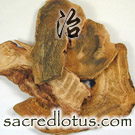 Da Huang12 gPurgatives
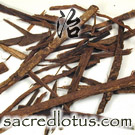 Hou Po6 gAromatic Herbs that Transform and Dissolve Dampness
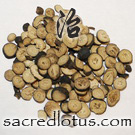 Zhi Shi3 pieces6-9 gramsRegulate the Qi
Preparation & dosage
How is Xiao Cheng Qi Tang prepared?
Xiao Cheng Qi Tang's three herbs are decocted together in one step, unlike Da Cheng Qi Tang's staged cooking order — because without Mang Xiao there is no salt-based ingredient to protect from prolonged heat, decoction order matters far less here.
- Cooking — Da Huang, Hou Po, and Zhi Shi are simmered together as a single decoction rather than cooking Hou Po and Zhi Shi first and adding Da Huang later.
- Effect of co-decoction — sources note that decocting Da Huang together with the other herbs, rather than adding it briefly at the end as in Da Cheng Qi Tang, softens its purgative force somewhat — consistent with the formula's overall milder intent.
- No Mang Xiao step — because this formula omits Mang Xiao, it has none of the "dissolve off the heat" handling that governs Da Cheng Qi Tang and Tao He Cheng Qi Tang.
Classical instruction was to take the decoction warm, observe for a bowel movement, and stop further dosing once the stool passes and distention resolves, rather than completing a fixed course regardless of response.
Source: cross-referenced against multiple online sources; Bensky & Barolet, Formulas & Strategies; Shang Han Lun.
Safety — read before use
What are the cautions for Xiao Cheng Qi Tang?
Xiao Cheng Qi Tang is contraindicated in pregnancy and should not be used for constipation or abdominal fullness arising from deficiency rather than confirmed heat-accumulation excess. The following points are widely noted as neutral public-safety reference, not administration guidance.
- Contraindicated in pregnancy — the purgative, downward-draining action is considered unsafe for pregnant patients.
- Not for deficiency patterns — sources caution against use in Qi, Blood, Yin, or Yang deficiency, or in frail/elderly patients, absent a true excess presentation.
- Not appropriate once stool has become fully hard and dry — that presentation calls for the added Mang Xiao found in Da Cheng Qi Tang or Tiao Wei Cheng Qi Tang, not this formula.
- Short-term use — sources describe discontinuing once the bowel movement is achieved and distention resolves, rather than continued or habitual use.
Source: cross-referenced against multiple online sources; Bensky & Barolet, Formulas & Strategies; Shang Han Lun.
Originally Appeared In:
- On Cold Damage (Shang Han Lun)
Notes:
How does Xiao Cheng Qi Tang differ from related formulas?
Xiao Cheng Qi Tang is the middle member of the Shang Han Lun's three "Order the Qi" (Cheng Qi) purgatives, sitting between the stronger Da Cheng Qi Tang and the gentler Tiao Wei Cheng Qi Tang, distinguished mainly by whether Mang Xiao is present and how much Hou Po/Zhi Shi is used.
- Da Cheng Qi Tang (Major Order the Qi Decoction) — adds Mang Xiao to Xiao Cheng Qi Tang's three herbs and uses considerably larger amounts of Hou Po and Zhi Shi, plus a strict staged cooking order (Hou Po/Zhi Shi decocted first, Da Huang added briefly at the end, Mang Xiao dissolved in off the heat); it is reserved for fully hardened, dry stool with all "four bigs" (fullness, distention, dryness, excess) present, whereas Xiao Cheng Qi Tang targets fullness and distention with heat before dryness has fully set in.
- Tiao Wei Cheng Qi Tang (Regulate the Stomach and Order the Qi Decoction) — drops Hou Po and Zhi Shi entirely, pairing Da Huang and Mang Xiao with Zhi Gan Cao instead; it targets dryness and heat with only mild distention, the reverse emphasis from Xiao Cheng Qi Tang, which targets distention/fullness but has no Mang Xiao to soften dryness.
- Why decoction order matters less here — Da Cheng Qi Tang's strict staged cooking exists specifically to protect Mang Xiao's softening action and to limit Da Huang's boiling time; since Xiao Cheng Qi Tang contains neither Mang Xiao nor a need to preserve a brief late addition of Da Huang for maximal force, its three herbs are simply co-decocted.
- Classical source and lineage — from Zhang Zhongjing's Shang Han Lun (Treatise on Cold Damage, ~200 CE), Yangming chapter, presented alongside Da Cheng Qi Tang and Tiao Wei Cheng Qi Tang as the three classical "Order the Qi" purgatives, differentiated by severity and composition rather than by pattern location.
Source: cross-referenced against multiple online sources; Bensky & Barolet, Formulas & Strategies; Shang Han Lun.
Clinical Studies & Research:
Is there modern research on Xiao Cheng Qi Tang?
Modern research on Xiao Cheng Qi Tang (Xiaochengqi decoction) has largely examined modified versions for perioperative gastrointestinal recovery and inflammation control, alongside chemical-constituent and mechanism studies in animal and analytical models. This research is presented as scientific context on traditional use, not a therapeutic claim.
- A clinical study of a modified Xiao-Cheng-Qi decoction in patients undergoing biliary/gallstone surgery reported improved postoperative gastrointestinal recovery (earlier passage of gas and stool, earlier feeding) and lower inflammatory markers (IL-6, CRP, serum amyloid A) compared with control groups.
- A modified "Jiawei Xiaochengqi" decoction reduced postoperative abdominal adhesion in a rat model, associated with inhibition of the CXCL2-CXCR2 inflammatory signaling pathway.
- Analytical chemistry studies have catalogued the decoction's chemical constituents and volatile-oil profile using UPLC-Q-TOF and related methods.
Sources: PMID 36818637; PMID 36681054; PMID 35531728; PMID 18652350 — presented as scientific context on formula variants and mechanisms, not evidence for the classical Yangming-purgative indication.
Sources & References
Compiled and edited by Thomas Dehli, Founder & Editor, Sacred Lotus Updated
The information here is referenced from numerous sources — teachers, practitioners, class notes from Five Branches University, the books below, and the published research literature, with citations given as resolvable PubMed identifiers. Where sources disagree, I have flagged the discrepancies directly. If facts couldn't be verified, I have left them out. How we source our content.
Reference information for students and practitioners — not medical advice. Consult a qualified practitioner. Terms of use.
Chinese Formulas Books & References
 https://amzn.to/4fYI3f8
 https://amzn.to/4j55NRA
 https://amzn.to/4gMROyv
 https://amzn.to/4h7msSK