

Du Huo Ji Sheng Tang (Angelica Pubescens and Sangjisheng Decoction)
Du Huo Ji Sheng Tang
Angelica Pubescens and Sangjisheng Decoction
- Category
- Formulas that Expel Dampness
- Subcategory
- Formulas that Dispel Wind-Dampness
- Ingredients
- 15 herbs
Actions
What does Du Huo Ji Sheng Tang do?
Du Huo Ji Sheng Tang expels wind, cold, and dampness lodged deep in the joints and lower back while simultaneously tonifying Qi, Blood, Liver, and Kidney — it treats the pathogenic factor and the underlying deficiency at the same time, which is why it is reserved for long-standing rather than newly-contracted painful obstruction (Bi syndrome).
- Expels Wind-Damp and scatters Cold — clears lingering pathogens from the lower back, hips, knees, and legs.
- Stops pain and frees the channels — relieves the aching, heaviness, and stiffness typical of chronic Bi.
- Tonifies the Liver and Kidney — strengthens the sinews and bones that the Liver and Kidney are said to govern.
- Nourishes and moves Qi and Blood — supports the underlying vacuity that allowed the pathogen to take root and lodge.
Source: cross-referenced against multiple online sources and standard formulary references (Bensky & Barolet; Chen & Chen).
Indications
What is Du Huo Ji Sheng Tang used for?
Du Huo Ji Sheng Tang is used for chronic Wind-Damp-Cold painful obstruction (Bi syndrome) of the lower back and knees in patients with an underlying Liver/Kidney and Qi/Blood deficiency — the classic long-term, low-grade joint and back pain pattern seen in older or constitutionally weaker patients.
- Chronic aching and heaviness in the lower back, hips, knees, and legs
- Joint stiffness, weakness, or restricted movement that worsens with fatigue or cold exposure
- Numbness or a cold sensation in the affected limbs
- A preference for warmth and worsening with cold or damp weather
- Associated signs of underlying deficiency — palpitations, shortness of breath, or general fatigue
Source: cross-referenced against multiple online sources and standard formulary references (Bensky & Barolet; Chen & Chen).
Western Uses:
What conditions is Du Huo Ji Sheng Tang used for in modern practice?
Du Huo Ji Sheng Tang treats chronic wind-damp-cold painful obstruction (bi) with underlying Liver-and-Kidney deficiency — the achy, cold, weak lower back and joints of longer-standing cases — so it is referenced for chronic musculoskeletal conditions: chronic rheumatoid/rheumatic arthritis, osteoarthritis, sciatica of a rheumatic type, chronic lower back pain, and the sequelae of poliomyelitis.
It is selected for the chronic bi-with-deficiency pattern, not for a diagnosis. New or severe back pain — especially with leg weakness, numbness, or bladder/bowel changes — requires prompt assessment, and inflammatory arthritis (e.g. rheumatoid) needs medical diagnosis and disease-modifying treatment. Traditional-use correlates only, not a treatment claim.
Source: Sacred Lotus sources & references (pattern) + Bensky & Barolet, Formulas & Strategies; biomedical correlates as reference only. Not medical advice.
Ingredients
15 substances in Du Huo Ji Sheng Tang — each links to its full herb monograph.
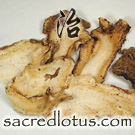 Du Huo9 gDispel Wind-Dampness
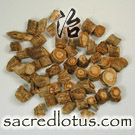 Fang Feng6 gWarm, Spicy Herbs that Release the Exterior
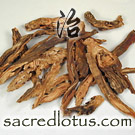 Qin Jiao6 gDispel Wind-Dampness
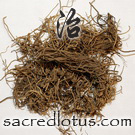 Xi Xin6 gWarm, Spicy Herbs that Release the Exterior
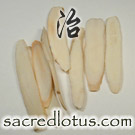 Bai Shao6 gTonify Blood
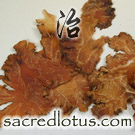 Chuan Xiong6 gInvigorate Blood and Remove Stagnation
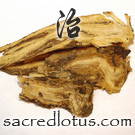 Dang Gui6 gTonify Blood
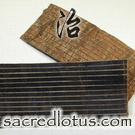 Du Zhong6 gTonify Yang
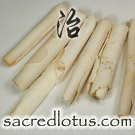 Fu Ling6 gRegulate Water and Drain Dampness
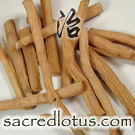 Huai Niu Xi6 gInvigorate Blood and Remove Stagnation
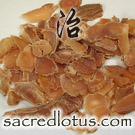 Ren Shen6 gTonify Qi
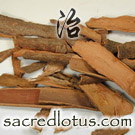 Rou Gui6 gWarm the Interior and Expel Cold
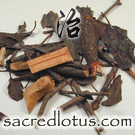 Sang Ji Sheng6 gTonify Yin
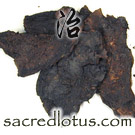 Sheng Di Huang6 gCool the Blood
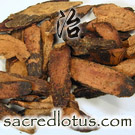 Zhi Gan Cao6 gTonify Qi
Preparation & dosage
How is Du Huo Ji Sheng Tang prepared?
Du Huo Ji Sheng Tang is prepared as a water decoction (tang) of the fifteen herbs listed above, taken warm. In contemporary clinical practice several substitutions and dosage adjustments are commonly reported.
- The herbs are combined and simmered together in the standard decoction method; no unusual cooking order is generally described for this formula.
- Modern sources often report Sang Ji Sheng used at a higher dose (roughly 15–30 grams) than the classical amount, and note that Xu Duan (Radix Dipsaci) is frequently substituted for it.
- Dang Shen (Radix Codonopsis) is commonly substituted for Ren Shen in contemporary practice, typically at a higher dose, as a milder and less costly Qi tonic.
- Some modern formulations reduce or omit Rou Gui and Xi Xin relative to the classical recipe, reflecting local dosing conventions and regulatory limits on these herbs.
Source: cross-referenced against multiple online sources and standard formulary references (Bensky & Barolet; Chen & Chen).
Safety — read before use
What are the cautions for Du Huo Ji Sheng Tang?
Du Huo Ji Sheng Tang is not indicated for Bi syndrome with signs of Heat, for acute inflammatory arthritis, or for patterns of Yin deficiency with Heat, since its warming and tonifying herbs can aggravate these presentations.
- Not appropriate for red, hot, swollen joints or other signs of Heat Bi.
- Not appropriate for Yin-deficient patients with Heat signs (e.g., night sweats, malar flushing, a red tongue with little coating), which the formula's warming herbs (Rou Gui, Xi Xin) can aggravate.
- The Blood-invigorating and warming herbs in this formula (Chuan Xiong, Rou Gui, Huai Niu Xi) are traditionally used with caution in pregnancy.
- Xi Xin (Herba Asari) is subject to regulatory dose limits and sourcing restrictions in a number of jurisdictions; some regulators restrict use to the root only, reflecting safety concerns about aristolochic-acid-related compounds found in the aerial parts of the plant. This is noted here as general public-safety reference, not administration guidance.
Source: cross-referenced against multiple online sources and standard formulary references (Bensky & Barolet; Chen & Chen).
Originally Appeared In:
- Thousand Ducat Formulas (Qian Jin Yao Fang)
Notes:
How does Du Huo Ji Sheng Tang differ from related formulas?
Du Huo Ji Sheng Tang is distinguished from other Bi-syndrome formulas by its combined tonifying and pathogen-expelling design, making it suited to chronic rather than acute presentations.
- Vs. Juan Bi Tang — Juan Bi Tang also expels Wind-Damp and relieves pain but does not carry the same degree of Blood- and Qi-tonifying material built into Du Huo Ji Sheng Tang, making it more suitable for Bi with less pronounced underlying deficiency.
- Vs. Qiang Huo Sheng Shi Tang — used for more superficial, acute Wind-Damp affecting the upper body and back, without addressing Liver/Kidney or Qi/Blood deficiency.
- Vs. Shen Tong Zhu Yu Tang — emphasizes invigorating Blood and unblocking the channels for Bi with pronounced Blood stasis and pain, rather than tonifying Liver/Kidney deficiency.
- Reported modifications in modern sources include adding Huang Qi for more pronounced Qi deficiency, adding Wei Ling Xian to strengthen Wind-Damp expulsion, and adding Mu Gua for more pronounced dampness or sinew stiffness.
What is the classical source of Du Huo Ji Sheng Tang?
Du Huo Ji Sheng Tang is traditionally attributed to the Tang-dynasty physician Sun Simiao, recorded in his formulary Bei Ji Qian Jin Yao Fang (Essential Prescriptions Worth a Thousand Pieces of Gold for Emergencies, circa 652 CE). It has remained one of the standard formulas for chronic Bi with underlying deficiency in the centuries since.
Source: cross-referenced against multiple online sources and standard formulary references (Bensky & Barolet; Chen & Chen).
Clinical Studies & Research:
Is there modern research on Du Huo Ji Sheng Tang?
Du Huo Ji Sheng Tang (transliterated in the biomedical literature as "Duhuo Jisheng Decoction/Wan") has a substantial body of modern research, concentrated on knee osteoarthritis, rheumatoid arthritis, and lumbar disc herniation — this is research context on a widely-studied traditional formula, not a clinical claim about outcomes for any individual.
- A randomized trial examined Duhuo Jisheng Decoction combined with Tui-na manipulation for knee osteoarthritis (PMID 37424023).
- A trial evaluated Duhuo Jisheng Decoction specifically for the Cold-Dampness Obstruction pattern of knee osteoarthritis (PMID 35774274).
- A systematic review and meta-analysis assessed the efficacy and safety of Duhuo Jisheng Decoction for rheumatoid arthritis (PMID 37933004).
- A systematic review and meta-analysis evaluated Duhuo Jisheng Decoction for lumbar disc herniation (PMID 32118755).
- A trial studied Duhuo Jisheng Decoction added to bisphosphonate therapy in postmenopausal osteoporosis (PMID 34637967).
Sources: PMID 37424023, PMID 35774274, PMID 37933004, PMID 32118755, PMID 34637967.
Sources & References
Compiled and edited by Thomas Dehli, Founder & Editor, Sacred Lotus Updated
The information here is referenced from numerous sources — teachers, practitioners, class notes from Five Branches University, the books below, and the published research literature, with citations given as resolvable PubMed identifiers. Where sources disagree, I have flagged the discrepancies directly. If facts couldn't be verified, I have left them out. How we source our content.
Reference information for students and practitioners — not medical advice. Consult a qualified practitioner. Terms of use.
Chinese Formulas Books & References
 https://amzn.to/4fYI3f8
 https://amzn.to/4j55NRA
 https://amzn.to/4gMROyv
 https://amzn.to/4h7msSK