

Huang Tu Tang (Yellow Earth Decoction)
Huang Tu Tang
Yellow Earth Decoction
- Category
- Formulas that Stop Bleeding
- Subcategory
- Formulas that Tonify and Stop Bleeding
- Ingredients
- 7 herbs
Actions
What does Huang Tu Tang do?
Huang Tu Tang (Yellow Earth Decoction) warms Spleen yang, nourishes the blood, and stops bleeding. It is the classic Jin Gui Yao Lue formula for chronic bleeding that arises because a cold, yang-deficient Spleen has lost its ability to hold blood inside the vessels — a “leaking container” pattern rather than bleeding from heat or trauma. Its structure is distinctive: three warming, astringing herbs stop the bleeding and rebuild Spleen yang, while three nourishing, cooling herbs replace lost blood and keep the warming herbs from themselves driving heat into the blood.
The seven ingredients divide by role:
- Chief: Fu Long Gan (Zao Xin Tu, aged stove earth) warms the Middle Burner, astringes, and directs blood back into its channels — the formula’s namesake “yellow earth.”
- Deputies: Fu Zi warms and revives Spleen (and Kidney) yang to re-establish the Spleen’s hold on the blood; Bai Zhu tonifies Spleen qi and supports Fu Long Gan’s warming, consolidating action.
- Assistants: Sheng Di Huang and E Jiao nourish and replenish the blood already lost, with E Jiao’s gelatin also acting as a direct hemostatic; Huang Qin clears any heat and checks the dryness of Fu Zi and Bai Zhu, keeping the warming herbs from scorching the blood they are meant to save. This warm-and-cool pairing (Fu Zi/Bai Zhu against Sheng Di Huang/Huang Qin) is the formula’s defining strategy.
- Envoy: Gan Cao harmonizes the warming and cooling herbs and supports the Spleen.
Source: Sacred Lotus sources & references + Bensky & Barolet, Formulas & Strategies (chief/deputy/assistant/envoy analysis; warm-cool balanced construction). Traditional-use framing; not medical advice.
Indications
What is Huang Tu Tang used for?
Huang Tu Tang treats chronic, low-grade bleeding caused by Spleen-yang deficiency failing to contain the blood — classically described in the Jin Gui Yao Lue as “far blood” (yuan xue), bleeding that is distal or delayed relative to the bowel movement, as opposed to “near blood” from damp-heat. The bleeding is typically dark, occurs over time rather than acutely, and is unaccompanied by pain, fever, or other signs of heat.
Its classic clinical presentation:
- Bleeding presentations: blood in the stool that is dark and appears after the stool (far blood); uterine bleeding (beng lou); some classical sources also apply it to blood after vomiting — all from a cold, deficient Middle Burner rather than heat or stasis.
- Accompanying Spleen-yang deficiency signs: pallor or a sallow complexion, cold limbs, fatigue, low or soft voice, poor appetite.
Tongue and pulse: a pale tongue with a white coat; a submerged, thin, and forceless pulse.
Source: Sacred Lotus sources & references on pattern/tongue/pulse + Bensky & Barolet, Formulas & Strategies (Jin Gui Yao Lue “far blood” discussion). Traditional-use framing; not medical advice.
Western Uses:
What is Huang Tu Tang used for in modern practice?
In modern TCM practice, Huang Tu Tang (referred to in the Chinese pharmacology literature as Huangtu decoction) is referenced for chronic, low-grade gastrointestinal bleeding and related digestive complaints in patients with an underlying cold, deficient constitution — contexts where Western medicine recognizes conditions such as occult or slow gastrointestinal bleeding, hemorrhoidal bleeding, or dysfunctional uterine bleeding with associated fatigue and pallor.
These biomedical correlates are offered as a reference to the formula’s traditional use, not as a claim that it treats any diagnosed disease. Contemporary study remains preclinical — network-pharmacology and animal-model work on gut microbiota, metabolome, and inflammatory mechanisms (see research) — and has not yet been confirmed in human bleeding trials. Any use for a diagnosed bleeding condition requires prompt medical evaluation; it belongs with a qualified practitioner and appropriate medical care, not self-treatment.
Source: traditional-use correlates summarized from Bensky & Barolet, Formulas & Strategies, cross-checked against the modern pharmacology literature (see research); reference only, not a treatment claim.
Ingredients
7 substances in Huang Tu Tang — each links to its full herb monograph.
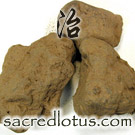 Fu Long Gan18 gStop Bleeding
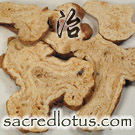 Bai Zhu9 gTonify Qi
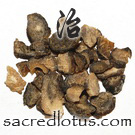 Fu Zi9 gWarm the Interior and Expel Cold
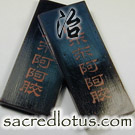 E Jiao9 gTonify Blood
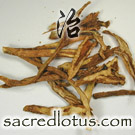 Huang Qin9 gClear Heat and Dry Dampness
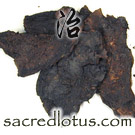 Sheng Di Huang9 gdriedCool the Blood
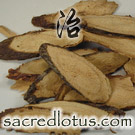 Gan Cao9 gTonify Qi
Preparation & dosage
How is Huang Tu Tang prepared?
Huang Tu Tang is a decoction built around Fu Long Gan (aged stove earth), which is cooked first and separately. Fu Long Gan is decocted alone for 30–40 minutes; the resulting liquid is then strained and used as the water to cook the remaining six herbs. A higher dose of Fu Long Gan (30–60 g) is often used in practice, or Chi Shi Zhi is substituted at 3–4 times the Fu Long Gan dose when stove earth is unavailable.
Source: Sacred Lotus sources & references + Bensky & Barolet, Formulas & Strategies.
Decoction. Fu Long Gan (Zao Xin Tu) is decocted separately first for 30-40 minutes and the strained liquid used to cook the rest; a higher dose of 30-60 g is common, or Chi Shi Zhi may substitute at 3-4x the Fu Long Gan dose. Reference relative amounts for the remaining herbs: Bai Zhu, Fu Zi, Gan Cao, Sheng Di Huang (dried), E Jiao, Huang Qin 9 g each. Reference only; not a prescription.
Safety — read before use
What are the cautions for Huang Tu Tang?
Huang Tu Tang is built for bleeding from cold and deficiency; it is inappropriate, and can worsen matters, when bleeding is from heat or excess. Bright-red, forceful, or acute bleeding with a red tongue, rapid pulse, thirst, or other heat signs calls for a cooling hemostatic formula (e.g. Huai Hua San, Xiao Ji Yin Zi) instead — the warming herbs in Huang Tu Tang would aggravate a heat-pattern hemorrhage.
- Fu Zi (aconite): a potentially toxic herb requiring properly processed (zhi) material, careful dosing, and adequate cooking time; not for self-prescription.
- Pregnancy: Fu Zi is generally contraindicated in pregnancy — use only under professional guidance, and any bleeding during pregnancy warrants prompt medical evaluation.
- Digestive fit: E Jiao and Sheng Di Huang are rich and can be cloying; in a weak Spleen with dampness they may need modification (e.g. added aromatic, qi-moving herbs) to avoid bloating or loose stools.
- Any unexplained or persistent bleeding — gastrointestinal, uterine, or otherwise — should be medically evaluated to rule out conditions requiring biomedical diagnosis and treatment; this formula is not a substitute for that workup.
Source: Bensky & Barolet, Formulas & Strategies (contraindication in heat-pattern bleeding; Fu Zi processing/dosing cautions). Traditional-use framing; not medical advice.
Originally Appeared In:
- Essentials from the Golden Cabinet (Jin Gui Yao Lue)
Notes:
How is Huang Tu Tang different from Bai Ye Tang, Jiao Ai Tang, and Huai Hua San?
All four are classical formulas that stop bleeding, but they target different mechanisms. Choosing among them depends on whether the bleeding comes from cold-deficiency, blood-vessel deficiency, or heat.
- vs Bai Ye Tang: Bai Ye Tang also treats yang deficiency with cold impairing the Spleen’s hold on the blood, using Ce Bai Ye, Gan Jiang, and Ai Ye — a simpler, more purely warming approach. Huang Tu Tang adds Sheng Di Huang, E Jiao, and Huang Qin to nourish blood and clear heat alongside the warming, making it better suited to more chronic bleeding with more pronounced blood deficiency.
- vs Jiao Ai Tang: Jiao Ai Tang shares E Jiao and Sheng Di Huang (plus Ai Ye) but is built for Chong- and Ren-vessel deficiency and injury causing uterine bleeding, without Huang Tu Tang’s Spleen-yang-warming core (Fu Long Gan, Fu Zi, Bai Zhu). Use Jiao Ai Tang when the pattern centers on the Chong and Ren vessels rather than Spleen yang.
- vs Huai Hua San: Huai Hua San (Huai Hua, Ce Bai Ye, Jing Jie, Zhi Ke) treats bleeding hemorrhoids from damp-heat and wind in the Large Intestine — a heat pattern, the clinical opposite of Huang Tu Tang’s cold-deficiency pattern.
- Jin Gui Yao Lue “near blood” vs “far blood”: the classic text pairs Huang Tu Tang (far blood, from cold-deficiency) with Chi Xiao Dou Dang Gui San (near blood, from damp-heat) — the two formulas frame the same symptom, blood in the stool, from opposite underlying patterns.
Source: Bensky & Barolet, Formulas & Strategies (comparative formula analysis; Jin Gui Yao Lue near-blood/far-blood discussion).
Clinical Studies & Research:
Is there modern research on Huang Tu Tang?
Yes, but it is limited to preclinical network-pharmacology and animal-model studies under its pharmacology-literature name, Huangtu decoction — no clinical bleeding trial was found. Two studies specifically model the formula’s traditional pattern and its digestive applications.
- Spleen-yang-deficiency diarrhea (preclinical, pattern-matched): in a mouse model of chronic diarrhea induced to mimic Spleen-yang deficiency, Huangtu decoction reduced weight loss, diarrhea rate, and intestinal tissue damage, and altered gut bacterial composition (reducing Allobaculum, Lactobacillus, and Ruminococcus) alongside changes in host metabolic pathways including ascorbate metabolism and HIF-1 signaling (PMID 39006272, American Journal of Translational Research, 2024).
- Ulcerative colitis (preclinical): network pharmacology combined with a DSS-induced colitis mouse model identified 47 compounds in Huangtu decoction and found the formula alleviated colonic inflammation partly by inhibiting matrix metalloproteinases MMP1, MMP3, and MMP9 (PMID 34616145, Drug Design, Development and Therapy, 2021).
Sources: PubMed 39006272; PubMed 34616145. Research context on the underlying pattern and digestive applications, not a bleeding-treatment claim; direct clinical evidence for hemostatic use remains unverified.
Sources & References
Compiled and edited by Thomas Dehli, Founder & Editor, Sacred Lotus Updated
The information here is referenced from numerous sources — teachers, practitioners, class notes from Five Branches University, the books below, and the published research literature, with citations given as resolvable PubMed identifiers. Where sources disagree, I have flagged the discrepancies directly. If facts couldn't be verified, I have left them out. How we source our content.
Reference information for students and practitioners — not medical advice. Consult a qualified practitioner. Terms of use.
Chinese Formulas Books & References
 https://amzn.to/4fYI3f8
 https://amzn.to/4j55NRA
 https://amzn.to/4gMROyv
 https://amzn.to/4h7msSK