

Ju Pi Zhu Ru Tang (Tangerine Peel and Bamboo Shavings Decoction)
Ju Pi Zhu Ru Tang
Tangerine Peel and Bamboo Shavings Decoction
- Category
- Formulas that Regulate the Qi
- Subcategory
- Formulas that Direct Rebellious Qi Downward
- Ingredients
- 6 herbs
Actions
What does Ju Pi Zhu Ru Tang do?
Ju Pi Zhu Ru Tang directs rebellious Stomach qi downward, clears lingering deficiency-type heat from the Stomach, and tonifies Stomach qi so the counterflow does not recur. It is built for a case where the Stomach's normal downward-moving qi has reversed direction because the Stomach itself is depleted and mildly heated — not because of a strong excess pathogen — so cooling and descending action are paired with gentle tonification rather than aggressive purging.
- Directs rebellious qi downward — Zhu Ru and Chen Pi together settle the upward-moving qi responsible for hiccup, belching, and dry retching.
- Clears deficiency-type Stomach heat — Zhu Ru's cool, slightly sweet nature drains the mild heat that has arisen from a weakened Stomach, without the harshness of a strong bitter-cold purgative.
- Tonifies Stomach and Spleen qi — Ren Shen, Gan Cao, and Da Zao rebuild the underlying deficiency that allowed heat and counterflow to develop in the first place.
- Harmonizes the Stomach and arrests vomiting — Sheng Jiang's classic anti-emetic action stops nausea and dry heaves while balancing the cool, potentially cloying nature of the tonics.
Source: composition confirmed from Sacred Lotus sources & references; action analysis cross-referenced against multiple online sources and Bensky & Barolet, Formulas & Strategies. Traditional-use framing; not medical advice.
Indications
What is Ju Pi Zhu Ru Tang used for?
Ju Pi Zhu Ru Tang treats persistent hiccup, belching, or vomiting arising from Stomach qi deficiency with heat — classically the pattern left behind after a prolonged illness, major surgery, or a difficult labor has weakened the Stomach and allowed a mild deficiency-heat to develop and force qi upward instead of down.
- Persistent, hard-to-stop hiccup (uncontrollable hiccoughing) that worsens with talking or exertion.
- Frequent belching or dry retching without much vomited material.
- Reduced appetite and generalized weakness following a lingering or debilitating illness.
- A subjective feeling of warmth or vexation in the chest and epigastrium, with a dry mouth.
- Symptoms that fail to resolve on their own once the acute illness has passed, leaving a residual Stomach-qi weakness.
Tongue and pulse: a red, tender, dry tongue with a yellow coating, and a weak, rapid pulse — the redness and dry yellow coat pointing to heat, the tenderness and weak rate to the underlying qi deficiency.
Source: tongue/pulse from Sacred Lotus sources & references; clinical presentation cross-referenced against multiple online sources plus Bensky & Barolet, Formulas & Strategies, and the classical source text (Jin Gui Yao Lue). Traditional-use framing; not medical advice.
Western Uses:
What conditions is Ju Pi Zhu Ru Tang used for in modern practice?
Ju Pi Zhu Ru Tang settles rebellious Stomach qi against a background of Stomach deficiency with lingering heat — so its recorded biomedical correlate is persistent hiccups (and, by extension, the nausea/retching of that pattern).
It is chosen for the Stomach-deficiency-with-heat pattern, not for a diagnosis. Hiccups lasting more than 48 hours (intractable hiccups) warrant medical evaluation, as they occasionally signal an underlying disorder. Traditional-use correlate only, not a treatment claim.
Source: Sacred Lotus sources & references (pattern) + Bensky & Barolet, Formulas & Strategies; biomedical correlate as reference only. Not medical advice.
Ingredients
6 substances in Ju Pi Zhu Ru Tang — each links to its full herb monograph.
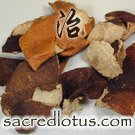 Chen Pi9-12 gRegulate the Qi
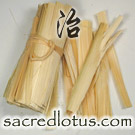 Zhu Ru9-12 gCool and Transform Phlegm-Heat
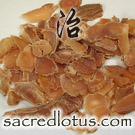 Ren Shen3 gTonify Qi
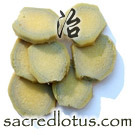 Sheng Jiang6-9 gWarm, Spicy Herbs that Release the Exterior
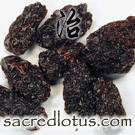 Da Zao5 piecesTonify Qi
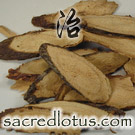 Gan Cao3-6 gTonify Qi
Preparation & dosage
How is Ju Pi Zhu Ru Tang prepared?
Ju Pi Zhu Ru Tang is prepared as a standard water decoction of all six herbs, taken warm in divided doses, with Sheng Jiang used fresh (uncooked) rather than dried. The classical method in the Jin Gui Yao Lue calls for the ingredients to be simmered together in water down to a reduced volume, strained, and the resulting liquid divided into several warm doses through the day.
In modern practice the herbs are simmered together for roughly 20–30 minutes as a standard decoction. Some practitioners prefer fresh bamboo shavings over the dried, scraped strips for a stronger heat-clearing effect when available, though both forms are used. Sheng Jiang is always the fresh, uncooked rhizome (as distinct from dried Gan Jiang), consistent with its traditional role as an anti-nausea herb.
Source: classical preparation method (Jin Gui Yao Lue) and modern decoction practice cross-referenced against multiple online sources and Bensky & Barolet, Formulas & Strategies. Traditional-use framing; not medical advice.
Safety — read before use
What are the cautions for Ju Pi Zhu Ru Tang?
This formula is built for hiccup and vomiting from Stomach deficiency with mild heat — it is not appropriate for cold-type hiccup, for strong excess-heat patterns, or as a long-term tonic without addressing the underlying illness. Correctly distinguishing deficiency-heat from either pure cold or pure excess heat is central to its traditional use.
- Not for cold-type hiccup: hiccup from Stomach deficiency-cold (a pale tongue, cold limbs, and a desire for warmth) calls for a warming formula such as Ding Xiang Shi Di Tang, not this cooling one.
- Not for strong excess heat: a forceful, replete heat pattern with high fever or marked constipation needs a stronger heat-clearing or purgative strategy; this formula's heat-clearing action is mild and paired with tonification, not designed to drain strong excess fire.
- Ren Shen and Gan Cao content: as with other Ren-Shen-containing formulas, traditional sources caution against combining with Li Lu (Veratrum) under the “eighteen antagonisms”; Gan Cao is likewise traditionally cautioned in combination with Hai Zao, Gan Sui, Da Ji, and Yuan Hua, and long-term or high-dose licorice use is cautioned in the presence of edema, hypertension, or low potassium.
- Pregnancy and long-standing illness: because the pattern often follows a debilitating illness or difficult labor, use should be supervised by a qualified TCM practitioner who can confirm the deficiency-heat pattern rather than a different cause of persistent hiccup or vomiting.
Source: cautions cross-referenced against multiple online sources and Bensky & Barolet, Formulas & Strategies (contraindications; eighteen antagonisms); Sacred Lotus sources & references confirm the formula's Ren Shen and Gan Cao content. Reference note, not medical advice.
Originally Appeared In:
- Essentials from the Golden Cabinet (Jin Gui Yao Lue)
Notes:
How does Ju Pi Zhu Ru Tang differ from Xuan Fu Dai Zhe Tang and Ding Xiang Shi Di Tang?
All three formulas treat hiccup or belching from a weakened Stomach, but they diverge on whether the underlying problem is heat, phlegm, or cold — a distinction that determines which one is appropriate. Matching the correct formula to the correct variant, rather than treating “hiccup” as one condition, is the traditional differentiating principle.
- vs Xuan Fu Dai Zhe Tang (Inula and Hematite Decoction): also a Stomach-deficiency formula built around Ban Xia, Sheng Jiang, Ren Shen, Da Zao, and Gan Cao, but it adds heavy, descending Xuan Fu Hua and Dai Zhe Shi to treat a more excess-leaning pattern of phlegm-turbidity with epigastric focal distention and repeated belching — a phlegm-and-qi-counterflow presentation rather than the heat-and-qi-deficiency one this formula addresses. It appears in the Shang Han Lun after a Taiyang disorder was mistakenly treated by sweating, purging, or vomiting.
- vs Ding Xiang Shi Di Tang (Clove and Persimmon Calyx Decoction): treats the cold-type mirror image of this pattern — hiccup from Stomach deficiency-cold rather than deficiency-heat — using warming Ding Xiang (clove) and astringent, qi-directing Shi Di (persimmon calyx) alongside Ren Shen and Sheng Jiang. Where Ju Pi Zhu Ru Tang's tongue is red and dry, Ding Xiang Shi Di Tang's is pale with a moist, thin white coat.
Classical source: Jin Gui Yao Lue (Essential Prescriptions from the Golden Cabinet), attributed to Zhang Zhongjing, Han dynasty — the formula appears in the chapter on vomiting, hiccup, and diarrhea disorders. Some later formularies note a modification of adding Huang Lian for more pronounced heat, or Mai Men Dong and Shi Hu when accompanying fluid/yin deficiency is prominent.
Source: formula-family differentiation and modification notes cross-referenced against multiple online sources and Bensky & Barolet, Formulas & Strategies; classical attribution from the Jin Gui Yao Lue.
Sources & References
Compiled and edited by Thomas Dehli, Founder & Editor, Sacred Lotus Updated
The information here is referenced from numerous sources — teachers, practitioners, class notes from Five Branches University, the books below, and the published research literature, with citations given as resolvable PubMed identifiers. Where sources disagree, I have flagged the discrepancies directly. If facts couldn't be verified, I have left them out. How we source our content.
Reference information for students and practitioners — not medical advice. Consult a qualified practitioner. Terms of use.
Chinese Formulas Books & References
 https://amzn.to/4fYI3f8
 https://amzn.to/4j55NRA
 https://amzn.to/4gMROyv
 https://amzn.to/4h7msSK