

Ma Huang Tang (Ephedra Decoction)
Ma Huang Tang
Ephedra Decoction
- Category
- Formulas that Release the Exterior
- Subcategory
- Formulas that Release Exterior Cold
- Ingredients
- 4 herbs
Actions
What does Ma Huang Tang do?
Ma Huang Tang induces sweating to forcefully release the exterior and disperse wind-cold, while simultaneously diffusing Lung qi to relieve cough and wheezing. It is the classical prototype of the "acrid, warm, exterior-releasing" formula category — built for a strong pathogen with no outlet, not a mild or lingering cold.
- Releases the exterior / induces sweating — Ma Huang and Gui Zhi together open the pores and drive out wind-cold that has bound the exterior with no sweat escaping.
- Disperses wind-cold — clears the pathogen from the muscle layer (Taiyang stage) before it can press further inward.
- Diffuses and downbears Lung qi — Ma Huang's upward-diffusing action paired with Xing Ren's downward-directing action relieves the wheezing/cough and chest fullness caused by constrained Lung qi.
- Harmonizes and moderates — honey-fried Gan Cao tempers the harsh, drying force of Ma Huang and Gui Zhi so the sweating stays controlled rather than excessive.
Source: Shang Han Lun (Zhang Zhongjing); cross-referenced against multiple online sources.
Indications
What is Ma Huang Tang used for?
Ma Huang Tang is the classical formula for the early, excess stage of wind-cold invasion — a common cold or flu-type illness with fever, strong chills, and no sweating at all. It is not used once sweat is present or once the pathogen has moved past the exterior.
- Common cold or early-stage influenza-type illness with fever and pronounced aversion to cold
- Complete absence of sweating despite fever (the defining excess-type sign)
- Generalized body aches, headache, and stiffness of the neck and back
- Cough or wheezing with a sensation of fullness or oppression in the chest, from Lung qi that cannot diffuse
- Nasal congestion with a stuffy, blocked sensation
- Some historical/extended use for the early eruptive stage of measles and for wind-cold-type wheezing disorders, when the same no-sweat excess presentation is present
Source: Shang Han Lun (Zhang Zhongjing); Chen & Chen, Chinese Medical Herbology and Pharmacology; cross-referenced against multiple online sources.
Western Uses:
What conditions is Ma Huang Tang used for in modern practice?
Ma Huang Tang is the classic strong diaphoretic for a tightly-bound exterior wind-cold excess (fever and chills with NO sweating, body aches, and wheezing), so it is referenced for early cold and constrained-Lung presentations: the common cold, asthma, and cough.
It is chosen for the sealed-exterior pattern (and is contraindicated once sweating appears or in deficiency). Because Ma Huang (Ephedra) contains ephedrine-type alkaloids, this is a potent formula requiring practitioner supervision and caution in anyone with heart or blood-pressure issues; asthma is a serious condition and a severe attack is life-threatening — not treatable by herbs in place of inhalers or emergency care. Traditional-use correlates only, not a treatment claim.
Source: Sacred Lotus sources & references (pattern) + Bensky & Barolet, Formulas & Strategies; biomedical correlates as reference only. Not medical advice.
Ingredients
4 substances in Ma Huang Tang — each links to its full herb monograph.
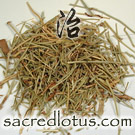 Ma Huang9 gWarm, Spicy Herbs that Release the Exterior
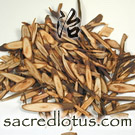 Gui Zhi6 gWarm, Spicy Herbs that Release the Exterior
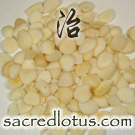 Xing Ren9-12 gRelieve Coughing and Wheezing
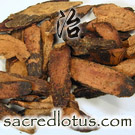 Zhi Gan Cao3 gTonify Qi
Preparation & dosage
How is Ma Huang Tang prepared?
Ma Huang Tang is a decoction (tang) in which the Ma Huang is boiled first and the foam skimmed off, before the remaining herbs are added — a classical step meant to reduce the herb's tendency to cause nausea or palpitations. Gan Cao is used honey-fried (zhi gan cao) rather than raw, per its standard processing for harmonizing formulas.
- Ma Huang is decocted alone first in water and the surface foam removed.
- Gui Zhi, Xing Ren, and honey-fried Zhi Gan Cao are then added and the whole is decocted together.
- The strained decoction is taken warm.
- Classically the patient is then covered lightly to encourage a mild, even sweat over the whole body — not a drenching sweat confined to one area.
- The classical instruction is to stop dosing once sweating occurs; the formula is not continued once its purpose — opening the exterior — has been achieved.
Source: Shang Han Lun (Zhang Zhongjing); cross-referenced against multiple online sources.
Safety — read before use
What are the cautions for Ma Huang Tang?
Ma Huang Tang is contraindicated whenever sweating is already present, since it is designed only for the sweat-less excess pattern; using it in a deficiency-type or already-sweating exterior case risks excessive sweating and damage to yang qi and fluids. The classical teaching is to stop dosing as soon as sweating begins.
- Not for Taiyang wind-cold with spontaneous sweating (that pattern calls for Gui Zhi Tang, not this formula) — see comparison notes below.
- Avoid in patients with Yin deficiency, Blood deficiency, or general qi deficiency, and in cases of profuse pre-existing sweating, as the strong diaphoresis can further deplete fluids and righteous qi.
- Used with caution, or avoided, in pregnancy, in the elderly and constitutionally weak, and in those with cardiovascular disease, hypertension, or hyperthyroidism, given Ma Huang's stimulating, pressor-type action.
- Ma Huang (Ephedra) contains ephedrine-type alkaloids. Ephedra/ephedrine-containing products are restricted or banned as dietary supplements in a number of countries (for example, the U.S. FDA's 2004 ban on ephedrine-alkaloid supplements) and ephedrine is a controlled/monitored substance in many jurisdictions and in competitive sport. This is provided as neutral public-safety reference, not as administration guidance.
Source: Shang Han Lun (Zhang Zhongjing); Bensky & Barolet, Formulas & Strategies; cross-referenced against multiple online sources.
Originally Appeared In:
- On Cold Damage (Shang Han Lun)
Notes:
How does Ma Huang Tang differ from Gui Zhi Tang?
Ma Huang Tang and Gui Zhi Tang are the two archetypal Taiyang exterior formulas from the Shang Han Lun, and the textbook contrast between them is excess versus deficiency: Ma Huang Tang treats wind-cold excess with no sweating, while Gui Zhi Tang treats wind-cold deficiency (wind-strike) with spontaneous sweating. Getting this distinction backward is a classic teaching error, since giving Ma Huang Tang's strong diaphoresis to an already-sweating, deficient patient can injure yang and fluids, while Gui Zhi Tang alone will not open a tightly bound, sweat-less excess exterior.
- Ma Huang Tang — excess pattern: no sweating, strong aversion to cold, pronounced body aches, floating-tight pulse. Ma Huang + Gui Zhi force the pores open.
- Gui Zhi Tang — deficiency pattern: spontaneous sweating, aversion to wind more than cold, floating-moderate/relaxed pulse. Gui Zhi + Bai Shao (with no Ma Huang) gently harmonizes Ying and Wei qi rather than forcing a sweat.
Ma Huang Tang comes from the Shang Han Lun ("Treatise on Cold Damage"), attributed to Zhang Zhongjing (Han dynasty), where it stands as the primary formula for Taiyang-stage wind-cold excess. Well-known later modifications include adding Shi Gao (gypsum) when exterior cold has begun to transform into interior heat, as in Ma Xing Shi Gan Tang, and combining with Shi Gao, Sheng Jiang, and Da Zao in Da Qing Long Tang for a more severe exterior cold with internal heat and restlessness.
Source: Shang Han Lun (Zhang Zhongjing); Bensky & Barolet, Formulas & Strategies; cross-referenced against multiple online sources.
Sources & References
Compiled and edited by Thomas Dehli, Founder & Editor, Sacred Lotus Updated
The information here is referenced from numerous sources — teachers, practitioners, class notes from Five Branches University, the books below, and the published research literature, with citations given as resolvable PubMed identifiers. Where sources disagree, I have flagged the discrepancies directly. If facts couldn't be verified, I have left them out. How we source our content.
Reference information for students and practitioners — not medical advice. Consult a qualified practitioner. Terms of use.
Chinese Formulas Books & References
 https://amzn.to/4fYI3f8
 https://amzn.to/4j55NRA
 https://amzn.to/4gMROyv
 https://amzn.to/4h7msSK