

Da Qing Long Tang (Major Bluegreen Dragon Decoction)
Da Qing Long Tang
Major Bluegreen Dragon Decoction
- Category
- Formulas that Release the Exterior
- Subcategory
- Formulas that Release Exterior Cold
- Ingredients
- 7 herbs
Actions
What does Da Qing Long Tang do?
Da Qing Long Tang is the most forceful diaphoretic (sweat-inducing) formula in the classical Shang Han Lun repertoire. It powerfully releases a tightly bound exterior wind-cold and, at the same time, clears the interior heat that builds up when a sealed exterior traps yang qi from venting — the combination that produces both severe body aches with no sweating AND restless irritability.
The seven ingredients divide by role:
- Chief: Ma Huang, in a notably large dose (roughly double the amount used in the base formula Ma Huang Tang), forces open the pores to induce a strong sweat and break a tightly bound exterior.
- Deputies: Gui Zhi supports Ma Huang’s release of the exterior and warms the channels; Shi Gao clears the interior heat responsible for the irritability (fan zao), offsetting the warming, drying effect of so much Ma Huang and Gui Zhi.
- Assistants: Xing Ren directs rebellious Lung qi downward alongside Ma Huang, easing any cough or wheeze; Sheng Jiang adds its own mild exterior-releasing action and harmonizes the Stomach.
- Envoys: Gan Cao and Da Zao harmonize the formula, protect Stomach qi and fluids, and moderate the harshness of combining so much Ma Huang with cold, heavy Shi Gao.
Source: formula composition (Sacred Lotus record) + Bensky & Barolet, Formulas & Strategies (chief/deputy/assistant/envoy analysis; Shang Han Lun origin). Traditional-use framing; not medical advice.
Indications
What is Da Qing Long Tang used for?
Da Qing Long Tang treats a severe, tightly bound exterior wind-cold excess pattern that has begun to generate interior heat. It is distinguished from a plain wind-cold exterior pattern by one key sign: restlessness or irritability (fan zao), which marks heat trapped inside because the sealed exterior will not let yang qi vent.
Classic presentation:
- Exterior wind-cold excess: pronounced chills and fever, severe body and joint aches, and — critically — NO sweating; the presence of sweat rules this formula out.
- Interior heat / irritability: restlessness, agitation, or a feeling of vexation (fan zao), signaling heat constrained inside by the closed exterior.
- Pulse: floating and tight (cold-dominant presentation) or floating and rapid (more pronounced heat), per the Sacred Lotus record.
- Tongue: thin white or slightly yellow coat.
Source: Sacred Lotus sources & references on pattern/pulse/tongue (Sacred Lotus record) + Bensky & Barolet, Formulas & Strategies; Shang Han Lun (Treatise on Cold Damage), line 38. Traditional-use framing; not medical advice.
Western Uses:
What is Da Qing Long Tang used for in modern practice?
In modern practice, Da Qing Long Tang is referenced for a brief, severe febrile onset — high fever with marked chills, pronounced body aches, and restlessness, without any sweating — the kind of presentation seen at the very start of an acute viral illness such as influenza or a severe cold. Because Ma Huang contains ephedrine-type alkaloids, its traditional strong exterior-releasing and Lung-opening action has also led practitioners to reference the formula (usually modified) for cough/wheeze patterns involving both cold and heat.
These biomedical correlates describe the formula’s traditional use pattern, not a claim that it treats any diagnosed disease. Given how potent it is, Da Qing Long Tang is traditionally used briefly, only for the acute excess-pattern window, and stopped once sweating begins (see cautions). Any use for a diagnosed condition belongs with a qualified practitioner and appropriate medical care.
Source: traditional-use correlates summarized from Bensky & Barolet, Formulas & Strategies; reference only, not a treatment claim.
Ingredients
7 substances in Da Qing Long Tang — each links to its full herb monograph.
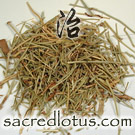 Ma Huang12 gWarm, Spicy Herbs that Release the Exterior
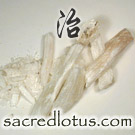 Shi Gao24 gDrain Fire
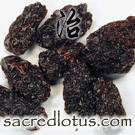 Da Zao10 piecesTonify Qi
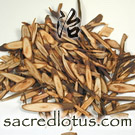 Gui Zhi6 gWarm, Spicy Herbs that Release the Exterior
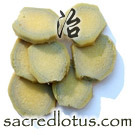 Sheng Jiang9 gWarm, Spicy Herbs that Release the Exterior
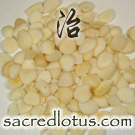 Xing Ren6 gRelieve Coughing and Wheezing
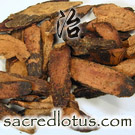 Zhi Gan Cao6 gTonify Qi
Preparation & dosage
How is Da Qing Long Tang prepared?
Traditionally decocted as a strong, single-course diaphoretic dose, not sipped like a routine daily tea. In the classical method, Ma Huang is simmered first and any foam skimmed off before the remaining herbs are added; Shi Gao, being a mineral substance, is typically crushed and added early so it has time to release its properties into the decoction.
Because the formula is so strong, the classical instruction is to stop further doses once a sweat is achieved — continuing to dose after sweating has already occurred risks the excessive-sweating and yang-collapse cautions described above. Modern clinical use commonly reduces the classical amounts of Ma Huang and Da Zao.
Source: Sacred Lotus record + Bensky & Barolet, Formulas & Strategies (preparation notes); Shang Han Lun (Treatise on Cold Damage), classical instruction to stop once sweating occurs.
Decoction, given as a single strong course; the classical instruction is to stop further doses once sweating is achieved, never repeat after sweat has broken. Reference relative amounts (Bensky & Barolet): Ma Huang 12-18 g (roughly double a standard Ma Huang Tang dose); Gui Zhi 6 g; Gan Cao 6 g; Xing Ren 6-9 g; Sheng Jiang 9 g; Da Zao 3-10 pieces; Shi Gao 12-24 g (crushed, added early in the decoction). Ranges vary by source/edition; reference only, not a prescription.
Safety — read before use
What are the cautions for Da Qing Long Tang?
Da Qing Long Tang is the strongest diaphoretic formula in the classical repertoire, and the Shang Han Lun itself warns against its misuse. It is appropriate ONLY for a true excess pattern with a tightly bound exterior and no sweating; once sweat appears, or if the pulse is weak, faint, or deficient rather than floating and tight, the formula is contraindicated.
- Excess pattern only, no sweating: reserved for a sealed exterior with no perspiration. Do not use if the patient is already sweating, has aversion to wind, and a weak pulse — signs of Wind-Cold with interior deficiency rather than excess — per the Sacred Lotus record and the classical text.
- Risk of overuse/misuse: excessive or repeated dosing can drive profuse sweating that depletes yang qi and fluids (“collapse of yang”), classically described as producing cold limbs, muscle twitching or tremor, and profound weakness. The classical instruction is to give a single dose and stop once sweating is achieved — never repeat once sweat has broken.
- Contraindicated with a weak/deficient pulse: a thin, faint, or deficient pulse signals underlying deficiency rather than excess; this formula should not be used in that setting.
- General caution: the large dose of Ma Huang and the formula’s forceful diaphoretic action call for caution or avoidance in pregnancy, in the elderly or frail, and in anyone with cardiovascular sensitivity to ephedrine-type alkaloids; Xing Ren is mildly toxic in excess and should stay within reference dosing.
Source: Sacred Lotus record + Bensky & Barolet, Formulas & Strategies (cautions); Shang Han Lun (Treatise on Cold Damage), line 38 (classical contraindication for a weak/faint pulse with sweating and aversion to wind). Traditional-use framing; not medical advice.
Originally Appeared In:
- On Cold Damage (Shang Han Lun)
Notes:
How does Da Qing Long Tang compare to Ma Huang Tang, Xiao Qing Long Tang, and Yue Bi Tang?
Da Qing Long Tang is built directly on Ma Huang Tang, with the addition of Shi Gao (plus Sheng Jiang and Da Zao) to address interior heat that a plain exterior-releasing formula cannot touch.
- vs Ma Huang Tang: Da Qing Long Tang is essentially Ma Huang Tang with the Ma Huang dose roughly doubled, plus Shi Gao, Sheng Jiang, and Da Zao added. Use Ma Huang Tang for a plain exterior wind-cold excess pattern with no sweating and no interior heat; move to Da Qing Long Tang once restlessness/irritability (fan zao) signals trapped interior heat.
- vs Xiao Qing Long Tang: both are “Bluegreen Dragon” decoctions built on a Ma Huang-and-Gui Zhi exterior-releasing core, but Xiao Qing Long Tang pairs that core with Gan Jiang, Xi Xin, Wu Wei Zi, Ban Xia, and Bai Shao to warm and transform congested phlegm/thin fluids in the Lungs (cough or wheeze with thin, watery sputum). It contains no Shi Gao and does not address interior heat.
- vs Yue Bi Tang: Yue Bi Tang shares Ma Huang, Shi Gao, Sheng Jiang, Da Zao, and Gan Cao but drops Gui Zhi and Xing Ren; it targets wind edema/water swelling with heat rather than the severe, tightly bound exterior pattern with body aches that Da Qing Long Tang addresses.
Source: Bensky & Barolet, Formulas & Strategies (formula-family comparisons); Sacred Lotus records for Ma Huang Tang and Xiao Qing Long Tang composition.
Clinical Studies & Research:
Is there modern research on Da Qing Long Tang?
Modern research on Da Qing Long Tang (also transliterated Daqinglong Decoction) is limited and mostly preclinical/analytical rather than clinical. Recent studies use mass-spectrometry profiling and network pharmacology to identify the formula’s active compounds and predict mechanisms, rather than testing it directly in patients.
- Influenza (preclinical, network pharmacology): UPLC-Q-TOF/MS profiling combined with network pharmacology identified 121 compounds in Daqinglong Decoction, 5 with good binding to influenza-virus-related targets, with predicted mechanisms involving reduced inflammatory signaling (e.g., IL-10, TNF) and immune-pathway modulation (PI3K-Akt, HIF-1) (PMID 37962031).
- Serum pharmacochemistry (preclinical): analysis of serum components after oral administration identified ephedrine, demethylephedrine, glycyrrhetinic acid, and related compounds as core active constituents, with predicted activity via MAPK, cAMP, and cGMP-PKG signaling pathways (PMID 35850846).
Sources: PubMed 37962031; PubMed 35850846. Research context on the formula’s chemical/pharmacological profile, not a therapeutic claim; direct clinical-trial evidence is lacking.
Sources & References
Compiled and edited by Thomas Dehli, Founder & Editor, Sacred Lotus Updated
The information here is referenced from numerous sources — teachers, practitioners, class notes from Five Branches University, the books below, and the published research literature, with citations given as resolvable PubMed identifiers. Where sources disagree, I have flagged the discrepancies directly. If facts couldn't be verified, I have left them out. How we source our content.
Reference information for students and practitioners — not medical advice. Consult a qualified practitioner. Terms of use.
Chinese Formulas Books & References
 https://amzn.to/4fYI3f8
 https://amzn.to/4j55NRA
 https://amzn.to/4gMROyv
 https://amzn.to/4h7msSK