

Qing Hao Bie Jia Tang (Artemisia Annua and Soft Shelled Turtle Shell Decoction)
Qing Hao Bie Jia Tang
Artemisia Annua and Soft Shelled Turtle Shell Decoction
- Category
- Formulas that Clear Heat
- Subcategory
- Formulas that Clear Heat from Deficiency
- Ingredients
- 5 herbs
Actions
What does Qing Hao Bie Jia Tang do?
Qing Hao Bie Jia Tang (Artemisia Annua and Soft-Shelled Turtle Shell Decoction) nourishes yin and vents heat that has retreated into the yin level (the deepest stratum in Wu Ju-tong’s warm-disease framework) after an acute febrile illness, drawing that lingering heat back out rather than simply cooling it in place. It comes from the late-stage, “mopping-up” chapter of Wen Bing Tiao Bian, for when the main battle of a warm-febrile disease has passed but heat remains hidden in the yin.
- Leads heat out from the yin level: Qing Hao (Herba Artemisiae Annuae) is light and aromatic, able to penetrate the yin level and carry lingering heat back out toward the surface where it can disperse.
- Enters yin and anchors the strategy: Bie Jia (Carapax Trionycis, soft-shelled turtle shell), a yin-nourishing shell substance, penetrates deeply into the yin level and is classically described as leading Qing Hao inward to reach heat that Qing Hao alone could not find, while Qing Hao in turn leads that heat back out through Bie Jia’s yin-nourishing action.
- Nourish yin and clear heat: Sheng Di Huang and Zhi Mu nourish yin and generate fluids that the lingering heat has consumed.
- Cools blood and assists venting: Mu Dan Pi clears heat from the blood and supports Qing Hao’s outward-venting action.
Source: Sacred Lotus sources & references (composition) + Bensky & Barolet, Formulas & Strategies; Chen & Chen, Chinese Herbal Formulas and Applications (Qing Hao/Bie Jia strategy). Traditional-use framing; not medical advice.
Indications
What is Qing Hao Bie Jia Tang used for?
Qing Hao Bie Jia Tang treats heat smoldering in the yin level, usually in the later stage of a warm-febrile disease — its single most distinctive diagnostic sign is a fever that rises at night and recedes by morning without sweating, which points to heat still lodged in yin rather than being resolved and vented out through the exterior.
- Diagnostic fever pattern: feverishness that is more pronounced at night and subsides toward morning without accompanying sweat — the key sign distinguishing this pattern from heat that resolves via diaphoresis.
- Yin-deficiency/fluid-damage signs: emaciation or weight loss following the illness, reflecting fluids and yin consumed over the course of the disease.
- Residual heat in a resolving febrile illness: low-grade or lingering fever persisting after the acute, more dramatic phase of a warm-febrile disease has otherwise settled.
Tongue and pulse: a red tongue with a scanty coating; a thin, rapid pulse.
Source: Sacred Lotus sources & references (pattern/tongue/pulse) + Bensky & Barolet, Formulas & Strategies (Wen Bing yin-level heat presentation). Traditional-use framing; not medical advice.
Western Uses:
What conditions is Qing Hao Bie Jia Tang used for in modern practice?
Qing Hao Bie Jia Tang clears smouldering heat from yin deficiency in the late stage of a febrile illness (a night fever that abates by morning, with no sweating), so it is referenced for lingering low-grade fevers and chronic depleting conditions: consumptive fever (phthisis/tuberculosis), summer fever in children, chronic pyelonephritis, renal tuberculosis, chronic nephritis, and the advanced stages of various infectious diseases.
It is chosen for the yin-deficient smouldering-heat pattern, not for a diagnosis. Tuberculosis (pulmonary or renal) is a serious, infectious, notifiable disease requiring medical treatment; a persistent fever always needs assessment. This formula is a traditional adjunct, not a substitute. Traditional-use correlates only, not a treatment claim.
Source: Sacred Lotus sources & references (pattern) + Bensky & Barolet, Formulas & Strategies; biomedical correlates as reference only. Not medical advice.
Ingredients
5 substances in Qing Hao Bie Jia Tang — each links to its full herb monograph.
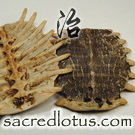 Bie Jia15 gTonify Yin
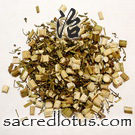 Qing Hao6 gClear and Relieve Summerheat
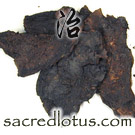 Sheng Di Huang12 gCool the Blood
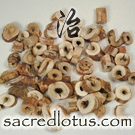 Mu Dan Pi9 gCool the Blood
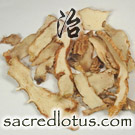 Zhi Mu6 gDrain Fire
Preparation & dosage
How is Qing Hao Bie Jia Tang prepared?
The formula is prepared as a water decoction, with attention paid to each herb’s physical nature: the hard shell material Bie Jia is decocted first to extract its substance, while the aromatic, volatile Qing Hao is added later and not over-boiled, to preserve its penetrating, heat-venting quality.
- Bie Jia (turtle shell): as a dense animal-shell material, it is traditionally simmered separately or for longer before the other herbs are added, similar to the handling of other mineral/shell ingredients in decoctions.
- Qing Hao (Artemisia annua): light and aromatic; classically added toward the end of decoction, since prolonged boiling disperses the volatile qualities responsible for its outward-venting action.
- Sourcing note: Bie Jia in the modern trade is commonly sourced from farmed soft-shelled turtle (Trionychidae); buyers concerned with sourcing should look for farmed/aquacultured material.
Source: Bensky & Barolet, Formulas & Strategies (herb-specific decoction handling). Traditional-use framing; not medical advice.
Safety — read before use
What are the cautions for Qing Hao Bie Jia Tang?
Qing Hao Bie Jia Tang is intended for genuine yin-deficiency heat lingering after a febrile illness — it is not appropriate for exterior patterns with active chills and fever, for excess-heat patterns, or where damp is prominent.
- Not for an unresolved exterior pathogen: if fever and chills reflect a pathogen still at the exterior, this yin-nourishing, interior-venting formula is not the correct strategy.
- Not for excess-heat or damp-heat patterns: the rich, yin-nourishing herbs (Sheng Di Huang in particular) can be cloying and are not suited to conditions where dampness, rather than yin deficiency, predominates.
- Caution with weak digestion: Sheng Di Huang’s rich, cloying quality can burden a weak Spleen, and Zhi Mu’s cold, moist nature can aggravate loose stools.
- Persistent or unexplained fever warrants professional evaluation to establish an accurate diagnosis before attributing it to yin-level heat.
- Animal-derived ingredient: Bie Jia (soft-shelled turtle shell/plastron) is an animal-derived material; buyers and practitioners concerned with sourcing and welfare should confirm farmed/legally sourced material through their supplier.
Source: Bensky & Barolet, Formulas & Strategies (cautions for yin-nourishing, heat-venting Wen Bing formulas). Traditional-use framing; not medical advice.
Originally Appeared In:
- Systematic Differentiation of Warm Diseases (Wen Bing Tiao Bian)
Notes:
How does Qing Hao Bie Jia Tang differ from Qing Gu San and Dang Gui Liu Huang Tang?
All three formulas address heat associated with yin deficiency, but they are distinguished by the stage and specific character of that heat — and the fever-timing pattern is the key diagnostic differentiator.
- vs Qing Gu San (Clear the Bone Powder): Qing Gu San treats chronic “steaming bone” (gu zheng) yin-deficiency heat generally, without the specific late-warm-disease context or the night-fever/morning-clear-without-sweat timing that marks Qing Hao Bie Jia Tang; it is built around a broader set of bone/yin-cooling herbs rather than the Qing Hao/Bie Jia venting pair.
- vs Dang Gui Liu Huang Tang: that formula treats yin-deficiency fire specifically presenting with night sweats — heat forcing its way out through sweating as yin fails to contain yang at night. Qing Hao Bie Jia Tang’s fever, by contrast, recedes toward morning without sweating, indicating the heat is still lodged/hidden in the yin level rather than being expelled through the pores — a different mechanism calling for a heat-leading, not sweat-restraining, strategy.
Classical source: Wen Bing Tiao Bian (Systematic Differentiation of Warm-Heat Diseases), by Wu Ju-tong (Wu Tang), 1798 CE — a foundational text of the Wen Bing (warm-disease) school, in the section addressing residual heat remaining in the yin level in the aftermath of an acute febrile illness.
Note on excess-vs-deficiency heat mimicry: as with several yin-deficiency-fever formulas, the pattern here can superficially resemble an ongoing excess-heat illness; the absence of sweating with the fever, the red-but-scanty-coated tongue, and the thin rapid (rather than full, forceful) pulse are the differentiating signs pointing to lingering yin-level heat rather than active excess heat.
Source: Bensky & Barolet, Formulas & Strategies; Chen & Chen, Chinese Herbal Formulas and Applications (classical source, formula comparisons).
Clinical Studies & Research:
Is there modern research on Qing Hao Bie Jia Tang?
Yes — modern research on Qinghao Biejia Decoction (QBD) spans network-pharmacology/mechanistic studies and a body of clinical research, though much of the clinical work has been applied to conditions well outside the formula’s classical late-warm-disease indication, most notably systemic lupus erythematosus (SLE). This reflects modern TCM practice matching the formula to any presentation showing a similar yin-deficiency-heat pattern, rather than new evidence for its original indication specifically.
- Systemic lupus erythematosus (meta-analysis of 9 RCTs, 655 participants): QBD added to conventional medication improved overall response rate and reduced SLE disease-activity and TCM symptom scores compared with conventional medication alone (PMID 34421590).
- Cancer-related fever (literature review and case report, 2026): traces QBD’s classical “latent heat in the yin” theory forward to its use, often modified, for fever associated with lung cancer, and reports one clinical case (PMID 41797778).
- Perimenopausal insomnia (randomized controlled trial, n=160): QBD combined with auricular acupoint seed embedding improved sleep-quality measures and TCM syndrome scores more than either therapy alone or education-only control (PMID 42021579).
- Chronic liver disease (network pharmacology): computational modeling proposed MAPK and PI3K/AKT signaling pathways as candidate mechanisms for QBD’s anti-inflammatory and anti-tumor properties in a liver-disease context (PMID 36277879).
Sources: PubMed 34421590; PubMed 41797778; PubMed 42021579; PubMed 36277879. Research context, not a therapeutic claim; the SLE and insomnia trials are clinical but for conditions distinct from the formula’s classical indication, and the liver-disease work is computational/mechanistic (network pharmacology), not clinical evidence.
Sources & References
Compiled and edited by Thomas Dehli, Founder & Editor, Sacred Lotus Updated
The information here is referenced from numerous sources — teachers, practitioners, class notes from Five Branches University, the books below, and the published research literature, with citations given as resolvable PubMed identifiers. Where sources disagree, I have flagged the discrepancies directly. If facts couldn't be verified, I have left them out. How we source our content.
Reference information for students and practitioners — not medical advice. Consult a qualified practitioner. Terms of use.
Chinese Formulas Books & References
 https://amzn.to/4fYI3f8
 https://amzn.to/4j55NRA
 https://amzn.to/4gMROyv
 https://amzn.to/4h7msSK