

Qing Re Zhi Beng Tang (Clear Heat and Stop Excessive Uterine Bleeding Decoction)
Qing Re Zhi Beng Tang
Clear Heat and Stop Excessive Uterine Bleeding Decoction
- Category
- Formulas that Stop Bleeding
- Subcategory
- Formulas that Clear Heat and Stop Bleeding
- Ingredients
- 10 herbs
Actions
What does Qing Re Zhi Beng Tang do?
Qing Re Zhi Beng Tang clears heat from the Blood and firmly stops sudden, heavy uterine bleeding (beng lou, “flooding and spotting”). It treats bleeding caused by heat forcing Blood recklessly out of the vessels, while also nourishing Yin so the underlying deficiency that let heat flare is addressed, not just the immediate hemorrhage.
The ten ingredients divide by role:
- Chief: Sheng Di Huang — cools Blood at the nutritive level, nourishes Yin, and generates fluids depleted by the bleeding.
- Deputies: Huang Qin, Huang Bai, and Zhi Zi — a bitter, cold heat-clearing trio that drains source Fire from the upper, middle, and lower burners, removing the heat that is driving the hemorrhage.
- Assistants: Di Yu, charred Ce Bai Ye, and Chun Pi are astringent hemostatics that act directly to stop the bleeding; Mu Dan Pi cools Blood while gently moving it so the astringents do not cause stagnation; Bai Shao and calcined Gui Ban nourish Yin and Blood, restraining the deficiency-heat that allows the bleeding to recur.
Source: Sacred Lotus sources & references + Bensky & Barolet, Formulas & Strategies (chief/deputy/assistant analysis). Traditional-use framing; not medical advice.
Indications
What is Qing Re Zhi Beng Tang used for?
Qing Re Zhi Beng Tang treats beng lou — sudden, profuse, or persistently heavy uterine bleeding — arising from Heat in the Blood, usually with an underlying Yin deficiency that allows the heat to flare. Because Heat agitates the Blood and damages the vessels that should contain it, the bleeding tends to be sudden and copious rather than a slow trickle.
Its classic clinical presentation:
- Bleeding pattern: heavy, sudden uterine bleeding (or prolonged spotting) with bright-red blood.
- Accompanying heat signs: dry mouth and lips, thirst, and a tendency toward irritability as internal Heat and Yin deficiency coexist.
Tongue and pulse: a yellow tongue coating with a rapid pulse, consistent with an active Heat pattern.
Source: Sacred Lotus sources & references on pattern/tongue/pulse + Bensky & Barolet, Formulas & Strategies. Traditional-use framing; not medical advice.
Western Uses:
What is Qing Re Zhi Beng Tang used for in modern practice?
In modern practice, Qing Re Zhi Beng Tang’s Heat-in-the-Blood pattern is referenced for episodes of heavy, bright-red uterine bleeding — the kind described in Western terms as dysfunctional or abnormal uterine bleeding, menorrhagia, or metrorrhagia. This traditional pattern (sudden, profuse, bright-red bleeding with signs of heat) does not map to any single biomedical diagnosis; it is a functional presentation that can arise from several underlying causes.
This biomedical correlate is offered as a reference to the formula’s traditional use, not as a claim that it treats any diagnosed condition. Heavy or prolonged uterine bleeding warrants evaluation by a qualified clinician to rule out structural or systemic causes; any herbal use belongs alongside that care, not in place of it.
Source: traditional-use correlates summarized from Bensky & Barolet, Formulas & Strategies; reference only, not a treatment claim.
Ingredients
10 substances in Qing Re Zhi Beng Tang — each links to its full herb monograph.
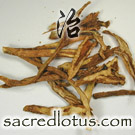 Huang Qin15 gstir-friedClear Heat and Dry Dampness
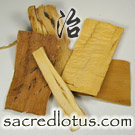 Huang Bai9 gClear Heat and Dry Dampness
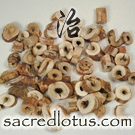 Mu Dan Pi9 gCool the Blood
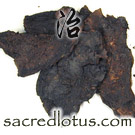 Sheng Di Huang24 gCool the Blood
 Zhi Zi9 gDrain Fire
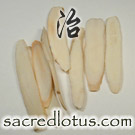 Bai Shao30 gTonify Blood
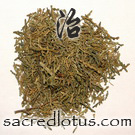 Ce Bai Ye30 gCe Bai Ye Tan, Brown BiotaStop Bleeding
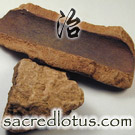 Chun Pi30 gAstringe, Stabilize, Bind
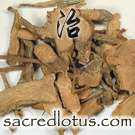 Di Yu24 gStop Bleeding
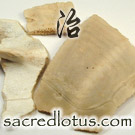 Gui Ban15 gcalcinedTonify Yin
Preparation & dosage
How is Qing Re Zhi Beng Tang prepared?
Qing Re Zhi Beng Tang ("Clear Heat and Stop Flooding Decoction") is prepared as a water decoction (tang) of its heat-clearing, blood-cooling and bleeding-stopping herbs (Zhi Zi, Huang Qin, Huang Bai, Sheng Di Huang, Mu Dan Pi, Di Yu, Ce Bai Ye, Chun Pi, Bai Shao) with Gui Ban (turtle plastron).
Where a hard shell such as Gui Ban is included it is customarily cracked and cooked longer (or decocted first) to extract its substance. This formula is used for heavy uterine bleeding from heat — a symptom that always warrants medical assessment.
Source: Sacred Lotus sources & references (composition and preparation note) + Bensky & Barolet, Formulas & Strategies.
Decoction. Reference relative amounts: Ce Bai Ye (charred) 30 g; Chun Pi 30 g; Bai Shao 30 g; Sheng Di Huang, Di Yu 24 g; Huang Qin (stir-fried) 15 g; Gui Ban (calcined) 15 g; Zhi Zi, Huang Bai, Mu Dan Pi 9 g each. Reference only; used for the acute bleeding episode.
Safety — read before use
What are the cautions for Qing Re Zhi Beng Tang?
Qing Re Zhi Beng Tang is built for a Heat-excess pattern, so it is the wrong formula when bleeding stems from deficiency or stasis instead. Its heavy, bitter-cold composition can injure Spleen-Stomach yang if used when it is not indicated, or if continued longer than the acute bleeding episode requires.
- Not for deficiency-type flooding: if the blood is pale and watery, with fatigue, cold limbs, or a weak pulse (Spleen/Kidney qi or yang deficiency failing to hold Blood), this formula is inappropriate — a warming, qi-securing approach is needed instead.
- Not for Blood stasis: dark, clotted bleeding with stabbing abdominal pain calls for a blood-moving strategy, not heat-clearing astringents.
- Pregnancy: contains Mu Dan Pi, a blood-moving herb — use only under professional guidance.
- Digestive caution: the bitter-cold herb load can burden a weak Spleen and Stomach; this formula is intended for the acute bleeding episode, not prolonged use.
- Severe or sustained hemorrhage with signs of qi collapse (e.g., profuse sweating, cold limbs, faintness) is an emergency requiring immediate medical care beyond herbal treatment.
Source: Bensky & Barolet, Formulas & Strategies (differential cautions for heat-type vs. deficiency-type and stasis-type uterine bleeding). Traditional-use framing; not medical advice.
Originally Appeared In:
- Traditional Chinese Medical Treatment of Women's Disorders (Zhong Yi Fu Ke Zhi Liao Xue)
Notes:
How is Qing Re Zhi Beng Tang different from Gu Ben Zhi Beng Tang?
Qing Re Zhi Beng Tang and Gu Ben Zhi Beng Tang treat opposite poles of beng lou (uterine flooding). Qing Re Zhi Beng Tang addresses the Heat-excess pole — bright-red, forceful bleeding with heat signs — by clearing heat, cooling Blood, and astringing. Gu Ben Zhi Beng Tang (from Fu Qing-zhu’s Fu Qing Zhu Nu Ke) addresses the opposite, deficiency-cold pole — pale, watery bleeding with exhaustion and cold limbs from Spleen and Kidney failing to hold Blood — by warming and tonifying qi, blood, and yang.
Correctly distinguishing the two patterns matters clinically: applying a cold, draining formula like Qing Re Zhi Beng Tang to a deficiency-cold flooding pattern (or a warming, tonifying formula to a heat pattern) would worsen the underlying imbalance rather than stop the bleeding.
Source: Bensky & Barolet, Formulas & Strategies, cross-referenced with the classical source of Gu Ben Zhi Beng Tang, Fu Qing Zhu Nu Ke (Fu Qing-zhu’s Gynecology).
Clinical Studies & Research:
Is there modern research on Qing Re Zhi Beng Tang?
PubMed does not currently index a clinical trial evaluating Qing Re Zhi Beng Tang as a whole formula; the modern evidence available concerns its individual hemostatic herbs and the broader category of Chinese herbal medicine for uterine bleeding. That herb-level research does support the traditional processing choices built into the formula — several of its ingredients are specified as charred or calcined, a preparation step used specifically to strengthen their bleeding-stopping action.
- Di Yu (Sanguisorba officinalis), charred vs. raw: a review of the genus reports that charred Sanguisorba produced significantly stronger shortening of bleeding time and clotting time than the raw root at equivalent doses in animal models (PMID 34616302).
- Ce Bai Ye (Platycladi Cacumen), heated/charred processing: a phytochemical study identified a hemostatic compound formed specifically when the herb’s flavonoid extract is heated, which promoted platelet aggregation and plasma coagulation in a dose-dependent way — a chemical rationale for using Ce Bai Ye Tan (charred) rather than the raw herb (PMID 26393545).
- Chinese herbal medicine for dysfunctional uterine bleeding (category-level, not formula-specific): a Cochrane-referenced meta-analysis of RCTs/quasi-RCTs found Chinese herbal medicine showed encouraging comparative effectiveness against conventional treatment for dysfunctional uterine bleeding, though trial quality was generally poor and larger, higher-quality trials were called for (PMID 18955223). This evidence is about the herbal-medicine category broadly, not Qing Re Zhi Beng Tang specifically.
Sources: PubMed 34616302; PubMed 26393545; PubMed 18955223. Research context on component herbs and the broader treatment category, not a therapeutic claim for this formula; direct clinical trial evidence on Qing Re Zhi Beng Tang itself was not found.
Sources & References
Compiled and edited by Thomas Dehli, Founder & Editor, Sacred Lotus Updated
The information here is referenced from numerous sources — teachers, practitioners, class notes from Five Branches University, the books below, and the published research literature, with citations given as resolvable PubMed identifiers. Where sources disagree, I have flagged the discrepancies directly. If facts couldn't be verified, I have left them out. How we source our content.
Reference information for students and practitioners — not medical advice. Consult a qualified practitioner. Terms of use.
Chinese Formulas Books & References
 https://amzn.to/4fYI3f8
 https://amzn.to/4j55NRA
 https://amzn.to/4gMROyv
 https://amzn.to/4h7msSK