

Shen Fu Tang (Ginseng and Prepared Aconite Decoction)
Shen Fu Tang
Ginseng and Prepared Aconite Decoction
- Category
- Formulas that Warm Interior Cold
- Subcategory
- Formulas that Rescue Devastated Yang
- Ingredients
- 2 herbs
Actions
What does Shen Fu Tang do?
Shen Fu Tang powerfully rescues devastated (collapsed) yang and augments the source qi in a single emergency draft. It is the simplest possible formula for this job — just two herbs — because in true yang collapse there is no time or physiological reserve for anything but the most direct rescue.
Both herbs act as chiefs, working as an inseparable pair:
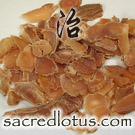
- Ren Shen (Ginseng Root): powerfully tonifies the Source (Original) qi and rescues qi from collapse/desertion, stabilizing the body's most basic reserves and steadying a faint, expiring pulse.
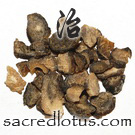
- Fu Zi (Processed Aconite): a hot, strongly yang herb that rescues devastated yang and restores the fire at the "gate of vitality" (Kidney yang), warming the whole body from its core.
Together they tonify qi and warm/rescue yang simultaneously — qi and yang share a mutual, generative relationship, so in collapse each herb reinforces the other's rescue action. This chief-chief pairing is the basis of the modern injectable preparation Shenfu injection (see research).
Source: Sacred Lotus sources & references and category + the site's Ren Shen and Fu Zi herb monographs + Bensky & Barolet, Formulas & Strategies (chief/chief analysis for two-herb rescue formulas). Traditional-use framing; not medical advice.
Indications
What is Shen Fu Tang used for?
Shen Fu Tang treats devastated (collapsed) yang with collapsing qi — the traditional pattern of sudden, life-threatening prostration classically described as "desertion." It sits in the formula category Formulas that Rescue Devastated Yang, within the broader group of Formulas that Warm Interior Cold.
Its classic emergency presentation:
- Sudden, profuse cold sweating and cold limbs, often up to the elbows and knees.
- Shallow, faint breathing and extreme pallor of the face.
- Mental fog or unresponsiveness as yang fails to warm and animate the body.
- Sometimes preceded by severe vomiting, diarrhea, or major blood/fluid loss that exhausted the yang.
Tongue and pulse: a pale tongue; a faint pulse verging on expiry (deep, minute, and barely perceptible) — the hallmark of yang about to be lost entirely.
Source: Sacred Lotus sources & references on pattern/category/tongue/pulse + Bensky & Barolet, Formulas & Strategies (Formulas that Rescue Devastated Yang). Traditional-use framing; not medical advice.
Western Uses:
What is Shen Fu Tang used for in modern practice?
In modern practice, the traditional pattern this formula addresses — sudden yang/qi collapse with cold sweating, cold limbs, a barely perceptible pulse, and extreme pallor — is referenced against biomedical states such as shock (septic, cardiogenic, or hypovolemic), severe hypotension, and acute heart failure. This is a traditional-use correlate, not a claim that the herbal decoction treats any diagnosed disease.
Notably, a distinct modern pharmaceutical derived from this same herb pair — Shenfu injection (參附注射液), an intravenous extract of Ren Shen and Fu Zi — is used as adjunct therapy in Chinese hospital ICU/cardiology settings for septic shock, acute heart failure, and peri-arrest support. Shenfu injection is a separately manufactured, standardized IV drug product, not the same preparation as the classical oral decoction, and its research (see research) should not be read as evidence for drinking the raw formula. Any use of this pattern-and-formula for a diagnosed emergency belongs strictly with qualified emergency medical care.
Source: traditional-use correlates summarized from Bensky & Barolet, Formulas & Strategies, cross-checked against PubMed research on Shenfu injection (see research). Reference only, not a treatment claim.
Ingredients
2 substances in Shen Fu Tang — each links to its full herb monograph.
Preparation & dosage
How is Shen Fu Tang prepared?
Shen Fu Tang is decocted as a concentrated emergency draft, with Fu Zi always cooked first and separately before Ren Shen is added. Classical and modern practice both pre-decoct (simmer) processed Fu Zi alone — commonly on the order of an hour or more, until it no longer tastes numbing to the tongue — before adding the remaining herb, because continued boiling further hydrolyzes Fu Zi's alkaloids into safer compounds.
Because the patient is often barely conscious or unable to swallow a normal draft, the finished decoction is typically taken warm, in small frequent sips rather than one large dose, and is prepared by a qualified practitioner in a clinical setting — not self-prepared.
Source: Bensky & Barolet, Formulas & Strategies (Fu Zi pre-decoction requirement) + the site's Fu Zi herb monograph (processing/toxicity chemistry). Reference only; not a self-preparation guide for a toxic-herb emergency formula.
Reference amounts (Sacred Lotus): Ren Shen 12 g; Fu Zi (processed) 9 g, decocted as a single concentrated emergency draft with Fu Zi pre-decocted first. Some reference sources cite the pair closer to a 3:2 ratio; exact amounts and preparation are adjusted by the practitioner to the severity of collapse. Emergency/expert use only — not a self-dosing guide.
Safety — read before use
What are the cautions for Shen Fu Tang?
This is an emergency rescue formula for expert, clinical/hospital use only — it is not a home remedy or a formula for self-administration. Its safety and its action both hinge on Fu Zi (Processed Aconite), a hot, toxic substance whose raw form causes numbness, cardiac arrhythmia, and other aconitine-type poisoning; only properly processed and correctly prepared Fu Zi is used internally, under qualified professional supervision.
- Fu Zi toxicity: classical and pharmacological sources agree raw aconite is highly toxic; processing (brine-soak then boil/steam) and prolonged decoction convert the toxic diester alkaloids (aconitine, mesaconitine, hypaconitine) to far less toxic forms. This chemistry is the reason Fu Zi must always be sourced processed and prepared correctly — never substitute raw aconite.
- Contraindicated in pregnancy and in yin deficiency with heat, or in true-heat/false-cold patterns where the cold signs are misleading.
- Classical incompatibilities (Eighteen Incompatibilities, aconite/Wu Tou group): traditionally not combined with Ban Xia, Gua Lou, Bei Mu, Bai Lian, or Bai Ji.
- Not for excess or closed (bi) disorders — this formula rescues collapse; it is inappropriate wherever the underlying pattern is excess rather than devastated yang.
- Emergency context: the presentation this formula addresses (shock-like collapse) is a medical emergency; it requires immediate professional/emergency care, not delayed or improvised self-treatment.
Source: the site's Fu Zi (fu-zi-processed-aconite) herb monograph (the Toxicity section/the Cautions section, owner's Five Branches notes, classical Eighteen Incompatibilities) + Bensky & Barolet, Formulas & Strategies (cautions for yang-rescue formulas). Traditional-use framing; not medical advice.
Originally Appeared In:
- Revised Fine Formulas for Women (Jiao Zhu Fu Ren Liang Fang)
Notes:
How is Shen Fu Tang different from Si Ni Tang and Du Shen Tang?
Shen Fu Tang is distinguished by pairing a strong qi-rescuing herb (Ren Shen) with a strong yang-rescuing herb (Fu Zi) in a minimal, two-herb emergency draft — every ingredient does maximal work, appropriate for a patient too depleted for a complex formula.
- vs Si Ni Tang (Frigid Extremities Decoction: Fu Zi, Gan Jiang, Zhi Gan Cao): Si Ni Tang rescues devastated yang and warms the interior but does not directly tonify Source qi the way Ren Shen does; it is used for yang collapse with less pronounced qi-collapse/pulse-expiry than Shen Fu Tang addresses.
- vs Du Shen Tang (Ginseng Alone Decoction, Ren Shen only): Du Shen Tang rescues collapsing qi alone, without Fu Zi's yang-rescuing heat — appropriate when qi (not yang) is deserting.
- Modifications: Long Gu and Mu Li (calcined) are commonly added to astringe floating yang and stop profuse sweating in severe collapse; Wu Wei Zi is sometimes added (echoing the qi-and-yin-astringing logic of Sheng Mai San) when qi and yin are collapsing together with the yang.
- Historical continuity: this same Ren Shen + Fu Zi pairing is the basis of the modern intravenous preparation Shenfu injection, used in Chinese hospital emergency/ICU settings (see the Western Uses section and research).
Source: Bensky & Barolet, Formulas & Strategies (comparison of yang-rescue formulas: Si Ni Tang, Shen Fu Tang, Du Shen Tang) + Sacred Lotus sources & references. Traditional-use framing.
Clinical Studies & Research:
Is there modern research on Shen Fu Tang?
Yes — most clinical research studies a related intravenous drug, Shenfu injection (參附注射液), an extract of the same Ren Shen + Fu Zi pair used as hospital adjunct therapy in China, while separate work examines the oral decoction's chemistry and mechanisms. Shenfu injection is a distinct, standardized pharmaceutical product and route (IV) from the classical oral decoction, so its clinical trial evidence should be read as supportive of the traditional pattern/herb-pair rationale, not as direct evidence for the drunk decoction.
- Septic shock (clinical, meta-analysis): a meta-analysis of 19 randomized controlled trials (1,505 participants) found Shenfu injection added to standard therapy did not reduce 28-day mortality overall, but further raised mean arterial pressure and normalized heart rate versus standard therapy alone, with a non-significant mortality-reduction trend in patients with moderate lactate elevation (PMID 30981461).
- Post-myocardial-infarction heart failure (clinical, meta-analysis): a meta-analysis of 36 studies (3,231 patients) found adjuvant Shenfu injection improved clinical effectiveness rate and left ventricular ejection fraction versus conventional therapy alone, with fewer adverse events, though evidence quality was rated low to moderate (PMID 36506518).
- Cerebral ischemia-reperfusion injury (preclinical): in a mouse middle-cerebral-artery-occlusion model, the combined ginseng-aconite decoction protected the blood-brain barrier (reduced IgG leakage, preserved tight-junction proteins Claudin-5/Occludin/ZO-1) via regulation of endothelial fatty-acid oxidation, and outperformed either herb given alone (PMID 38942350).
- Chemistry (analytical): LC-MS/MS quantification of the co-decocted formula found ginsenosides (led by Rb1) present at much higher levels than the aconite alkaloids (aconitine, mesaconitine, hypaconitine), consistent with aconitine-type alkaloids being the herb pair's principal toxicity source (PMID 24107599).
Sources: PubMed 30981461; PubMed 36506518; PubMed 38942350; PubMed 24107599. Research context on the herb pair and a related pharmaceutical extract, not a therapeutic claim for the oral decoction; direct clinical trial evidence for the classical decoction itself remains limited.
Sources & References
Compiled and edited by Thomas Dehli, Founder & Editor, Sacred Lotus Updated
The information here is referenced from numerous sources — teachers, practitioners, class notes from Five Branches University, the books below, and the published research literature, with citations given as resolvable PubMed identifiers. Where sources disagree, I have flagged the discrepancies directly. If facts couldn't be verified, I have left them out. How we source our content.
Reference information for students and practitioners — not medical advice. Consult a qualified practitioner. Terms of use.
Chinese Formulas Books & References
 https://amzn.to/4fYI3f8
 https://amzn.to/4j55NRA
 https://amzn.to/4gMROyv
 https://amzn.to/4h7msSK