

Shi Zao Tang (Ten Jujube Decoction)
Shi Zao Tang
Ten Jujube Decoction
- Category
- Formulas that Drain Downward
- Subcategory
- Formulas that Drive Out Excess Water
- Ingredients
- 3 herbs
Actions
What does Shi Zao Tang do?
Shi Zao Tang (Ten Jujube Decoction) drastically drains excess water and fluid retention from the chest, hypochondria, and abdomen through the bowels and urine. It is the classical formula for “suspended fluid” (xuan yin) — pathological fluid pooling in the chest cavity and rib-sides — and is reserved, historically, for patients whose constitution was judged robust enough to withstand a harsh purgation.
Three toxic, water-expelling herbs act together as the drastic core, moderated by a jujube decoction as the vehicle:
- Gan Sui (Kansui Root): the most forceful of the three, reaching water lodged almost anywhere in the body and expelling it primarily through the stool.
- Da Ji (Peking Euphorbia Root, classically Jing Da Ji): drains water from the chest and lower abdomen alongside the other two chief herbs.
- Yuan Hua (Genkwa Flower): directed especially at phlegm-fluid lodged in the chest and rib-sides, with a mild diuretic action.
- Da Zao (Jujube), envoy: decocted separately and used as the vehicle for the powder; it protects and supports Spleen-Stomach qi and moderates the toxicity of the other three herbs.
Name-collision note: This formula's "Da Ji" is Jing Da Ji (Radix Euphorbiae Pekinensis, Peking Euphorbia root) — a toxic, drastic water-expelling purgative. It shares its romanized name with an unrelated, non-toxic herb, the hemostatic thistle Da Ji (Herba Cirsii Japonici), which is not used here. The two are entirely different plants.
Source: Sacred Lotus sources & references cross-checked against Bensky & Barolet, Formulas & Strategies (2nd ed.), “Formulas that Drastically Expel Water.” Encyclopedia reference; not administration guidance.
Indications
What is Shi Zao Tang used for?
Shi Zao Tang treats “suspended fluid” (xuan yin) — excess water and phlegm-fluid pooled in the chest and rib-sides that obstructs qi and causes pain worsened by coughing or deep breathing. Classically it was applied to severe generalized edema, ascites, and fluid accumulation in the chest cavity, but only in patients whose underlying constitution was strong (an excess-type presentation).
Classic presentation:
- Chest and rib-side: cough and pain in the chest and hypochondria that worsens with coughing, deep breathing, or postural change; shortness of breath.
- Abdomen: hard, focal distention and fullness in the epigastrium; possible generalized abdominal swelling.
- Associated signs: dry heaves, headache, and vertigo attributed to fluid disrupting the normal flow of qi.
Tongue and pulse: a white, slippery tongue coating; a submerged (deep) and wiry pulse.
Source: Bensky & Barolet, Formulas & Strategies (pattern, tongue, and pulse for Shi Zao Tang). Encyclopedia reference; not medical advice.
Western Uses:
What is Shi Zao Tang used for in modern practice?
In modern practice, Shi Zao Tang and its toxic chief herbs are studied mainly as a reference point for conditions involving large-volume fluid accumulation — malignant pleural effusion, malignant ascites, and cirrhotic ascites — contexts where Western medicine recognizes analogous fluid-retention states. Because Gan Sui, Da Ji, and Yuan Hua are potent, toxic purgatives, this correlate is offered strictly as a reference to the formula’s traditional use, not as evidence that it treats any diagnosed disease.
Contemporary research (see research) is preclinical: animal studies of vinegar-processing to reduce intestinal toxicity while preserving water-expelling effect in ascites models, plus phytochemical and toxicology reviews of the individual toxic herbs. No human clinical trials establishing safety or efficacy were located. Any use for a diagnosed fluid-retention condition belongs with a qualified practitioner and appropriate medical care; the toxicity of the chief herbs makes self-administration inappropriate.
Source: traditional-use correlates summarized from Bensky & Barolet, Formulas & Strategies, cross-checked against PubMed (see research). Reference only, not a treatment claim.
Ingredients
3 substances in Shi Zao Tang — each links to its full herb monograph.
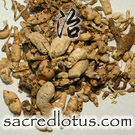 Gan SuiEqual quantity each herbHarsh Expellants
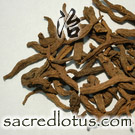 Jing Da JiEqual quantity each herbJing Da JiHarsh Expellants
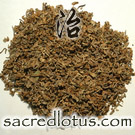 Yuan HuaEqual quantity each herbHarsh Expellants
Preparation & dosage
How was Shi Zao Tang classically prepared?
Historically, Gan Sui, Jing Da Ji, and Yuan Hua were ground into an even powder and taken in small measured doses on an empty stomach in the morning, washed down with a warm decoction made from Da Zao (jujube) — the ingredient the formula is named for. The three toxic herbs were not boiled together with the jujube; the jujube decoction was prepared separately as the vehicle and to support Spleen-Stomach qi.
Classical texts describe the intended effect as several loose bowel movements; if purgation did not occur, dosing was not simply increased but reassessed by the practitioner a day or two later. This procedure is documented here as historical/encyclopedic reference only — given the toxicity of the chief herbs, it is not a guide for self-administration.
Source: Sacred Lotus sources & references on preparation + Bensky & Barolet, Formulas & Strategies. Historical reference; not administration guidance.
Reference only — historical/encyclopedic record, not a dosing guide. Classical powder: Gan Sui, Jing Da Ji, and Yuan Hua in equal parts, historically taken in doses of roughly 0.5-1 g, together with a decoction of ten pieces of Da Zao (jujube) as the vehicle. Because Gan Sui, Da Ji, and Yuan Hua are toxic drastic purgatives, historical use required direct supervision by an experienced practitioner and was restricted to robust patients; contraindicated in pregnancy and incompatible with Gan Cao (licorice).
Safety — read before use
What are the cautions for Shi Zao Tang?
Shi Zao Tang is one of the most toxic formulas in the Chinese materia medica: all three chief herbs — Gan Sui, Da Ji, and Yuan Hua — are classified toxic, drastic purgatives, and this entry is provided as an encyclopedia safety reference, not as guidance for administration or self-treatment. Historically it was reserved for robust patients under direct, experienced practitioner supervision, given in small measured doses, and never used casually or repeatedly.
- Toxicity: Gan Sui (Radix Euphorbiae Kansui) and the classical Jing Da Ji (Radix Euphorbiae Pekinensis) contain diterpene esters that are gastrointestinal irritants and cytotoxic in laboratory studies; Yuan Hua (Flos Genkwa) contains daphnane-type diterpenoids that can cause severe vomiting, abdominal pain, and bloody diarrhea, and in overdose, dehydration, shock, or respiratory compromise.
- Contraindicated in pregnancy, and traditionally considered inappropriate for children, the elderly, or anyone with a weak/deficient constitution, chronic wasting disease, or gastrointestinal ulceration or bleeding.
- Herb incompatibility: traditionally never combined with Gan Cao (licorice) — Gan Sui and Gan Cao are one of the classical “eighteen incompatible” (fan) herb pairs.
- Historical preparation note: the three toxic herbs were not decocted together; they were taken as a powder with a separately prepared jujube decoction, and dosing was not escalated without direct professional reassessment.
Source: Bensky & Barolet, Formulas & Strategies (cautions/contraindications for drastic water-expelling formulas) + PubMed toxicology reviews (PMID 39205630; PMID 38906384). Public-safety reference; not medical advice.
Originally Appeared In:
- On Cold Damage (Shang Han Lun)
Notes:
How is Shi Zao Tang different from Zhou Che Wan?
Zhou Che Wan (Vessel and Vehicle Pill) is built on the Shi Zao Tang core — Gan Sui, Da Ji, and Yuan Hua — but adds Da Huang, Qian Niu Zi, Mu Xiang, Qing Pi, and Chen Pi, turning the pure water-purging decoction into a pill that combines purgation with qi-regulation. Shi Zao Tang is reserved, in the classical literature, for the most severe, acute presentations of suspended fluid or large-volume effusion in a robust patient; Zhou Che Wan is described for lung congestion with prominent cough and wheezing that does not require Shi Zao Tang’s full drastic force.
Source: Bensky & Barolet, Formulas & Strategies (formula comparison, “Formulas that Drastically Expel Water”). Encyclopedia reference.
Clinical Studies & Research:
Is there modern research on Shi Zao Tang?
Yes, but it is confined to preclinical toxicology and processing studies, not human clinical trials. Recent work has focused on reducing the intestinal toxicity of the formula’s toxic chief herbs (commonly via vinegar-processing) while preserving water-expelling effect in animal models of ascites, alongside phytochemical and toxicology reviews of the individual herbs.
- Whole-formula toxicity reduction (preclinical): vinegar-processed Shi Zao Tang reduced intestinal toxicity while preserving water-expelling efficacy in a malignant-ascites rat model (PMID 41044610 / PMC 12495871).
- Gan Sui + Da Zao detoxification (preclinical): a metabonomic study found that co-administering Euphorbia kansui (Gan Sui) with jujube (Da Zao) measurably reduced toxicity markers versus Gan Sui alone, supporting the classical rationale for the jujube vehicle (PMID 23280778).
- Gan Sui dosage-toxicity-efficacy (preclinical): a factor-analysis study of Kansui and licorice in a malignant pleural effusion rat model examined the classical Gan Sui/Gan Cao incompatibility (PMID 27084456).
- Jing Da Ji / Euphorbia pekinensis toxicology (review): a comprehensive review of phytochemistry, pharmacology, and toxicology naming diterpenoids as the principal toxic and active constituents (PMID 39205630).
- Yuan Hua / Daphne genkwa (review): an ethnopharmacology, phytochemistry, and pharmacology review covering the daphnane diterpenoids responsible for both bioactivity and toxicity (PMID 38906384).
Sources: PubMed/PMC 41044610 (PMC 12495871); PubMed 23280778; PubMed 27084456; PubMed 39205630; PubMed 38906384. Research context only; no human clinical-trial evidence was located, and none of these findings constitute a treatment claim.
Sources & References
Compiled and edited by Thomas Dehli, Founder & Editor, Sacred Lotus Updated
The information here is referenced from numerous sources — teachers, practitioners, class notes from Five Branches University, the books below, and the published research literature, with citations given as resolvable PubMed identifiers. Where sources disagree, I have flagged the discrepancies directly. If facts couldn't be verified, I have left them out. How we source our content.
Reference information for students and practitioners — not medical advice. Consult a qualified practitioner. Terms of use.
Chinese Formulas Books & References
 https://amzn.to/4fYI3f8
 https://amzn.to/4j55NRA
 https://amzn.to/4gMROyv
 https://amzn.to/4h7msSK