

San Wu Bei Ji Wan (Three Substance Pill for Emergencies)
San Wu Bei Ji Wan
Three Substance Pill for Emergencies
- Category
- Formulas that Drain Downward
- Ingredients
- 3 herbs
Actions
What does San Wu Bei Ji Wan do?
San Wu Bei Ji Wan (Three Substance Pill for Emergencies) is a drastic warm-purgative formula that forcibly breaks up cold accumulation blocking the stomach and intestines. It comes from the Jin Gui Yao Lue (Essentials from the Golden Cabinet, c. 200 CE), where it appears among remedies meant to be kept prepared in advance for sudden, life-threatening blockage — not a formula for routine or self-directed use.
The three ingredients divide by role:
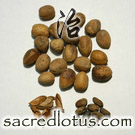
- Chief: Ba Dou (croton seed) — extremely hot and strongly toxic; forcibly opens the blocked bowel and expels cold accumulation. This is the formula’s defining, and most hazardous, ingredient.
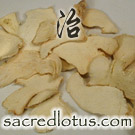
- Deputy: Gan Jiang (dried ginger rhizome) — warms the middle and Yang qi, reinforcing Ba Dou’s cold-dispelling action and helping protect digestive function during drastic purging.
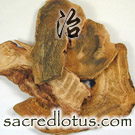
- Assistant: Da Huang (rhubarb root and rhizome) — adds purgative action while its cold nature moderates the fierce heat and toxicity of Ba Dou, a classic hot/cold mutual-restraint pairing.
Source: this site’s own composition record + chief/deputy/assistant analysis cross-referenced against multiple online sources (agreeing independently), consistent with Bensky & Barolet, Formulas & Strategies. Encyclopedia reference; not administration guidance or medical advice.
Indications
What is San Wu Bei Ji Wan used for?
San Wu Bei Ji Wan addresses acute, excess-type cold accumulation blocking the stomach and intestines — classically from sudden cold or dietary stagnation severe enough to be treated as a medical emergency.
Its classic clinical presentation:
- Sudden, severe abdominal pain described as sharp or stabbing, with a rigid, distended abdomen.
- Complete constipation and inability to eat or drink.
- Cold extremities, and in severe cases lockjaw (trismus) or loss of consciousness.
Tongue and pulse: a blue-purple tongue with a white coating; a deep and tight pulse — signs of interior cold and stagnation rather than heat.
Source: this site’s own pattern/tongue/pulse record + Bensky & Barolet, Formulas & Strategies; cross-referenced against multiple online sources. Encyclopedia reference; not medical advice.
Western Uses:
What is San Wu Bei Ji Wan used for in modern practice?
San Wu Bei Ji Wan is referenced in TCM sources for acute simple intestinal obstruction and acute cold-type food poisoning, but multiple independent sources agree its clinical use has declined sharply in the modern era because of Ba Dou’s toxicity. Where Western medicine would recognize a surgical or medical emergency such as bowel obstruction, TCM literature describes this formula historically being reached for only when faster, gentler options were unavailable or had failed.
This is offered strictly as a reference to the formula’s traditional and historical use, not as a claim that it treats any diagnosed condition. Genuine intestinal obstruction and severe abdominal emergencies require immediate professional medical evaluation; any traditional use of this formula belongs only with a qualified practitioner in an appropriate clinical setting, if at all.
Source: traditional-use correlates cross-referenced against multiple online sources and a Chinese-language clinical-application review (Wu et al., Frontiers in Medical Science Research 2020, not PubMed-indexed) + the site’s own prior formula reference. Reference only; not a treatment claim.
Ingredients
3 substances in San Wu Bei Ji Wan — each links to its full herb monograph.
Preparation & dosage
How is San Wu Bei Ji Wan prepared?
Classically, the three ingredients — Ba Dou, Gan Jiang, and Da Huang, in equal parts — are ground into a fine powder, taken directly or formed into small honey pills. This describes how the formula appears in its historical source text; it is not a preparation instruction.
- Source text: Jin Gui Yao Lue (Essentials from the Golden Cabinet), attributed to Zhang Zhongjing (c. 200 CE), listed among emergency remedies meant to be kept ready in advance.
- Modern safety processing: contemporary formularies note Ba Dou is defatted before inclusion, to reduce (not eliminate) its toxicity.
The site’s prior formula reference gave a dosage range of “0.6–15 gram,” which appears to be a typographical error (a 15 g dose of a croton-seed-based powder would be a severe overdose). multiple online sources instead give 0.6–1.5 g of the finished powder, which is used here.
Source: this site’s own composition record + Jin Gui Yao Lue attribution cross-referenced against multiple online sources. Historical/reference description only, not preparation instructions.
Historical reference only — not administration guidance. Classic equal-parts composition (30 g each, per this site’s own record) of Ba Dou, Gan Jiang, and Da Huang ground to a fine powder; TCM formularies cite a reference finished-powder dose on the order of 0.6-1.5 g (the site's prior "0.6-15 gram" figure appears to be a typo; see preparation notes). Historically administered, if at all, only by a professional in an acute emergency setting — not a self-care or routine dose.
Safety — read before use
What are the cautions for San Wu Bei Ji Wan?
San Wu Bei Ji Wan contains Ba Dou (croton seed), one of the most toxic substances in the Chinese materia medica, and TCM sources classify the whole formula as an emergency, professional-use-only preparation rather than a routine remedy. The following is public-safety reference information, not administration or dosing guidance.
- Ba Dou toxicity: this site’s own record records Ba Dou’s properties as “Spicy, Hot, Toxic.” Pharmacological study of its constituent, Crotonis Fructus, documents measurable hepatic and gastrointestinal tissue damage and disruption of gut microbiota in animal models (PMID 37713114). TCM sources describe overdose signs including sore throat, vomiting, severe watery diarrhea, and intense abdominal pain.
- Contraindications described in TCM sources: pregnancy; elderly, frail, or constitutionally weak patients; and heat-type (rather than cold-type) acute abdominal presentations, which classical texts warn are dangerously worsened by this formula.
- Processing: TCM formularies note Ba Dou is traditionally defatted (oil substantially removed) before inclusion specifically to reduce — not eliminate — its toxicity; the unprocessed seed is considered unsafe.
- Scope: consistently described as a last-resort emergency measure, administered historically only under professional supervision, not for self-administration or routine dispensing.
Source: this site’s own herb properties + Crotonis Fructus toxicology (PubMed 37713114) + cautions cross-referenced against multiple online sources, consistent with Bensky & Barolet cautions for drastic purgatives. Public-safety reference information; not administration guidance or medical advice.
Originally Appeared In:
- Essentials from the Golden Cabinet (Jin Gui Yao Lue)
Notes:
How does San Wu Bei Ji Wan compare to Da Huang Fu Zi Tang?
Both formulas warmly purge cold accumulation causing constipation, but San Wu Bei Ji Wan is reserved for far more severe, acute presentations. Da Huang Fu Zi Tang is the standard, milder choice for cold-accumulation constipation with unilateral pain, decocted and taken over time; San Wu Bei Ji Wan is a drastic, fast-acting powder/pill reserved for acute, potentially life-threatening blockage with central abdominal pain and risk of loss of consciousness.
- Purgative used: Da Huang Fu Zi Tang purges with Da Huang warmed by Fu Zi; San Wu Bei Ji Wan uses the far more drastic and toxic Ba Dou as its chief agent.
- Clinical threshold: Da Huang Fu Zi Tang is the first-choice formula when time allows a decoction; San Wu Bei Ji Wan’s historical role was for emergencies where minutes mattered and milder approaches were not an option.
- Risk: San Wu Bei Ji Wan is considerably stronger and carries substantially greater risk, which is why modern sources describe its use as far less common today.
Source: formula-differentiation cross-referenced against multiple online sources, consistent with Bensky & Barolet conventions for comparing purgative formulas. Encyclopedia reference; not medical advice.
Clinical Studies & Research:
Is there modern research on San Wu Bei Ji Wan?
No PubMed-indexed clinical trials of the intact formula were found; modern evidence instead comes from toxicology and pharmacology on its chief, most hazardous ingredient, Ba Dou (Crotonis Fructus). That research documents both the substance’s toxicity and some of the pharmacological activity underlying its traditional purgative/analgesic use.
- Toxicity mechanism (animal model): Crotonis Fructus caused measurable hepatic and gastrointestinal tissue damage and disrupted gut microbiota balance (reduced beneficial Lactobacillus, increased opportunistic pathogens) in rats (PMID 37713114).
- Metabolic pharmacology (in vitro): Crotonis Fructus extract and its constituent croton oil stimulated lipolysis in adipocytes via a protein-kinase-A-dependent pathway (PMID 25435891).
- Pain/GI motility (in vitro and in vivo): Croton tiglium seed extract showed antinociceptive activity in a mouse writhing test and both stimulatory and relaxant effects on isolated intestinal smooth muscle, attributed to phorbol-ester constituents (PMID 24250486).
Sources: PubMed 37713114; PubMed 25435891; PubMed 24250486 (PMC 3832157). Research context on the formula's chief ingredient, not a therapeutic claim for the formula; direct clinical evidence on the intact formula is lacking.
Sources & References
Compiled and edited by Thomas Dehli, Founder & Editor, Sacred Lotus Updated
The information here is referenced from numerous sources — teachers, practitioners, class notes from Five Branches University, the books below, and the published research literature, with citations given as resolvable PubMed identifiers. Where sources disagree, I have flagged the discrepancies directly. If facts couldn't be verified, I have left them out. How we source our content.
Reference information for students and practitioners — not medical advice. Consult a qualified practitioner. Terms of use.
Chinese Formulas Books & References
 https://amzn.to/4fYI3f8
 https://amzn.to/4j55NRA
 https://amzn.to/4gMROyv
 https://amzn.to/4h7msSK