

Si Miao Yong an Tang (Four Valiant Decoction for Well Being)
Si Miao Yong an Tang
Four Valiant Decoction for Well Being
- Category
- Formulas that Clear Heat
- Subcategory
- Formulas that Clear Heat and Relieve Toxicity
- Ingredients
- 4 herbs
Actions
What does Si Miao Yong An Tang do?
Si Miao Yong An Tang clears intense heat-toxin from the blood and vessels while invigorating blood flow. It was designed for early, severe gangrene of the fingers or toes (tuo ju) driven by toxic heat obstructing the vessels — before the tissue has fully died — and uses just four herbs at unusually large doses to hit the pattern hard and fast.
The four ingredients divide by role:
- Chief: Jin Yin Hua clears heat and resolves toxicity — the core action against the fire-poison driving the sore.
- Deputy: Xuan Shen reinforces the heat-toxin-clearing action while nourishing yin and cooling the blood, protecting fluids that intense heat has begun to consume.
- Assistant: Dang Gui invigorates and nourishes the blood to unblock the obstructed vessels and relieve pain; its warming, moving nature is restrained by the two cold, heat-clearing herbs around it so it does not add fuel to the fire.
- Envoy: Gan Cao itself helps resolve toxicity and harmonizes the formula, moderating the heavy cold dosage for the digestion.
Source: Sacred Lotus sources & references + Bensky & Barolet, Formulas & Strategies (chief/deputy/assistant/envoy analysis; category: Formulas that Clear Heat and Relieve Toxicity). Traditional-use framing; not medical advice.
Indications
What is Si Miao Yong An Tang used for?
Si Miao Yong An Tang treats heat-toxin obstructing the blood vessels — the classic presentation is a limb, usually a toe or finger, that is dark red or purplish, hot, swollen, and severely painful, sometimes with ulceration or the beginnings of gangrene, often with fever and thirst. It is given during the acute, inflamed stage while there is still active heat-toxin to clear, rather than once tissue has already died.
- Local signs: burning, throbbing pain in the affected digit or limb; dusky red-purple discoloration; heat to the touch; possible ulceration with foul discharge.
- Systemic signs: fever, thirst, and restlessness consistent with toxic heat.
Tongue and pulse: a red tongue, and a rapid pulse (some sources add a slippery or forceful quality reflecting the excess heat).
Source: Bensky & Barolet, Formulas & Strategies, cross-checked against other published formula references. Traditional-use framing; not medical advice.
Western Uses:
What is Si Miao Yong An Tang used for in modern practice?
In modern practice, Si Miao Yong An Tang is referenced for inflammatory vascular conditions of the limbs — most notably thromboangiitis obliterans (Buerger’s disease), its most-studied modern correlate, as well as diabetic foot ulcers and other peripheral vascular/ischemic presentations where Western medicine recognizes vessel inflammation, impaired circulation, and tissue breakdown within the pattern the formula traditionally addresses.
These biomedical correlates describe the formula’s traditional target, not a claim that it treats any diagnosed disease. Gangrene, non-healing ulceration, or suspected Buerger’s disease are medical emergencies requiring evaluation by a qualified provider; herbal treatment, if used, belongs alongside that care, not instead of it.
Source: traditional-use correlates summarized from Bensky & Barolet, Formulas & Strategies, cross-checked against contemporary research (see research). Reference only, not a treatment claim.
Ingredients
4 substances in Si Miao Yong an Tang — each links to its full herb monograph.
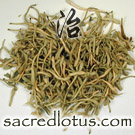 Jin Yin Hua90 gClear Heat and Eliminate Toxins
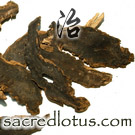 Xuan Shen90 gCool the Blood
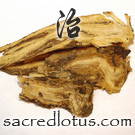 Dang Gui60 gTonify Blood
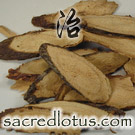 Gan Cao30 gTonify Qi
Preparation & dosage
How is Si Miao Yong An Tang prepared?
Si Miao Yong An Tang is taken as a decoction of the four herbs together, traditionally as a single large daily dose given because of the severity of the condition. Classic instructions divide the decoction into portions taken over the day; once the heat-toxin signs begin to resolve, the dose is typically reduced rather than continued at full strength.
Source: Bensky & Barolet, Formulas & Strategies; traditional preparation, reference only.
Decoction. Reference relative amounts (Bensky & Barolet; original source Yan Fang Xin Bian): Jin Yin Hua 90 g (chief); Xuan Shen 90 g (deputy); Dang Gui 60 g (assistant); Gan Cao 30 g (envoy) — an unusually large single daily dose reflecting the severity of the pattern, reduced once the condition improves.
Discrepancy: this site’s ingredient records currently list 90 g for all four herbs, while published formula references (Bensky & Barolet and other texts citing the original Yan Fang Xin Bian source) consistently give the 90/90/60/30 g ratio above. Flagged for owner review; not corrected here.
Reference only, not a prescription.Safety — read before use
What are the cautions for Si Miao Yong An Tang?
Si Miao Yong An Tang is a cold, toxin-clearing formula for excess heat-toxin — it is not appropriate for gangrene or sores of the cold, deficient type (pale, non-inflamed, or chronic ulceration without heat signs), which calls for warming and tonifying strategies instead. Because it is dosed heavily with cold, bitter herbs, it can strain a weak or cold Spleen and Stomach.
- Not for cold/deficiency-type presentations: pale, non-throbbing, non-hot ulceration or gangrene should not be treated with this formula.
- Digestive caution: the large doses of cold, heat-clearing herbs may cause loose stools or poor appetite in patients with weak digestion; the formula is generally used for a limited acute course, then reduced.
- Pregnancy: contains the blood-invigorating herb Dang Gui — use only under professional guidance.
- Medical urgency: gangrene, non-healing ulcers, and suspected Buerger’s disease are medical emergencies; this formula is not a substitute for evaluation and treatment by a qualified provider.
Source: Bensky & Barolet, Formulas & Strategies (cautions for heat-toxin sore formulas). Traditional-use framing; not medical advice.
Originally Appeared In:
- New Compilation of Time Tested Formulas (Yan Fang Xin Bian)
Notes:
How is Si Miao Yong An Tang different from Wu Wei Xiao Du Yin and Xian Fang Huo Ming Yin?
All three formulas clear heat-toxin from sores, but they target different stages and locations. Si Miao Yong An Tang is the narrowest and most powerful of the three — just four herbs at large doses, aimed specifically at heat-toxin obstructing the vessels of a limb, i.e., gangrene of a finger or toe, while there is still active heat to clear.
- vs Wu Wei Xiao Du Yin: a broader, milder formula (Jin Yin Hua plus four other toxin-clearing herbs) for acute, superficial carbuncles and boils with redness, swelling, and heat — general toxic-heat sores rather than a vascular/limb-specific pattern.
- vs Xian Fang Huo Ming Yin: uses a much larger, more complex herb set to clear toxin, disperse swelling, invigorate blood, and transform phlegm for early-stage, deep-seated abscesses before they have pointed or ruptured — a dispersal strategy, rather than Si Miao Yong An Tang’s narrower fight against vascular gangrene.
Source: Bensky & Barolet, Formulas & Strategies, cross-checked against other published formula comparisons.
Clinical Studies & Research:
Is there modern research on Si Miao Yong An Tang?
Yes — mostly network-pharmacology and animal-model research on the inflammatory vascular conditions the formula traditionally targets, plus growing interest in diabetic wound healing. Its most-studied modern correlate is thromboangiitis obliterans (Buerger’s disease), where recent work points to anti-inflammatory and pro-angiogenic mechanisms; other studies extend to diabetic foot ulcers. Direct randomized controlled trials in humans remain limited.
- Thromboangiitis obliterans (preclinical, metabolomics): a rat model study found antithrombotic and anti-inflammatory effects, with treatment regulating urinary metabolic biomarkers toward normal (PMID 35273504).
- Thromboangiitis obliterans (network pharmacology + endothelial cells): combined computational and lab work identified quercetin, vestitol, and beta-sitosterol acting on IL-6, MMP9, and VEGFA to reduce inflammation and promote angiogenesis (PMID 37318081).
- Diabetic foot ulcers (network pharmacology): a 2025 analysis proposed PI3K-Akt and AGE-RAGE signaling as mechanisms behind the formula’s traditional use for slow-healing foot wounds (PMID 40441214).
Sources: PubMed 35273504; PubMed 37318081; PubMed 40441214. Research context, not a therapeutic claim; clinical trial evidence in humans remains limited.
Sources & References
Compiled and edited by Thomas Dehli, Founder & Editor, Sacred Lotus Updated
The information here is referenced from numerous sources — teachers, practitioners, class notes from Five Branches University, the books below, and the published research literature, with citations given as resolvable PubMed identifiers. Where sources disagree, I have flagged the discrepancies directly. If facts couldn't be verified, I have left them out. How we source our content.
Reference information for students and practitioners — not medical advice. Consult a qualified practitioner. Terms of use.
Chinese Formulas Books & References
 https://amzn.to/4fYI3f8
 https://amzn.to/4j55NRA
 https://amzn.to/4gMROyv
 https://amzn.to/4h7msSK