

Wu Wei Xiao Du Yin (Five Ingredient Decoction to Eliminate Toxins)
Wu Wei Xiao Du Yin
Five Ingredient Decoction to Eliminate Toxins
- Category
- Formulas that Clear Heat
- Subcategory
- Formulas that Clear Heat and Relieve Toxicity
- Ingredients
- 5 herbs
Actions
What does Wu Wei Xiao Du Yin do?
Wu Wei Xiao Du Yin (Five-Ingredient Decoction to Eliminate Toxin) clears heat, resolves fire toxin, cools the blood, and reduces swelling. It combines five sweet-or-spicy, bitter, cold-natured herbs that all share the same core action — clearing heat toxin — so their combined strength is far greater than any single herb alone (a classic “mutual reinforcement” design).
The five ingredients divide by role:
- Chief: Jin Yin Hua (Honeysuckle Flower), dosed at roughly double the other four — broadly clears heat toxin and is a mainstay for sores and boils.
- Deputies: Ye Ju Hua (Wild Chrysanthemum Flower), Pu Gong Ying (Dandelion), and Zi Hua Di Ding (Viola) reinforce the heat-toxin-clearing action, each entering slightly different channels (Pu Gong Ying is noted for Liver/Stomach-channel sores; Zi Hua Di Ding for cooling the blood).
- Assistant: Zi Bei Tian Kui (Begonia) adds further heat-toxin clearing and helps disperse hardened swelling.
Source: Sacred Lotus sources & references + Bensky & Barolet, Formulas & Strategies (chief/deputy/assistant analysis). Traditional-use framing; not medical advice.
Indications
What is Wu Wei Xiao Du Yin used for?
Wu Wei Xiao Du Yin treats Fire toxin concentrated locally in the skin — hot, painful sores, boils, furuncles, and early localized carbuncles/abscesses, classically described as small but deep and hard lesions ("like a millet seed yet as hard and deep-rooted as an iron nail"). It is meant for the early, localized stage of a skin lesion, before pus has fully formed or drained.
Its classic clinical presentation:
- Local signs: a firm, red, swollen, hot, and painful sore or nodule, sometimes with a hard, deep-rooted core.
- Systemic signs (when present): may accompany fever, chills, and thirst if toxin is more diffuse.
Tongue and pulse: the tongue is red with a yellow coating; the pulse is rapid and forceful.
Source: Sacred Lotus sources & references/identity + Bensky & Barolet, Formulas & Strategies. Traditional-use framing; not medical advice.
Western Uses:
What is Wu Wei Xiao Du Yin used for in modern practice?
In modern practice this pattern is referenced for early-stage bacterial skin and soft-tissue infections — boils, furuncles, carbuncles, and similar localized, inflamed skin lesions, and (in some clinical use) mastitis and acne, all in contexts where Western medicine recognizes localized redness, heat, swelling, and pain.
These biomedical correlates are offered as a reference to the formula’s traditional use, not as a claim that it treats any diagnosed infection or disease. Contemporary research is largely preclinical and mechanistic, with a registered clinical review still awaiting reported results (see research). Any suspected skin infection belongs with a qualified practitioner and appropriate medical care.
Source: traditional-use correlates summarized from Bensky & Barolet, Formulas & Strategies; reference only, not a treatment claim.
Ingredients
5 substances in Wu Wei Xiao Du Yin — each links to its full herb monograph.
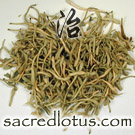 Jin Yin Hua27-36 gClear Heat and Eliminate Toxins
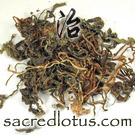 Pu Gong Ying10-15 gClear Heat and Eliminate Toxins
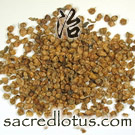 Ye Ju Hua10-15 gClear Heat and Eliminate ToxinsNo specimen photographZi Bei Tian Kui10-15 gClear Heat and Eliminate Toxins
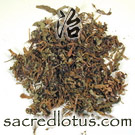 Zi Hua Di Ding10-15 gClear Heat and Eliminate Toxins
Preparation & dosage
How is Wu Wei Xiao Du Yin prepared?
Prepared as a decoction, traditionally finished with a small amount of rice wine. After decocting the five herbs, about 2–3 tablespoons of rice wine (huang jiu) is added and briefly brought back to a boil before straining; the wine is said to help carry the cold, clearing action of the herbs out to the affected area.
The spent (cooked) herb dregs can also be mashed and applied topically to the sore itself, combining internal and external use.
Source: this site’s own record (preparation field) + Bensky & Barolet, Formulas & Strategies. Traditional-use framing; not medical advice.
Decoction, finished with 2-3 tablespoons rice wine. Reference relative amounts: Jin Yin Hua 27-36 g (chief, roughly double the other four); Pu Gong Ying, Zi Hua Di Ding, Ye Ju Hua, Zi Bei Tian Kui 10-15 g each. Reference only.
Safety — read before use
What are the cautions for Wu Wei Xiao Du Yin?
Wu Wei Xiao Du Yin is built entirely from cold, heat-clearing herbs, so it is inappropriate for sores that are not hot in nature. “Yin-type” or cold-natured sores — pale, not markedly red or hot, slow to develop — call for a different, warming approach; using this formula there would be counterproductive.
- Not for prolonged, unsupervised use: the concentrated cold, bitter herbs can burden Spleen-Stomach digestion, causing loose stools or poor appetite; the formula is meant for the acute, active-heat stage, not ongoing use.
- Once a sore points and drains pus, practice traditionally shifts the approach (draining/tonifying additions) rather than continuing this formula unmodified.
- Any hot, spreading, or worsening skin lesion (or one with systemic fever) warrants prompt evaluation by a qualified practitioner or medical provider — this is traditional-use reference only, not a substitute for care of an active infection.
Source: Bensky & Barolet, Formulas & Strategies (cautions for cold, heat-clearing formulas for sores). Traditional-use framing; not medical advice.
Originally Appeared In:
- Golden Mirror of the Medical Tradition (Yi Zong Jin Jian)
Notes:
How is Wu Wei Xiao Du Yin different from Xian Fang Huo Ming Yin?
Wu Wei Xiao Du Yin is a compact, five-herb formula for the earliest, purely heat-toxin stage of a sore — it clears heat toxin only. Xian Fang Huo Ming Yin (Immortal’s Formula for Sustaining Life) treats a similar sore at a more developed stage, adding qi- and blood-invigorating, pus-expelling, and phlegm-dispersing herbs to move a lesion toward resolution or drainage once heat toxin alone is not the whole picture.
- Choose Wu Wei Xiao Du Yin for a fresh, purely hot, red, swollen sore with no significant blood stasis or pus yet.
- Choose Xian Fang Huo Ming Yin when the sore is more advanced, painful with a sense of local stasis, or slow to point/drain.
Herb-identity note: sources are not fully consistent on the fifth ingredient. Sacred Lotus (matching the live site) identifies Zi Bei Tian Kui as Herba Begoniae (Begonia fimbristipula); several English-language references instead list the assistant herb as Tian Kui Zi (Semiaquilegia adoxoides root) under the same formula name. Both botanicals are called “Tian Kui” in different regional materia medica traditions and serve a similar heat-toxin-clearing, node-dispersing role, but they are distinct plants — worth confirming which the herb supplier provides.
Source: Bensky & Barolet, Formulas & Strategies (formula comparison) + cross-check of Sacred Lotus sources & references against multiple published English-language formula references for herb identity.
Clinical Studies & Research:
Is there modern research on Wu Wei Xiao Du Yin?
Yes — mostly mechanistic and preclinical, plus one completed clinical trial and one registered clinical-review protocol. A phytochemistry and network-pharmacology study identified active constituents (including esculetin and isochlorogenic acids) and found the decoction suppressed inflammatory signaling (MAPK/STAT3 pathways) in heat-toxin-relevant lab models. A randomized trial in gout arthritis found comparable clinical response to low-dose colchicine, with a companion animal study showing suppression of NLRP3-inflammasome signaling.
- Anti-inflammatory mechanism (preclinical): active constituents and MAPK/STAT3 suppression identified in LPS-stimulated macrophages and a dermatitis-model mouse study (PMID 41029337 / PMC 12482766).
- Gout arthritis (clinical trial + preclinical): a randomized trial (78 participants) found comparable response rates to low-dose colchicine, with a rat model showing reduced NLRP3/caspase-1/IL-1β inflammasome signaling (PMID 39130631).
- Chronic osteomyelitis (preclinical): a rat model found suppressed disease progression via regulatory T-cell (Treg) modulation along the IL-2/STAT5 pathway (PMID 35369962).
- Wound infection (clinical, protocol stage): a registered systematic-review/meta-analysis protocol set out to evaluate the decoction for wound infection across Chinese and international trial databases; results were not yet reported as of this protocol’s publication (PMID 36482518).
Sources: PubMed 41029337; PubMed 39130631; PubMed 35369962; PubMed 36482518. Research context, not a therapeutic claim; direct clinical trial evidence for the traditional skin-sore indication remains limited.
Sources & References
Compiled and edited by Thomas Dehli, Founder & Editor, Sacred Lotus Updated
The information here is referenced from numerous sources — teachers, practitioners, class notes from Five Branches University, the books below, and the published research literature, with citations given as resolvable PubMed identifiers. Where sources disagree, I have flagged the discrepancies directly. If facts couldn't be verified, I have left them out. How we source our content.
Reference information for students and practitioners — not medical advice. Consult a qualified practitioner. Terms of use.
Chinese Formulas Books & References
 https://amzn.to/4fYI3f8
 https://amzn.to/4j55NRA
 https://amzn.to/4gMROyv
 https://amzn.to/4h7msSK