

Tao Hua Tang (Peach Blossom Decoction)
Actions
What does Tao Hua Tang do?
Tao Hua Tang (Peach Blossom Decoction) warms the middle burner and astringes the intestines to stop chronic, deficiency-cold diarrhea that contains blood. Despite its name, the formula contains no peach-blossom herb at all — it is a three-ingredient Shang Han Lun (Treatise on Cold Damage) formula whose name instead comes from the pale pink color the decoction takes on from its chief mineral ingredient, said to resemble peach-blossom petals.
The three ingredients divide by role:
- Chief: Chi Shi Zhi (halloysite, a kaolin-like mineral clay) astringes the intestines and stops both the diarrhea and the bleeding — it is the formula’s core action and the true namesake ingredient.
- Deputy: Gan Jiang (dried ginger) warms the middle burner and expels the interior cold driving the deficiency-cold diarrhea.
- Assistant: Geng Mi (non-glutinous rice) tonifies depleted Spleen/Stomach qi and buffers the two more intense ingredients, protecting the digestive tract.
Source: Sacred Lotus sources & references + Bensky & Barolet, Formulas & Strategies (chief/deputy/assistant analysis; name-origin cross-checked against independent TCM formula references). Traditional-use framing; not medical advice.
Indications
What is Tao Hua Tang used for?
Tao Hua Tang treats chronic dysenteric diarrhea from Spleen-and-Kidney yang deficiency with cold — loose, watery stools containing dull, dark blood and mucus (not the bright-red, foul-smelling blood of a heat pattern), typically long-standing and depleting rather than acute.
Its classic clinical presentation:
- Diarrhea/dysentery: chronic, watery stool with dark blood and pus, without the tenesmus, urgency, or foul odor typical of damp-heat dysentery.
- Abdominal pain that is dull and eased, not worsened, by local pressure and warmth — a hallmark of a deficiency-cold rather than excess pattern.
- Accompanying signs: fatigue, cold limbs, a pale or sallow complexion, and reduced appetite from underlying yang deficiency.
Tongue and pulse: Sacred Lotus records a pale tongue with a slow, frail pulse (also described as faint and thin) — consistent with deficiency and internal cold rather than an active infective or heat process.
Source: Sacred Lotus sources & references on pattern/tongue/pulse + Bensky & Barolet, Formulas & Strategies. Traditional-use framing; not medical advice.
Western Uses:
What is Tao Hua Tang used for in modern practice?
In modern practice Tao Hua Tang and its modifications are referenced for chronic diarrheal conditions with a deficiency-cold presentation — contexts where practitioners have traditionally applied its warming, astringent pattern include chronic diarrhea, dysentery, and inflammatory bowel conditions such as ulcerative colitis, in which Western medicine also recognizes loose stool with blood or mucus.
These biomedical correlates describe the formula’s traditional use only, not a claim that it treats any diagnosed disease. Bloody diarrhea always warrants medical evaluation to rule out infection, inflammatory bowel disease, ischemic colitis, or malignancy before any herbal formula is considered; direct clinical evidence for the classical formula itself remains limited (see research).
Source: traditional-use correlates summarized from Bensky & Barolet, Formulas & Strategies, cross-checked against independent TCM formula references; reference only, not a treatment claim.
Ingredients
3 substances in Tao Hua Tang — each links to its full herb monograph.
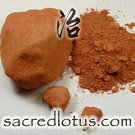 Chi Shi Zhi30 gAstringe, Stabilize, Bind
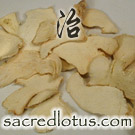 Gan Jiang9 gWarm the Interior and Expel ColdNo specimen photographGeng Mi30 gTonify Qi
Preparation & dosage
How is Tao Hua Tang prepared?
Tao Hua Tang uses a distinctive split preparation of its chief herb: part of the Chi Shi Zhi is decocted together with the Gan Jiang and Geng Mi, while the remainder is ground to a fine powder and stirred into the strained decoction just before drinking, so the mineral both acts systemically and coats the intestinal lining directly.
Classically the formula was taken in divided doses and discontinued once the diarrhea resolved, rather than completed as a fixed course — consistent with its use for an acute flare of a chronic pattern.
Source: Bensky & Barolet, Formulas & Strategies (classical decoction-plus-powder method), cross-checked against independent TCM formula references. Traditional-use framing; not medical advice.
Decoction with a split use of the chief herb. Reference relative amounts: Chi Shi Zhi 30 g (traditionally about half decocted with the other herbs, half ground to powder and stirred into the strained decoction); Gan Jiang 9 g; Geng Mi 30 g. Reference only; not a prescribing recommendation.
Safety — read before use
What are the cautions for Tao Hua Tang?
Tao Hua Tang is a warming, astringent formula for deficiency-cold diarrhea, so it is inappropriate whenever heat, dampness, or active infection are present. Giving an astringent formula for damp-heat dysentery can trap the pathogen and worsen the condition.
- Avoid in damp-heat or acute dysentery — bright red blood, foul odor, tenesmus, fever, or other heat signs indicate the opposite pattern (compare Bai Tou Weng Tang).
- Medical workup first: bloody or persistent diarrhea should be evaluated by a physician to exclude infection, inflammatory bowel disease, ischemic colitis, or malignancy before self-treating with this or any formula.
- Pregnancy and mineral quality: use only under professional guidance; Chi Shi Zhi is a mineral (halloysite/kaolin) ingredient, so sourcing and dosing should follow qualified practitioner guidance rather than self-administration.
Source: Bensky & Barolet, Formulas & Strategies (cautions for astringent formulas in deficiency-cold vs. damp-heat dysentery), cross-checked against independent TCM formula references. Traditional-use framing; not medical advice.
Originally Appeared In:
- On Cold Damage (Shang Han Lun)
Notes:
How is Tao Hua Tang different from Bai Tou Weng Tang, Si Shen Wan, and Zhen Ren Yang Zang Tang?
Tao Hua Tang is chosen specifically for chronic, deficiency-cold bloody diarrhea — its closest comparison formulas treat diarrhea from a different pattern or a more complex one.
- vs Bai Tou Weng Tang: the opposite pattern — Bai Tou Weng Tang clears heat and toxicity for acute damp-heat dysentery with bright red blood, tenesmus, and fever, where Tao Hua Tang’s warming astringents would be contraindicated.
- vs Si Shen Wan: Si Shen Wan targets chronic “five-more” (daybreak) diarrhea from Spleen-and-Kidney yang deficiency without significant blood in the stool; Tao Hua Tang is reserved for the pattern that specifically includes blood and pus.
- vs Zhen Ren Yang Zang Tang: a broader formula for chronic diarrhea/dysentery with more pronounced qi-and-blood deficiency, combining astringents with qi and blood tonics; Tao Hua Tang is the simpler, more narrowly targeted three-herb formula.
Source: Bensky & Barolet, Formulas & Strategies, cross-checked against independent TCM formula references (formula-comparison conventions).
Clinical Studies & Research:
Is there modern research on Tao Hua Tang?
Direct clinical research on the classical three-herb formula is limited; most modern study is on modified, multi-herb versions built on the same base for ulcerative colitis. A 2022 paper combining a literature review of randomized trials with network-pharmacology and molecular-docking analysis studied "Jianpi Yiqi Taohua Decoction" (JYTD) — an expanded, 13-herb formula built on the classical Tao Hua Tang base — for ulcerative colitis.
- Clinical synthesis: across the randomized trials it reviewed, Taohua-Tang-based decoctions were associated with a higher complete response rate and overall response rate than comparison treatments for ulcerative colitis (PMID 35173140).
- Mechanism (preclinical/computational): network-pharmacology and molecular-docking analysis of the expanded JYTD formula identified multiple candidate compounds, targets, and pathways (including AKT1, NFKB1, and other hub targets) consistent with anti-inflammatory activity relevant to ulcerative colitis.
Source: PubMed 35173140. Study concerns a modified, expanded formula (JYTD) built on the Tao Hua Tang base, not the classical three-herb decoction alone; research context, not a therapeutic claim.
Sources & References
Compiled and edited by Thomas Dehli, Founder & Editor, Sacred Lotus Updated
The information here is referenced from numerous sources — teachers, practitioners, class notes from Five Branches University, the books below, and the published research literature, with citations given as resolvable PubMed identifiers. Where sources disagree, I have flagged the discrepancies directly. If facts couldn't be verified, I have left them out. How we source our content.
Reference information for students and practitioners — not medical advice. Consult a qualified practitioner. Terms of use.
Chinese Formulas Books & References
 https://amzn.to/4fYI3f8
 https://amzn.to/4j55NRA
 https://amzn.to/4gMROyv
 https://amzn.to/4h7msSK