

Zhen Ren Yang Zang Tang (True Man's Decoction to Nourish the Organs)
Zhen Ren Yang Zang Tang
True Man's Decoction to Nourish the Organs
- Category
- Formulas that Stabilize and Bind
- Ingredients
- 10 herbs
Actions
What does Zhen Ren Yang Zang Tang do?
Zhen Ren Yang Zang Tang warms and binds the intestines to stop chronic diarrhea and dysentery, while tonifying the Spleen and Kidney that have allowed the leakage to happen in the first place. Its full classical name, Chun Yang Zhen Ren Yang Zang Tang (“Pure Yang True Man’s Decoction to Nourish the Organs”), reflects its aim of restoring and re-containing organs that have become depleted after long-standing, unremitting diarrhea.
The ten ingredients divide by role:
- Chief: Ying Su Ke (honey-fried poppy husk) — the most heavily dosed herb in the formula and its strongest astringent, directly binding the intestines to stop the leakage of fluid and qi.
- Deputies: He Zi and Rou Dou Kou (dry-fried) complete an astringent trio with Ying Su Ke, sealing the Large Intestine from three angles; Rou Gui warms Kidney and Spleen yang to address the underlying cold at the root of the disorder.
- Assistants: Ren Shen and Bai Zhu tonify Spleen qi to rebuild digestive function; Dang Gui and Bai Shao nourish and harmonize the blood, tempering the warming/binding herbs; Mu Xiang moves qi so that the strongly astringent herbs do not cause stagnation, bloating, or abdominal fullness.
- Envoy: Zhi Gan Cao (honey-fried licorice) harmonizes the formula and supports the Spleen.
Discrepancy: formula references do not agree on a single chief herb. Most published analyses — and the framing implicit in the modern pharmacology literature, which treats Ying Su Ke and Rou Gui as the formula’s two principal drugs — designate Ying Su Ke as chief because of its dose and its defining astringent action. A minority of sources instead name Ren Shen as chief, reasoning from its role as the lead qi tonic. Both readings are defensible; this page follows the majority (Ying Su Ke as chief).
Source: this site’s own composition record + chief/deputy/assistant/envoy analysis cross-referenced against multiple online sources (Bensky & Barolet-style framework); Xing et al. 2021 (PMID 34992665) for the “two principal drugs” framing. Traditional-use framing; not medical advice.
Indications
What is Zhen Ren Yang Zang Tang used for?
Zhen Ren Yang Zang Tang treats chronic diarrhea or dysentery caused by Spleen-Kidney deficiency-cold with loss of the intestines’ astringency — a late-stage pattern in which diarrhea has gone on so long that the Large Intestine itself has lost its ability to hold and contain, on top of the underlying Spleen-Kidney yang deficiency that let the cold and dampness take hold.
Its classic clinical presentation:
- Unremitting diarrhea or dysentery that persists despite other treatment, sometimes with rectal prolapse from long-term qi sinking and loss of containment.
- Cold, dull abdominal pain relieved by warmth and by pressure — distinguishing it from the pain of excess/heat patterns, which resists pressure.
- Tenesmus (a persistent, often ineffectual urge to defecate) alongside general fatigue, poor appetite, and cold limbs from the underlying deficiency.
Tongue and pulse: pale tongue with a white coat; slow, thin pulse — both signaling deficiency-cold rather than active heat or excess.
Source: this site’s own pattern/tongue/pulse record + multiple online sources. Traditional-use framing; not medical advice.
Western Uses:
What is Zhen Ren Yang Zang Tang used for in modern practice?
In modern practice, Zhen Ren Yang Zang Tang is referenced for chronic, deficiency-type diarrheal conditions — practitioners have traditionally applied its warming, astringing, tonifying pattern to presentations resembling ulcerative colitis in a quiescent or deficiency-cold phase, irritable bowel syndrome with diarrhea, and rectal prolapse, contexts where Western medicine recognizes chronic loose stools, mucosal inflammation, or pelvic-floor weakness.
These biomedical correlates are offered as a reference to the formula’s traditional use, not as a claim that it treats any diagnosed disease. Contemporary study (see research) has so far focused on ulcerative colitis models and a small pool of Chinese clinical trials; it does not establish the formula as a treatment for any Western diagnosis. Any use for a diagnosed condition belongs with a qualified practitioner and appropriate medical care — and, given the Ying Su Ke content, under professional supervision only (see cautions).
Source: traditional-use correlates summarized from multiple online sources; reference only, not a treatment claim.
Ingredients
10 substances in Zhen Ren Yang Zang Tang — each links to its full herb monograph.
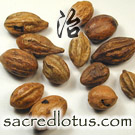 He Zi6-15 gAstringe, Stabilize, Bind
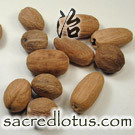 Rou Dou Kou9-15 gdry-friedAstringe, Stabilize, Bind
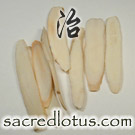 Bai Shao9-15 gTonify Blood
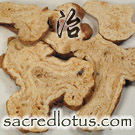 Bai Zhu9-12 gTonify Qi
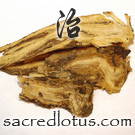 Dang Gui6-12 gTonify Blood
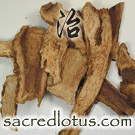 Mu Xiang6-9 gRegulate the Qi
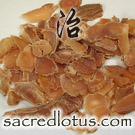 Ren Shen3-6 gTonify Qi
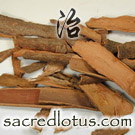 Rou Gui3-4.5 gWarm the Interior and Expel Cold
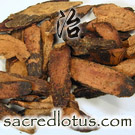 Zhi Gan Cao3-9 gTonify Qi
Preparation & dosage
How is Zhen Ren Yang Zang Tang prepared?
Zhen Ren Yang Zang Tang is prepared as a decoction, with Ying Su Ke honey-fried and Rou Dou Kou dry-fried before use. The classical method (Tai Ping Hui Min He Ji Ju Fang) ground the ingredients to a coarse powder and decocted roughly 6 g per dose down to about 80% of the original volume of water, taken warm before meals.
In modern practice the raw herbs are simmered as a standard decoction for 20–30 minutes; Mu Xiang, being aromatic, is often added only in the final 5–10 minutes so its qi-moving property is not driven off by prolonged heat.
Source: multiple online sources (classical and modern preparation method).
Decoction. Reference relative amounts (this site’s own composition record): Ying Su Ke 6-20 g (honey-fried); Rou Dou Kou 9-15 g (dry-fried); He Zi 6-15 g; Bai Zhu 9-12 g; Bai Shao 9-15 g; Dang Gui 6-12 g; Mu Xiang 6-9 g; Rou Gui 3-4.5 g; Zhi Gan Cao 3-9 g; Ren Shen 3-6 g. Given the Ying Su Ke content, dosing and duration should be set and supervised by a qualified practitioner; short-term use only. Reference only, not a prescription.
Safety — read before use
What are the cautions for Zhen Ren Yang Zang Tang?
This formula's defining herb, Ying Su Ke (poppy husk), is classified as toxic in the traditional materia medica and is a legally controlled/restricted narcotic substance in most jurisdictions today, because it contains natural opiate alkaloids. Within this formula it functions as a bound, short-term astringent rather than a standalone remedy — but the same cautions that apply to the herb apply to the formula as a whole.
- Not for early-stage or active excess/heat presentations — contraindicated in acute dysentery with fresh blood, pus, or urgent tenesmus from damp-heat, and in diarrhea from food stagnation or an unresolved external pathogen. Astringing too early risks trapping the pathogenic factor inside the body.
- Short-term, professional-supervision use only — traditional sources are explicit that Ying Su Ke should not be used in large doses or for extended periods, given both its toxicity and its narcotic, addiction-forming potential; this formula is not intended as a routine or self-directed remedy.
- Legally controlled (reference note, varies by jurisdiction) — concentrate of poppy straw/husk is a Schedule II controlled substance under U.S. federal law and falls under the 1961 UN Single Convention on Narcotic Drugs internationally; several Western dispensaries list Ying Su Ke as obsolete/unavailable, and modern reformulations may omit or substitute it depending on jurisdiction.
- Pregnancy and breastfeeding: avoid — Ying Su Ke is traditionally contraindicated in pregnancy, and the formula also contains blood-invigorating Dang Gui.
- Pediatric use: not used in children.
Source: this site's Ying Su Ke herb monograph (reviewed) + multiple online sources (contraindications) + U.S. controlled-substances statutes referencing poppy straw concentrate (Schedule II); 1961 Single Convention on Narcotic Drugs. Reference note, not medical or legal advice.
Originally Appeared In:
- Imperial Grace Formulary of the Tai Ping Era (Tai Ping Hui Min He Ji Ju Fang)
Notes:
How does Zhen Ren Yang Zang Tang compare to other astringent diarrhea formulas, and how is it modified?
Zhen Ren Yang Zang Tang is one of the strongest astringent formulas in the Chinese herbal repertoire because it is the only widely referenced classical formula built around Ying Su Ke — other Spleen-Kidney formulas for chronic diarrhea rely on gentler astringents and stronger warming instead.
- vs Si Shen Wan (Four Miracle Pill): Si Shen Wan targets “daybreak diarrhea” from Kidney yang deficiency alone, using Bu Gu Zhi, Wu Zhu Yu, Rou Dou Kou, and Wu Wei Zi without any poppy husk — a milder, more purely warming-astringent approach for a narrower pattern.
- vs Tao Hua Tang (Peach Blossom Decoction): Tao Hua Tang warms and binds for cold-type dysentery with a simpler three-herb structure (Chi Shi Zhi, Gan Jiang, Geng Mi) and no qi-and-blood tonics — suited to a less depleted, more acute-cold presentation than the chronic, deficient picture Zhen Ren Yang Zang Tang addresses.
Key modifications multiple online sources: for pronounced rectal prolapse, add Huang Qi and Sheng Ma to lift sunken qi, borrowing the strategy of Bu Zhong Yi Qi Tang; where residual heat signs remain, remove Rou Gui and add Huang Lian to clear lingering damp-heat without abandoning the overall warming-astringent strategy.
Source: multiple online sources (modifications, related-formula comparison); formula identity cross-checked against standard classical-formula references for Si Shen Wan and Tao Hua Tang composition.
Clinical Studies & Research:
Is there modern research on Zhen Ren Yang Zang Tang?
Yes, though it is limited to a handful of studies focused on ulcerative colitis — one meta-analysis of Chinese clinical trials plus a network-pharmacology analysis, and one earlier rat model. A 2021 meta-analysis pooling 5 randomized controlled trials (356 patients total, all conducted in China) found the total effective rate and recovery rate for ulcerative colitis significantly higher with Zhenren Yangzang decoction than control treatment, alongside reductions in the inflammatory cytokines IL-6 and TNF-α and fewer adverse reactions in the treatment group. The same paper's network-pharmacology analysis identified 169 active compounds and 187 formula-related target genes overlapping with ulcerative-colitis-associated genes, enriched in IL-17 and AGE-RAGE inflammatory signaling pathways.
- Ulcerative colitis (clinical meta-analysis + network pharmacology): total effective rate pooled OR 3.11 (95% CI 1.50–6.46); recovery rate pooled OR 3.32 (95% CI 1.91–5.78); IL-6 and TNF-α reductions; fewer adverse reactions than control (PMID 34992665; PMC 8727130; DOI 10.1155/2021/4512755).
- Ulcerative colitis (rat model, preclinical): in TNBS-induced colitis in rats, oral Zhenrenyangzang decoction (2, 4, or 8 g/kg/day for 8 days) reduced colonic NF-κB and p38MAPK expression and increased TLR2, promoting recovery from colitis comparable to standard sulfasalazine therapy (PMID 26629011; PMC 4658900).
Sources: PubMed 34992665 / PMC 8727130 (DOI 10.1155/2021/4512755); PubMed 26629011 / PMC 4658900. Research context on ulcerative colitis models only, not a therapeutic claim for the formula's classical dysentery/diarrhea indication; direct clinical trial evidence for chronic diarrhea (as opposed to ulcerative colitis) was not found and is not claimed.
Sources & References
Compiled and edited by Thomas Dehli, Founder & Editor, Sacred Lotus Updated
The information here is referenced from numerous sources — teachers, practitioners, class notes from Five Branches University, the books below, and the published research literature, with citations given as resolvable PubMed identifiers. Where sources disagree, I have flagged the discrepancies directly. If facts couldn't be verified, I have left them out. How we source our content.
Reference information for students and practitioners — not medical advice. Consult a qualified practitioner. Terms of use.
Chinese Formulas Books & References
 https://amzn.to/4fYI3f8
 https://amzn.to/4j55NRA
 https://amzn.to/4gMROyv
 https://amzn.to/4h7msSK