

Tiao Wei Cheng Qi Tang (Regulate the Stomach and Order the Qi Decoction)
Tiao Wei Cheng Qi Tang
Regulate the Stomach and Order the Qi Decoction
- Category
- Formulas that Drain Downward
- Subcategory
- Formulas that Purge Heat Accumulation
- Ingredients
- 3 herbs
Actions
What does Tiao Wei Cheng Qi Tang do?
Tiao Wei Cheng Qi Tang (Regulate the Stomach and Order the Qi Decoction) purges heat and unbinds dry, bound stool from the Stomach and Intestines while gently harmonizing the middle burner as it does so. It is the mildest of the three “Cheng Qi” (Order the Qi) decoctions from the Shang Han Lun, built to clear Yang Ming (Stomach/Intestine) heat-excess when the main problem is heat scorching fluids into dry, bound stool — not pronounced abdominal distention or pain.
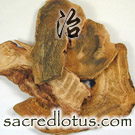
- Purges heat and drains fire: Da Huang (Rhei Radix Et Rhizoma) clears heat-excess and moves stagnant stool downward.
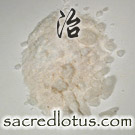
- Softens hardness, moistens dryness: Mang Xiao (Natrii Sulfas), salty and cold, softens hardened, dry stool and clears heat.
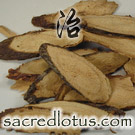
- Harmonizes and moderates: Zhi Gan Cao (Glycyrrhizae Radix, honey-fried) slows and tempers the drastic purging action of the other two herbs and protects Stomach qi during the purge.
Source: Sacred Lotus sources & references (composition) + Bensky & Barolet, Formulas & Strategies; Chen & Chen, Chinese Herbal Formulas and Applications. Traditional-use framing; not medical advice.
Indications
What is Tiao Wei Cheng Qi Tang used for?
Tiao Wei Cheng Qi Tang treats mild Yang Ming organ (bowel) heat-excess — heat that has bound with stool in the Stomach and Intestines and dried it out, but without the pronounced abdominal fullness, distention, or hard, tender masses that mark the more severe Cheng Qi presentations.
- Constipation with dry, bound stool, often with a sense of mild abdominal discomfort or fullness rather than severe distention or pain.
- Heat signs: fever (which may be tidal/worse in the afternoon), thirst, irritability or vexation, and in more pronounced cases mild delirious speech or restlessness.
- Stomach/Intestine fire signs such as mouth and tongue sores, gum swelling or toothache, or nosebleed attributed to Stomach heat.
Tongue and pulse: a red tongue with a yellow coating, and a slippery, rapid pulse.
Source: Sacred Lotus sources & references (pattern/tongue/pulse) + Bensky & Barolet, Formulas & Strategies; Chen & Chen, Chinese Herbal Formulas and Applications. Traditional-use framing; not medical advice.
Western Uses:
What conditions is Tiao Wei Cheng Qi Tang used for in modern practice?
Tiao Wei Cheng Qi Tang gently purges mild Yang-Ming organ heat with constipation (fullness and heat without the severe distention of the major purgatives), so it is referenced for heat-constipation and acute-abdomen pictures: constipation, acute simple intestinal obstruction, acute cholecystitis, and acute appendicitis.
It is chosen for the mild-organ-heat pattern, not for a diagnosis. Intestinal obstruction, cholecystitis and appendicitis are potential surgical emergencies presenting with severe abdominal pain and require immediate medical assessment — a purgative must never be taken into an undiagnosed acute abdomen. Traditional-use correlates only, not a treatment claim.
Source: Sacred Lotus sources & references (pattern) + Bensky & Barolet, Formulas & Strategies; biomedical correlates as reference only. Not medical advice.
Ingredients
3 substances in Tiao Wei Cheng Qi Tang — each links to its full herb monograph.
Preparation & dosage
How is Tiao Wei Cheng Qi Tang prepared?
Da Huang and Zhi Gan Cao are decocted together in water first; the dregs are then strained out and Mang Xiao is dissolved into the strained hot liquid rather than boiled along with the other herbs, per the method recorded in the Shang Han Lun. This preserves Mang Xiao’s salty, softening action, which is diminished by prolonged boiling.
- Classical dosing style: the resulting decoction is traditionally taken warm, in small, repeated sips rather than as a single large dose — consistent with its gentler, “regulating” intent compared to the more aggressive Da Cheng Qi Tang.
- Short-term, condition-specific use: as a purgative formula for an acute heat-excess pattern, it is not intended for ongoing or tonic use once the bowel has moved and heat has cleared.
Source: Shang Han Lun (Zhang Zhongjing) preparation method + Bensky & Barolet, Formulas & Strategies. Traditional-use framing; not medical advice.
Water decoction; Da Huang and Zhi Gan Cao decocted together, strained, then Mang Xiao dissolved into the hot strained liquid (not boiled with the other herbs). Reference relative amounts (per Sacred Lotus sources & references): Da Huang 12 g; Mang Xiao 9-12 g; Zhi Gan Cao 6 g. Reference only; not a prescription.
Safety — read before use
What are the cautions for Tiao Wei Cheng Qi Tang?
Tiao Wei Cheng Qi Tang is a purgative for true Yang Ming heat-excess with dry, bound stool — it is not appropriate for cold or deficiency patterns, for constipation without heat signs, or for long-term or indiscriminate use as a general laxative. Da Huang and Mang Xiao are strongly purging and, in the salty-cold Mang Xiao’s case, can injure Stomach/Spleen yang and deplete fluids if overused.
- Contraindicated in pregnancy: both Da Huang and Mang Xiao are strongly purgative/downward-draining and are avoided in pregnancy in standard formulary guidance.
- Not for deficiency or cold-type constipation, or for exterior patterns where a pathogen has not yet consolidated into interior heat-excess.
- Not for pronounced abdominal fullness, distention, or hard masses — that presentation calls for Xiao Cheng Qi Tang or Da Cheng Qi Tang, whose Hou Po and Zhi Shi specifically move qi and relieve distention; using this milder formula there under-treats the pattern, while using this formula’s stronger cousins where there is no distention over-purges.
- Discontinue once the bowel has moved and heat clears: as with all Cheng Qi decoctions, this is a short-term purgative strategy, not a tonic, and prolonged use is inappropriate; professional guidance is advised, particularly for the elderly, the weak, or during pregnancy.
Source: Bensky & Barolet, Formulas & Strategies (cautions for purgative Yang Ming formulas). Traditional-use framing; not medical advice.
Originally Appeared In:
- On Cold Damage (Shang Han Lun)
Notes:
How does Tiao Wei Cheng Qi Tang differ from Da Cheng Qi Tang and Xiao Cheng Qi Tang?
All three formulas come from the same Shang Han Lun chapter on Yang Ming organ heat-excess and share Da Huang as their core purgative, but they are chosen by how much qi-stagnation and distention accompanies the heat. See description for the full ingredient-by-ingredient comparison; in brief, Da Cheng Qi Tang (all four herbs) is for severe distention, fullness, and pain with hard stool; Xiao Cheng Qi Tang (no Mang Xiao) is for milder distention without deeply hardened stool; Tiao Wei Cheng Qi Tang (no Hou Po or Zhi Shi, plus Gan Cao) is for heat and dry stool with little or no distention — the gentlest, most “regulating” option of the three.
Classical source: Shang Han Lun (Treatise on Cold Damage), attributed to Zhang Zhongjing, compiled circa 200 CE — one of the foundational texts of Chinese herbal medicine and the original source for all three Cheng Qi decoctions.
Common modifications described in the formula literature include adding Zhi Zi and Dou Chi for more pronounced heat-vexation in the chest, or adapting the formula (with substantial modification) for heat-pattern presentations outside its classic bowel-heat indication, such as Stomach-heat toothache or bleeding gums; any such modification changes the formula’s composition and is a separate clinical decision from the classical three-herb decoction.
Source: Bensky & Barolet, Formulas & Strategies; Chen & Chen, Chinese Herbal Formulas and Applications (Shang Han Lun formula family and modifications).
Clinical Studies & Research:
Is there modern research on Tiao Wei Cheng Qi Tang?
Direct modern research on the classical three-herb formula itself is very limited; the one identifiable report in the indexed literature describes a modified version used adjunctively, not the traditional Yang Ming heat-excess indication. A 2025 case report describes a modified Tiao Wei Cheng Qi decoction used alongside surgery to help relieve partial bowel obstruction and improve a patient’s condition ahead of a partial duodenectomy for primary duodenal adenocarcinoma, framed by the authors around a “gastric dryness and fluid injury” pattern rather than the classical Yang Ming presentation this monograph describes.
- Case report, modified formula (2025): a modified Tiao Wei Cheng Qi decoction combined with partial duodenectomy in a case of primary duodenal adenocarcinoma with bowel obstruction (PMID 40735036).
Source: PubMed 40735036. Research context only, from a single case report of a modified formula in a specific oncologic setting — not evidence for the classical formula’s traditional Yang Ming heat-excess indication, and not a therapeutic claim.
Sources & References
Compiled and edited by Thomas Dehli, Founder & Editor, Sacred Lotus Updated
The information here is referenced from numerous sources — teachers, practitioners, class notes from Five Branches University, the books below, and the published research literature, with citations given as resolvable PubMed identifiers. Where sources disagree, I have flagged the discrepancies directly. If facts couldn't be verified, I have left them out. How we source our content.
Reference information for students and practitioners — not medical advice. Consult a qualified practitioner. Terms of use.
Chinese Formulas Books & References
 https://amzn.to/4fYI3f8
 https://amzn.to/4j55NRA
 https://amzn.to/4gMROyv
 https://amzn.to/4h7msSK