

Da Cheng Qi Tang (Major Order the Qi Decoction)
Da Cheng Qi Tang
Major Order the Qi Decoction
- Category
- Formulas that Drain Downward
- Subcategory
- Formulas that Purge Heat Accumulation
- Ingredients
- 4 herbs
Actions
What does Da Cheng Qi Tang do?
Da Cheng Qi Tang strongly purges accumulated heat and stagnant Qi from the Stomach and Intestines, breaking up hardened stool and clearing full-blown Yangming organ (Fu) excess. It is the most forceful of the "Order the Qi" purgatives, built to attack all "four bigs" (pi, man, zao, shi — fullness, distention, dryness, and excess) at once rather than any single one alone.
- Purges heat-accumulation and unblocks the bowels — Da Huang and Mang Xiao soften and expel hardened, dry stool.
- Moves stagnant Qi and relieves distention/fullness — Zhi Shi and Hou Po break up Qi stagnation in the abdomen so the purgatives can act.
- Clears excess heat — draining the bowel drains the heat that has bound with it, addressing tidal fever and delirious speech from Yangming heat.
Source: cross-referenced against multiple online sources; Bensky & Barolet, Formulas & Strategies; classical formulation from the Shang Han Lun (Treatise on Cold Damage, Zhang Zhongjing, ~200 CE).
Indications
What is Da Cheng Qi Tang used for?
Da Cheng Qi Tang is used for Yangming organ (Fu)-excess: full, hard, painful abdominal distention with severe constipation, tidal fever, and profuse sweating from the hands and feet. It is reserved for confirmed excess-heat bound with dry stool, not for simple constipation.
- Severe constipation with hard, dry stool, or paradoxical watery diarrhea that leaks around a retained hard mass ("heat accumulation diarrhea").
- Epigastric and abdominal focal distention and fullness that does not resolve with pressure.
- Firm, tense abdomen with pain aggravated by palpation (a positive "guarding" finding).
- Tidal fever (fever that worsens at a set time of day, classically late afternoon) with profuse sweating from the hands and feet.
- Irritability, restlessness, delirious speech, or clouded consciousness from heat harassing the Stomach/Intestines.
- Abdominal fullness and constipation following high fever, in the aftermath of febrile disease, or with dental/gum pain from Stomach fire.
Source: cross-referenced against multiple online sources; Bensky & Barolet, Formulas & Strategies; Shang Han Lun.
Western Uses:
What conditions is Da Cheng Qi Tang used for in modern practice?
Da Cheng Qi Tang is a strong purgative for Yang-Ming organ heat with obstruction (high fever, abdominal fullness and pain, constipation), and it is referenced — in a hospital/practitioner setting — for acute-abdomen and heat-excess pictures: severe constipation, simple intestinal obstruction, acute cholecystitis, acute appendicitis, acute pancreatitis, biliary roundworm (ascariasis), early-stage dysentery, pneumonia, and heat-excess syncope or seizures.
A critical safety note: most of these are medical or SURGICAL EMERGENCIES. Acute appendicitis, intestinal obstruction, cholecystitis, and pancreatitis present with severe abdominal pain and require immediate hospital assessment — not self-treatment; a powerful purgative taken into an undiagnosed acute abdomen can be dangerous. Where Da Cheng Qi Tang appears in modern integrative practice it is used by clinicians alongside conventional care (there is genuine research interest in it for post-operative ileus). This records traditional/integrative-use correlates, emphatically not a treatment claim or a reason to delay emergency care.
Source: Sacred Lotus sources & references (pattern) + Bensky & Barolet, Formulas & Strategies; biomedical correlates as reference only. Not medical advice.
Ingredients
4 substances in Da Cheng Qi Tang — each links to its full herb monograph.
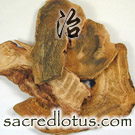 Da Huang12 gPurgatives
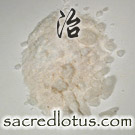 Mang Xiao9-12 gPurgatives
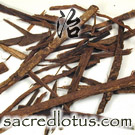 Hou Po24 gAromatic Herbs that Transform and Dissolve Dampness
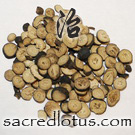 Zhi Shi12-15 gRegulate the Qi
Preparation & dosage
How is Da Cheng Qi Tang prepared?
Da Cheng Qi Tang is taken as a decoction with a strict, non-standard cooking order: Hou Po and Zhi Shi are cooked first, Da Huang is added later for a brief final boil, and Mang Xiao is dissolved into the strained liquid only after it is taken off the heat — reversing this order is considered to change the formula's action.
- Step 1 — Hou Po and Zhi Shi are decocted first (classically in water reduced by evaporation), to move Qi and open the distention before the purgatives are introduced.
- Step 2 — Da Huang is added later and cooked only briefly; prolonged co-decoction is traditionally held to weaken its purgative effect, so it is added toward the end rather than from the start.
- Step 3 — Mang Xiao is not boiled at all: once the decoction is strained and off the heat, Mang Xiao is dissolved directly into the warm strained liquid, since heat and prolonged cooking degrade its softening (runan) action.
Historical sources note that adjusting this order — for example decocting all four herbs together, or cooking Da Huang from the start — shifts the formula's emphasis: cooking Da Huang longer with the other herbs is said to favor moving Qi and relieving distention over vigorous purging, which is part of how the related, gentler members of this family (Xiao Cheng Qi Tang, Tiao Wei Cheng Qi Tang) are differentiated in preparation as well as composition.
Source: cross-referenced against multiple online sources; Bensky & Barolet, Formulas & Strategies; Shang Han Lun.
Safety — read before use
What are the cautions for Da Cheng Qi Tang?
Da Cheng Qi Tang is a strong purgative reserved for confirmed Yangming organ-excess (true excess-heat bound with hard, dry stool); it is contraindicated in pregnancy and in patterns of deficiency, and is not intended for general or habitual constipation. The following points are widely noted as neutral public-safety reference, not administration guidance.
- Contraindicated in pregnancy — the strongly purgative, downward-draining, blood-invigorating action is considered unsafe in pregnant patients.
- Not for deficiency patterns — sources caution against use in Qi, Blood, Yin, or Yang deficiency, in the frail or elderly, or in patients without a true excess condition, since the formula can injure the Stomach/Spleen Qi and deplete fluids.
- Not for simple or chronic constipation without heat-accumulation — it is described as a targeted crisis formula for confirmed Fu-organ excess with the "four bigs," not a general-purpose laxative.
- Short-term use only — sources describe it as intended to be discontinued once the stool is passed and the excess resolves, rather than continued.
- Possible effects of the strong purgative action — diarrhea, vomiting, or abdominal cramping have been described as arising from the formula's forceful downward-draining action.
Source: cross-referenced against multiple online sources; Bensky & Barolet, Formulas & Strategies; Shang Han Lun.
Originally Appeared In:
- On Cold Damage (Shang Han Lun)
Notes:
How does Da Cheng Qi Tang differ from related formulas?
Da Cheng Qi Tang is the strongest of the classical "Order the Qi" (Cheng Qi) purgatives from the Shang Han Lun, differentiated from its relatives by which of the "four bigs" — fullness, distention, dryness, and excess — each formula is built to address.
- Xiao Cheng Qi Tang (Minor Order the Qi Decoction) — omits Mang Xiao and cooks all the herbs together rather than in staged order, giving a milder purge aimed more at fullness and distention than at hard dryness; used when excess-heat is present but the stool is not yet fully hardened.
- Tiao Wei Cheng Qi Tang (Regulate the Stomach and Order the Qi Decoction) — omits Zhi Shi and Hou Po, pairing Da Huang and Mang Xiao with Zhi Gan Cao instead; it targets dryness and heat with mild distention, moderating the purge for a gentler presentation.
- Da Xian Xiong Tang (Major Sinking Into the Chest Decoction) — replaces Zhi Shi and Hou Po with Gan Sui and Mang Xiao alongside Da Huang, redirecting the formula from intestinal Fu-excess toward chest-and-epigastric water-heat binding (structural, painful hardness of the chest/epigastrium), a distinct pattern from Yangming bowel excess.
- Classical source and lineage — Da Cheng Qi Tang originates in Zhang Zhongjing's Shang Han Lun (Treatise on Cold Damage, ~200 CE) as the principal formula for Yangming Fu-organ excess, and is considered the parent formula from which the milder Cheng Qi variants are derived by omission or substitution of ingredients.
Source: cross-referenced against multiple online sources; Bensky & Barolet, Formulas & Strategies; Shang Han Lun.
Clinical Studies & Research:
Is there modern research on Da Cheng Qi Tang?
Modern research on Da Cheng Qi Tang has focused mainly on its use for acute abdominal conditions such as postoperative ileus, acute pancreatitis, and intestinal obstruction, where it is studied as an adjunct alongside conventional care rather than a replacement for it. This research is presented as scientific context on traditional use, not a therapeutic claim.
- Clinical and pharmacological studies from China have examined Da Cheng Qi Tang and closely related Cheng-Qi-family decoctions for effects on gastrointestinal motility and recovery of bowel function after abdominal surgery.
- Research on acute pancreatitis has explored Da Cheng Qi Tang-based protocols as a complementary measure alongside standard treatment, with outcomes reported in the Chinese-language clinical literature.
- Individual constituent herbs, particularly Da Huang (Rheum), have documented pharmacological data on anthraquinone-driven purgative and gastrointestinal-motility effects, published independently of the whole-formula research.
Sources: cross-referenced against multiple online sources; no specific PMID/PMC identifiers for whole-formula clinical trials could be independently verified and resolved, so none are cited here.
Sources & References
Compiled and edited by Thomas Dehli, Founder & Editor, Sacred Lotus Updated
The information here is referenced from numerous sources — teachers, practitioners, class notes from Five Branches University, the books below, and the published research literature, with citations given as resolvable PubMed identifiers. Where sources disagree, I have flagged the discrepancies directly. If facts couldn't be verified, I have left them out. How we source our content.
Reference information for students and practitioners — not medical advice. Consult a qualified practitioner. Terms of use.
Chinese Formulas Books & References
 https://amzn.to/4fYI3f8
 https://amzn.to/4j55NRA
 https://amzn.to/4gMROyv
 https://amzn.to/4h7msSK