

Wen Jing Tang (Warm the Menses Decoction)
Wen Jing Tang
Warm the Menses Decoction
- Category
- Formulas that Invigorate the Blood
- Ingredients
- 12 herbs
Actions
What does Wen Jing Tang do?
Wen Jing Tang warms the Chong and Ren vessels to dispel cold, invigorates the blood to resolve stasis, and simultaneously nourishes blood and yin while tonifying the qi of the middle burner. That combination — warming and moving alongside nourishing and tonifying — is unusually broad for a single formula, and is exactly what it is best known for.
- Warms the channels and dispels cold: Wu Zhu Yu and Gui Zhi, assisted by Sheng Jiang, drive out cold from the Chong and Ren vessels and the lower abdomen.
- Invigorates blood and dispels stasis: Chuan Xiong and Mu Dan Pi move blood that has become static from prolonged cold, while Mu Dan Pi also clears the deficiency heat that stasis of long standing tends to generate.
- Nourishes blood: Dang Gui, Bai Shao, and E Jiao build blood and help stop the irregular, prolonged, or spotting-type bleeding that this pattern produces.
- Nourishes yin and clears deficiency heat: Mai Men Dong offsets the warming, drying herbs and addresses the dry mouth/lips and low-grade evening heat that accompany chronic blood deficiency.
- Tonifies the qi of the middle burner: Ren Shen and Gan Cao support Spleen/Stomach qi so it can generate blood, and harmonize the formula's warming and cooling actions.
- Harmonizes the Stomach: Ban Xia and Sheng Jiang direct rebellious qi downward and keep the rich, cloying blood-nourishing herbs (E Jiao, Mai Men Dong) from burdening digestion.
Source: Jin Gui Yao Lue + Bensky & Barolet, Formulas & Strategies (action analysis); ingredient list confirmed against the Sacred Lotus formula database.
Indications
What is Wen Jing Tang used for?
Wen Jing Tang is the classic formula for irregular menstruation and chronic lower-abdominal cold with an underlying pattern of blood stasis, blood deficiency, and cold in the Chong and Ren vessels — including difficulty conceiving that traditional practice attributes to this pattern.
- Menstruation arriving early or late, or an irregular cycle overall
- Persistent but mild uterine bleeding, or menstrual flow that is prolonged or continuous rather than a clean, timely stop
- Bleeding or spotting between periods
- Distension, pain, and a sensation of cold in the lower abdomen
- Low-grade fever appearing in the evenings
- Dry mouth and lips together with a warm feeling in the palms and soles (signs of concurrent yin/blood deficiency generating mild heat)
- Infertility associated with this cold-stasis-with-deficiency pattern
Source: Jin Gui Yao Lue (chapter on gynecological disorders) + Bensky & Barolet, Formulas & Strategies; cross-referenced against multiple online sources.
Western Uses:
What conditions is Wen Jing Tang used for in modern practice?
Wen Jing Tang warms the Chong and Ren vessels and dispels cold-and-stasis while nourishing blood (chronic menstrual irregularity with cold, lower-abdominal cold pain, and infertility), so it is referenced for cold-and-deficiency gynaecological conditions: irregular menstruation, painful periods (dysmenorrhoea), uterine bleeding, infertility, and chronic pelvic inflammatory disease.
It is chosen for the cold-in-the-vessels-with-stasis pattern, not for a diagnosis. Infertility, abnormal uterine bleeding, and pelvic inflammatory disease all require medical/gynaecological diagnosis and care. This formula is a traditional adjunct, not a substitute. Traditional-use correlates only, not a treatment claim.
Source: Sacred Lotus sources & references (pattern) + Bensky & Barolet, Formulas & Strategies; biomedical correlates as reference only. Not medical advice.
Ingredients
12 substances in Wen Jing Tang — each links to its full herb monograph.
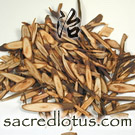 Gui Zhi6 gWarm, Spicy Herbs that Release the Exterior
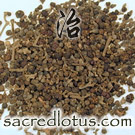 Wu Zhu Yu9 gWarm the Interior and Expel Cold
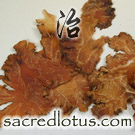 Chuan Xiong6 gInvigorate Blood and Remove Stagnation
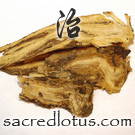 Dang Gui9 gTonify Blood
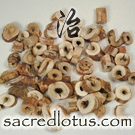 Mu Dan Pi6 gCool the Blood
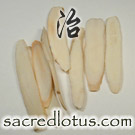 Bai Shao6 gTonify Blood
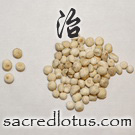 Ban Xia6 gWarm Herbs that Transform Phlegm-Cold
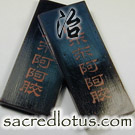 E Jiao6 gTonify Blood
 Mai Men Dong9 gTonify Yin
 Ren Shen6 gTonify Qi
 Sheng Jiang6 gWarm, Spicy Herbs that Release the Exterior
 Gan Cao6 gTonify Qi
Preparation & dosage
How is Wen Jing Tang prepared?
Wen Jing Tang is prepared as a standard water decoction of all twelve herbs, with one key exception: E Jiao (donkey-hide gelatin) is dissolved into the final strained decoction rather than boiled with the other herbs. E Jiao is a concentrated animal-glue substance that becomes gummy and can scorch or stick if simmered directly with the other ingredients, so practitioners melt it into the hot, already-strained liquid just before the decoction is taken.
In contemporary practice, Dang Shen is commonly substituted for Ren Shen at roughly double or triple the dose, reflecting Dang Shen's gentler, more moderate qi-tonifying action and lower cost. Sheng Jiang (fresh, uncooked ginger) is used rather than dried ginger, matching its role of harmonizing the Stomach alongside Ban Xia rather than adding additional interior-warming strength.
Source: Bensky & Barolet, Formulas & Strategies (preparation notes, E Jiao handling, Dang Shen substitution); cross-referenced against multiple online sources.
Safety — read before use
What are the cautions for Wen Jing Tang?
Wen Jing Tang is not appropriate for patterns of excess heat, nor for lower-abdominal masses (zheng jia) arising from blood stasis of the excess type — it is built for a cold-with-deficiency pattern, and using it against a true excess-heat or excess-stasis presentation would be a pattern mismatch.
- Excess heat: the formula's several warming herbs (Wu Zhu Yu, Gui Zhi, Sheng Jiang) are contraindicated where heat signs — a red tongue, thirst for cold drinks, a rapid pulse — predominate.
- Excess-type abdominal masses: firm, fixed lower-abdominal masses from severe blood stasis generally call for a stronger, dedicated stasis-breaking formula rather than this gentler warm-and-nourish approach.
- Pregnancy: the formula contains blood-invigorating herbs (Chuan Xiong, Mu Dan Pi) that are conventionally used with caution or avoided in pregnancy; use in this context is a matter for a qualified TCM practitioner, not self-administration.
- Pattern discrimination: the evening low-grade fever, dry mouth/lips, and warm palms/soles that mark this pattern reflect a mild concurrent deficiency heat — they should not be mistaken for a true excess-heat bleeding disorder, which this formula does not address.
Source: Bensky & Barolet, Formulas & Strategies (contraindications); cross-referenced against multiple online sources. Reference only, not administration guidance.
Originally Appeared In:
- Essentials from the Golden Cabinet (Jin Gui Yao Lue)
Notes:
How does Wen Jing Tang differ from Shao Fu Zhu Yu Tang and other cold-stasis formulas?
Wen Jing Tang is built for cold-stasis complicated by blood, yin, and qi deficiency — not for pure cold-excess blood stasis, which is the territory of formulas like Shao Fu Zhu Yu Tang. The two are easily confused because both warm the lower abdomen and move stagnant blood, but their underlying pattern differs sharply.
- vs Shao Fu Zhu Yu Tang: Shao Fu Zhu Yu Tang (from the Yi Lin Gai Cuo) is a purely excess-oriented formula — strong stasis-breaking and pain-relieving herbs (Pu Huang, Wu Ling Zhi, Yan Hu Suo, Mo Yao) alongside warming herbs, for fixed, stabbing lower-abdominal pain and masses from cold-stasis with no deficiency component. It carries no yin-nourishing or qi-tonifying herbs at all. Wen Jing Tang, by contrast, is a cold-stasis-with-deficiency formula: it adds blood tonics (Dang Gui, Bai Shao, E Jiao), a yin tonic (Mai Men Dong), and qi tonics (Ren Shen, Gan Cao) because the underlying constitution is depleted, not merely obstructed — reflected in Wen Jing Tang's more diffuse, chronic pain and its deficiency-heat signs (evening low-grade fever, dry mouth, hot palms/soles) that Shao Fu Zhu Yu Tang's presentation lacks.
- vs cold-excess blood-stasis formulas generally: formulas built around pure warming-and-moving action (without tonification) are appropriate when the constitution is otherwise sound and cold-stasis is the whole picture. Wen Jing Tang's breadth of composition — warming, blood-moving, blood-nourishing, and yin-nourishing herbs together — signals a more complex, deficiency-laden presentation, and is why it remains a long-course formula for constitutional gynecological cold rather than a short-course formula for acute stasis pain.
Classical source: Wen Jing Tang originates in the Jin Gui Yao Lue (Essentials from the Golden Cabinet), attributed to Zhang Zhongjing (Han dynasty, c. 3rd century CE), in the chapter addressing diseases of women, where it is described for irregular menstruation and infertility from prolonged uterine cold with blood stasis.
Source: Bensky & Barolet, Formulas & Strategies (formula comparison and classical origin); cross-referenced against multiple online sources.
Clinical Studies & Research:
Is there modern research on Wen Jing Tang?
Yes — several systematic reviews and meta-analyses of randomized controlled trials report Wen Jing Tang (Wenjing decoction) outperforming conventional comparators for ovulatory-disorder infertility and primary dysmenorrhea, alongside network-pharmacology work exploring possible mechanisms. As with most TCM formula literature, most underlying trials were conducted in China with variable methodological quality, so these findings are best read as promising signals rather than definitive proof.
- Ovulatory-disorder infertility (meta-analysis): a systematic review and meta-analysis of 11 randomized controlled trials (915 patients) found Wenjing decoction associated with a higher clinical effective rate and higher pregnancy rate than clomiphene alone, with the largest benefit when the two were combined (PMID 35838989).
- Primary dysmenorrhea (systematic review): a systematic review and meta-analysis of 18 studies (1,736 patients) found Wenjing decoction associated with a higher clinical effective rate and greater reduction in pain scores than NSAIDs for primary dysmenorrhea (PMID 28791471).
- Mechanism (network pharmacology + animal study): network-pharmacology analysis identified dozens of chemical constituents in the formula and, combined with an animal model, proposed a mechanism for its effect on dysmenorrhea involving inflammatory signaling and mediators such as IL-6 and TNF-alpha (PMID 39270884).
Sources: PMID 35838989; PMID 28791471; PMID 39270884. Research context only, not a therapeutic claim.
Sources & References
Compiled and edited by Thomas Dehli, Founder & Editor, Sacred Lotus Updated
The information here is referenced from numerous sources — teachers, practitioners, class notes from Five Branches University, the books below, and the published research literature, with citations given as resolvable PubMed identifiers. Where sources disagree, I have flagged the discrepancies directly. If facts couldn't be verified, I have left them out. How we source our content.
Reference information for students and practitioners — not medical advice. Consult a qualified practitioner. Terms of use.
Chinese Formulas Books & References
 https://amzn.to/4fYI3f8
 https://amzn.to/4j55NRA
 https://amzn.to/4gMROyv
 https://amzn.to/4h7msSK