

Wu Zhu Yu Tang (Evodia Decoction)
Wu Zhu Yu Tang
Evodia Decoction
- Category
- Formulas that Warm Interior Cold
- Subcategory
- Formulas that Warm the Middle and Dispel Cold
- Ingredients
- 4 herbs
Actions
What does Wu Zhu Yu Tang do?
Wu Zhu Yu Tang warms the Liver and Stomach, expels cold, and directs rebellious Stomach and Liver qi back downward — addressing both the cold at the root of the pattern and the counterflow ascent of qi that produces its hallmark vomiting and severe vertex headache.
The four ingredients divide by role:
- Chief: Wu Zhu Yu is hot and acrid-bitter, entering the Liver, Stomach, and Kidney channels; it warms interior cold, subdues rebellious qi flowing upward, and dries dampness. Its reach into the Liver (Jueyin) channel — which the classical channel pathways connect to the vertex of the head — is traditionally why this pattern’s headache localizes specifically to the crown.
- Deputy: Sheng Jiang, used in an unusually large amount, warms the Stomach and is traditionally called “the sacred herb for stopping vomiting” — it disperses cold and reinforces Wu Zhu Yu’s downward-directing action.
- Assistant: Ren Shen tonifies the qi of the Spleen and Stomach, addressing the underlying deficiency that allows cold to accumulate in the middle and lower burner in the first place — this is a deficiency-cold pattern, not simple excess cold, so a tonic is included alongside the warming herbs.
- Envoy: Da Zao harmonizes the formula, protects Stomach qi and fluids, and moderates the harshness of Wu Zhu Yu and the strongly dispersing Sheng Jiang.
Source: Sacred Lotus sources & references (composition) cross-referenced against multiple online sources; Bensky & Barolet, Formulas & Strategies (chief/deputy/assistant/envoy analysis). Traditional-use framing; not medical advice.
Indications
What is Wu Zhu Yu Tang used for?
Wu Zhu Yu Tang treats deficiency cold of the Stomach together with Liver or Kidney channel cold — a pattern the Shang Han Lun describes across three different channel presentations that share the same underlying cold and qi-counterflow mechanism, one of the classic teaching points of this formula.
Its classic clinical presentation includes:
- Stomach-Liver cold counterflow: vomiting shortly after eating, or vomiting of clear fluid, with cold pain in the epigastrium and abdomen.
- Vertex headache: a severe headache at the very top of the head, often radiating toward the eyes, together with dry retching and copious clear, frothy saliva.
- Shaoyin (Kidney) involvement: vomiting and diarrhea with cold limbs (reversal cold of the hands and feet) and marked restlessness or agitation from profound underlying cold.
- General cold signs: a preference for warmth, worse symptoms with cold exposure, and fatigue consistent with underlying yang deficiency.
Tongue and pulse: pale tongue with a white, slippery coat; a wiry-slow or weak pulse.
Source: Sacred Lotus sources & references (pattern/tongue/pulse) cross-referenced against multiple online sources; Shang Han Lun (Treatise on Cold Damage); Bensky & Barolet, Formulas & Strategies. Traditional-use framing; not medical advice.
Western Uses:
What conditions is Wu Zhu Yu Tang used for in modern practice?
Wu Zhu Yu Tang warms deficient middle-burner cold with Liver/Stomach cold and rebellion (cold epigastric pain, vomiting of clear fluid, and a classic severe headache at the vertex), so it is referenced for cold-type digestive and head conditions: acute and chronic gastritis, cholecystitis, morning sickness, cold-type ("neurogenic") headache, Ménière's disease, hypertension, and trigeminal neuralgia.
It is chosen for the middle-burner-cold-with-rebellion pattern, not for a diagnosis. Severe or unrelenting vomiting in pregnancy (hyperemesis) needs medical care; hypertension requires management; and trigeminal neuralgia needs medical diagnosis. Traditional-use correlates only, not a treatment claim.
Source: Sacred Lotus sources & references (pattern) + Bensky & Barolet, Formulas & Strategies; biomedical correlates as reference only. Not medical advice.
Ingredients
4 substances in Wu Zhu Yu Tang — each links to its full herb monograph.
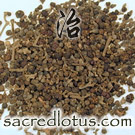 Wu Zhu Yu9-12 gWarm the Interior and Expel Cold
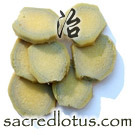 Sheng Jiang18 gWarm, Spicy Herbs that Release the Exterior
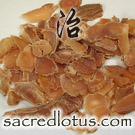 Ren Shen9 gTonify Qi
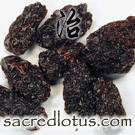 Da Zao12 piecesTonify Qi
Preparation & dosage
How is Wu Zhu Yu Tang prepared?
Wu Zhu Yu Tang is prepared as a water decoction and taken warm, traditionally in divided doses. Wu Zhu Yu is conventionally processed before use — classical Chinese materia medica describes rinsing or soaking it in hot water, or preparing it with licorice water, to soften its harsh, acrid quality — and Sheng Jiang is used in a distinctly larger amount than in most other formulas, reflecting its central role in settling the vomiting.
Source: Bensky & Barolet, Materia Medica and Formulas & Strategies (Wu Zhu Yu processing and decoction method); cross-referenced against multiple online sources.
Safety — read before use
What are the cautions for Wu Zhu Yu Tang?
Wu Zhu Yu Tang is a strongly warming, acrid formula built for genuine deficiency-cold, and Wu Zhu Yu itself is recognized in classical and modern sources as a mildly toxic herb when used in excess or over a prolonged period — this is presented here as neutral reference, not as guidance for self-administration or dosing.
- Not for heat patterns: contraindicated in vomiting or headache caused by heat — for example, Liver-heat or Liver-yang-rising headache with red eyes and irritability — where its hot, acrid nature would aggravate the condition.
- Yin deficiency: avoid, or use only with modification, in yin-deficient patients, since Wu Zhu Yu’s heat and dryness can further injure yin.
- Herb-level caution: Wu Zhu Yu carries a recognized mild toxicity; classical materia medica cautions against excessive or prolonged use, and modern dosing guidance keeps the amount used per formula modest. A 2024 rat toxicology study of the full decoction found no adverse effects at doses up to roughly 80 times the proposed clinical amount, but this reflects the prepared decoction studied under laboratory conditions, not a basis for exceeding customary dosing.
- Pregnancy: use only under professional guidance, given the formula’s strong acrid-warming, downward-directing action.
Source: Bensky & Barolet, Materia Medica (Wu Zhu Yu toxicity notes); PMID 38291651, Drug and Chemical Toxicology, 2024 (decoction toxicology); cross-referenced against multiple online sources. Neutral public-safety reference; not administration guidance.
Originally Appeared In:
- On Cold Damage (Shang Han Lun)
Notes:
How does Wu Zhu Yu Tang differ from Ban Xia Hou Po Tang and Li Zhong Wan?
Wu Zhu Yu Tang is reserved for true Yang-deficient interior cold with vomiting and vertex headache, which sets it apart from two formulas it is easily confused with.
- vs Ban Xia Hou Po Tang: this formula treats Liver-qi stagnation with phlegm constrained in the throat (plum-pit qi / globus sensation), using Ban Xia, Hou Po, Fu Ling, Sheng Jiang, and Zi Su Ye to move qi and transform phlegm; it does not warm deficiency cold and does not address vertex headache or the Shaoyin cold-limb/agitation presentation. Choose Ban Xia Hou Po Tang for qi-phlegm constraint with a sensation of something stuck in the throat; choose Wu Zhu Yu Tang for genuine interior cold with vomiting and headache.
- vs Li Zhong Wan: both share Ren Shen as a tonifying assistant and both address Spleen-Stomach deficiency cold, but Li Zhong Wan (Ren Shen, Bai Zhu, Gan Jiang, Zhi Gan Cao) is milder and Spleen-focused, aimed at diarrhea, poor appetite, and cold limbs without the severe vomiting-immediately-after-eating or vertex headache that mark Wu Zhu Yu Tang. Wu Zhu Yu Tang is reserved for the more acute, more severe Liver-Stomach cold counterflow, relying on the stronger warming, downward-directing Wu Zhu Yu-Sheng Jiang pair rather than Li Zhong Wan’s Spleen-warming Bai Zhu and Gan Jiang.
Source: Bensky & Barolet, Formulas & Strategies (formula comparisons); Shang Han Lun (Treatise on Cold Damage); cross-referenced against multiple online sources. Traditional-use framing; not medical advice.
Clinical Studies & Research:
Is there modern research on Wu Zhu Yu Tang?
Yes — including one randomized controlled clinical trial for reflux disease and several animal studies on chronic migraine that speak directly to the formula’s classical vertex-headache indication.
- Randomized controlled trial (GERD): in a placebo-controlled trial of 90 patients with gastroesophageal reflux disease, the herbal decoction (as an add-on/comparator to omeprazole) produced symptom improvement broadly similar to the standard proton-pump inhibitor over 4 weeks, with the herbal group showing a possible longer-lasting effect after treatment ended (PMID 30668332, Phytomedicine, 2019).
- Chronic migraine (rat model): in an inflammatory-soup-induced chronic migraine model, the decoction reduced hyperalgesia (raised facial mechanical withdrawal threshold and tail-flick latency) in a dose-dependent way, increased brainstem serotonin, and lowered calcitonin gene-related peptide and inflammatory markers linked to migraine pain (PMID 35026523, Phytomedicine, 2022).
- Decoction toxicology: acute and 28-day oral toxicity testing in rats found no adverse effects at doses up to 4 g/kg/day (roughly 80-fold the proposed clinical dose), with no lethal dose identified in the doses tested (PMID 38291651, Drug and Chemical Toxicology, 2024).
- Gastric mucosal injury (rat model): in an alcohol-induced gastric ulcer model, the decoction was associated with reduced mucosal damage, studied through combined network-pharmacology and metabolomics analysis (PMID 38259271, Frontiers in Pharmacology, 2024).
Sources: PubMed 30668332; PubMed 35026523; PubMed 38291651; PubMed 38259271. Research context, not a therapeutic claim.
Sources & References
Compiled and edited by Thomas Dehli, Founder & Editor, Sacred Lotus Updated
The information here is referenced from numerous sources — teachers, practitioners, class notes from Five Branches University, the books below, and the published research literature, with citations given as resolvable PubMed identifiers. Where sources disagree, I have flagged the discrepancies directly. If facts couldn't be verified, I have left them out. How we source our content.
Reference information for students and practitioners — not medical advice. Consult a qualified practitioner. Terms of use.
Chinese Formulas Books & References
 https://amzn.to/4fYI3f8
 https://amzn.to/4j55NRA
 https://amzn.to/4gMROyv
 https://amzn.to/4h7msSK