

Xiao Jian Zhong Tang (Minor Construct the Middle Decoction)
Xiao Jian Zhong Tang
Minor Construct the Middle Decoction
- Category
- Formulas that Warm Interior Cold
- Subcategory
- Formulas that Warm the Middle and Dispel Cold
- Ingredients
- 6 herbs
Actions
What does Xiao Jian Zhong Tang do?
Xiao Jian Zhong Tang (Minor Construct the Middle Decoction) warms and tonifies the Middle burner and moderates spasmodic epigastric and abdominal pain of Middle-yang (Spleen–Stomach) deficiency cold. It “constructs the Middle” — rebuilding the Spleen and Stomach so they can again generate qi and blood — while harmonizing yin and yang.
How the ingredients work together (it is Gui Zhi Tang with the Bai Shao doubled plus Yi Tang):
- Chief — Yi Tang (maltose, 18–30 g): sweet and warm, it tonifies and enriches the Middle and moderates urgency and cramping pain.
- Deputies — Gui Zhi with a large dose of Bai Shao (18 g): Gui Zhi warms the yang and disperses cold; the doubled, sour Bai Shao nourishes blood, softens the Liver, and relaxes spasm — together they balance warming and preserving yin and relieve cramping.
- Assistants/envoys — Sheng Jiang, Da Zao, Zhi Gan Cao: warm and harmonize the Stomach and support the Spleen and qi.
Source: Sacred Lotus sources & references (composition); owner’s Five Branches / Bensky formula notes; Bensky & Barolet, Chinese Herbal Medicine: Formulas & Strategies. Traditional-use framing; not medical advice.
Indications
What is Xiao Jian Zhong Tang used for?
It is used for intermittent, spasmodic (cramping) epigastric or abdominal pain that improves with warmth and pressure — the pattern of Middle-yang (Spleen–Stomach) deficiency cold in which weakened digestion also fails to construct qi and blood. The pain likes warmth and pressure and often eases after eating.
Typical pattern and presentation:
- Cardinal sign — recurring spasmodic abdominal pain, better with warmth and pressure.
- Deficiency signs — fatigue, a lusterless complexion, and, in the fuller picture, palpitations, irritability, low-grade fever, a dry mouth and throat, and sore or tight limbs.
- Tongue and pulse — pale tongue with a thin white coat; a thin, wiry pulse.
Source: live Sacred Lotus sources & references (indication: spasmodic, intermittent abdominal pain better with warmth and pressure; tongue: pale, white coat; pulse: thin, wiry); owner’s Five Branches / Bensky formula notes. Traditional pattern description, not a diagnosis.
Western Uses:
How is Xiao Jian Zhong Tang framed in modern practice?
In modern practice Xiao Jian Zhong Tang is used as a reference formula for deficiency-cold digestive patterns that overlap with conditions such as peptic ulcer, chronic gastritis, and functional abdominal pain. It is chosen for the TCM pattern — cramping pain that responds to warmth and pressure — rather than for any biomedical label.
This is a framing note, not a treatment claim:
- Pattern-first — selection rests on Middle-yang deficiency cold, not on a diagnosis.
- Overlap terms — the reviewed literature discusses peptic ulcer, chronic gastritis, and functional gastrointestinal complaints in deficiency patterns.
Source: reviewed clinical literature (see Research). Reference framing only; persistent abdominal pain needs evaluation by a licensed clinician — not medical advice.
Ingredients
6 substances in Xiao Jian Zhong Tang — each links to its full herb monograph.
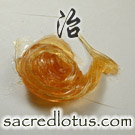 Yi Tang18-30 gTonify Qi
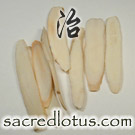 Bai Shao18 gTonify Blood
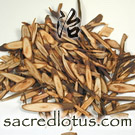 Gui Zhi9 gWarm, Spicy Herbs that Release the Exterior
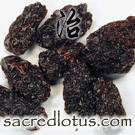 Da Zao12 piecesTonify Qi
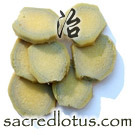 Sheng Jiang9 gWarm, Spicy Herbs that Release the Exterior
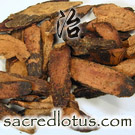 Zhi Gan Cao6 gTonify Qi
Preparation & dosage
How is Xiao Jian Zhong Tang prepared?
Xiao Jian Zhong Tang is prepared as a water decoction (tang) of Gui Zhi, a doubled dose of Bai Shao, Sheng Jiang, Da Zao and Zhi Gan Cao — after which its defining ingredient, Yi Tang (malt sugar / maltose), is stirred into the strained, still-hot decoction until it dissolves rather than being boiled with the herbs.
The sweet Yi Tang is central, not optional: it warms and supplements the middle burner and gives the formula its "construct the centre" action. Da Zao is often reduced to about 4 pieces. Available as granules.
Source: Sacred Lotus sources & references (composition and preparation note) + Bensky & Barolet, Formulas & Strategies.
Decoction. Classical amounts: Yi Tang (maltose) 18-30 g, Bai Shao 18 g, Gui Zhi 9 g, Sheng Jiang 9 g, Zhi Gan Cao 6 g, Da Zao 12 pieces (often reduced to about 4). Dissolve the Yi Tang into the strained decoction. Reference only, not a prescription.
Safety — read before use
What are the cautions for Xiao Jian Zhong Tang?
Because the formula is sweet, warming, and tonifying, it is unsuitable for heat and for damp obstruction. It is contraindicated or used only with caution in heat patterns, damp-heat, yin deficiency with heat signs, and in vomiting or abdominal fullness from damp obstruction — where its cloying sweetness can aggravate the fullness. It is not for excess-type abdominal pain.
- Sweetness — the large dose of Yi Tang (maltose) makes diabetic caution reasonable and can worsen damp/fullness patterns.
- Licorice — contains Zhi Gan Cao; per the Eighteen Incompatibilities it is not combined with Gan Sui, Da Ji, Yuan Hua, or Hai Zao.
Source: owner’s Five Branches / Bensky formula notes; classical incompatibility lists; materia medica cautions. Reference only.
Originally Appeared In:
- On Cold Damage (Shang Han Lun)
Notes:
How does Xiao Jian Zhong Tang compare with related formulas, and how is it modified?
Xiao Jian Zhong Tang is Gui Zhi Tang re-purposed for the interior: doubling the Bai Shao and adding Yi Tang turns an exterior-harmonizing formula into one that tonifies the Middle and moderates cramping pain.
- Huang Qi Jian Zhong Tang — Xiao Jian Zhong Tang plus Huang Qi, for the same pattern with more pronounced qi deficiency: spontaneous sweating and shortness of breath.
- vs Da Jian Zhong Tang (Major) — Da Jian Zhong Tang (Shu Jiao, Gan Jiang, Ren Shen, Yi Tang) treats more severe Middle deficiency cold with colicky pain, vomiting, and visible peristalsis; it is warmer and stronger than the “Minor” version.
- vs Li Zhong Wan — Li Zhong Wan warms and tonifies the Middle for deficiency cold with diarrhea and vomiting, but does not nourish blood or moderate spasmodic pain the way Xiao Jian Zhong Tang does.
Source: owner’s Five Branches / Bensky formula notes (comparison & modification set, incl. Huang Qi Jian Zhong Tang); Bensky, Formulas & Strategies.
Clinical Studies & Research:
Is there modern research on Xiao Jian Zhong Tang?
Yes — chiefly Chinese-language trials in peptic ulcer and chronic gastritis, with favorable pooled results but low methodological quality. A meta-analysis of “Jianzhong decoction” for peptic ulcers pooled 58 randomized controlled trials in 5,192 patients — 16 of them using Xiao Jian Zhong Tang specifically and 21 using the Huangqi Jianzhong variant. Versus conventional Western therapy it reported a higher total effective rate (OR 4.29), higher Helicobacter pylori eradication (OR 2.10), and lower recurrence (OR 0.23), while noting small samples, low methodological quality, and short follow-up.
A separate systematic review of Huangqi Jianzhong Tang (the Xiao Jian Zhong Tang plus Huang Qi variant) for chronic gastritis pooled 9 RCTs in 979 patients and found it more effective than conventional medicine alone when combined with it (OR 3.78), but concluded that “due to poor methodological quality, the beneficial effect and safeties… could not be confirmed.”
Sources: PubMed 28410586 (BMC Complement Altern Med, 2017, meta-analysis, 58 RCTs / 5,192 patients, Jianzhong decoction for peptic ulcer; includes 16 Xiao Jian Zhong Tang trials); PubMed 26819622 (Evid Based Complement Alternat Med, 2015, systematic review, 9 RCTs / 979 patients, Huangqi Jianzhong Tang for chronic gastritis). Research context, not a therapeutic claim.
Sources & References
Compiled and edited by Thomas Dehli, Founder & Editor, Sacred Lotus Updated
The information here is referenced from numerous sources — teachers, practitioners, class notes from Five Branches University, the books below, and the published research literature, with citations given as resolvable PubMed identifiers. Where sources disagree, I have flagged the discrepancies directly. If facts couldn't be verified, I have left them out. How we source our content.
Reference information for students and practitioners — not medical advice. Consult a qualified practitioner. Terms of use.
Chinese Formulas Books & References
 https://amzn.to/4fYI3f8
 https://amzn.to/4j55NRA
 https://amzn.to/4gMROyv
 https://amzn.to/4h7msSK