

Xiao Huo Luo Dan (Minor Invigorate the Collaterals Special Pill)
Xiao Huo Luo Dan
Minor Invigorate the Collaterals Special Pill
- Category
- Formulas that Expel Wind
- Ingredients
- 6 herbs
Actions
What does Xiao Huo Luo Dan do?
Xiao Huo Luo Dan warms and unblocks the channels and collaterals, expels wind-cold-damp, transforms phlegm, and invigorates blood to stop pain — a classical strategy for chronic, deep-seated painful obstruction (Bi syndrome) where cold, phlegm, and static blood have combined and lodged in the joints and sinews over a long period.
- Warms and expels Wind-Cold-Damp: the paired processed aconites, Chuan Wu and Cao Wu, are strongly warming herbs traditionally used to drive deep-lodged cold and dampness out of the joints and channels.
- Transforms Phlegm in the channels: Zhi Tian Nan Xing dries dampness and dissolves the phlegm that chronic obstruction allows to accumulate in the sinews and joints.
- Invigorates Blood and stops pain: the resin pair Ru Xiang and Mo Yao moves qi and blood locally to disperse stasis, addressing the fixed, unmoving quality of the pain.
- Unblocks the collaterals: Di Long frees the flow of qi and blood through the channels and is traditionally considered to moderate and guide the action of the warming herbs.
Source: Sacred Lotus sources & references (composition) cross-referenced against multiple online sources; Bensky & Barolet, Formulas & Strategies (strategy and herb roles). Traditional-use framing; not medical advice.
Indications
What is Xiao Huo Luo Dan used for?
Xiao Huo Luo Dan is traditionally used for chronic, fixed, severe pain of the joints and sinews from Wind-Cold-Damp Bi complicated by phlegm and blood stasis — long-standing cases where the pain has become deep, stubborn, and resistant to simpler formulas.
- Chronic painful obstruction (Bi syndrome): deep, fixed, severe joint and sinew pain that is worse in cold or damp weather.
- Contracture and stiffness: restricted range of motion or difficulty flexing and extending the affected joints.
- Numbness or heaviness of the limbs: from phlegm-damp obstructing the channels and collaterals.
- Residual stiffness or pain after injury: lingering discomfort where cold, phlegm, and static blood have settled into the area over time.
Source: Bensky & Barolet, Formulas & Strategies; Chen & Chen, Chinese Medical Herbology and Pharmacology (indications for Wind-Damp Bi formulas). Traditional-use framing; not medical advice.
Western Uses:
What conditions is Xiao Huo Luo Dan used for in modern practice?
Xiao Huo Luo Dan dislodges wind-cold-damp, phlegm and blood stasis lodged in the channels and collaterals (chronic, fixed, deep limb pain and numbness, often after injury or stroke), so it is referenced for stubborn channel-obstruction conditions: the after-effects of wind-stroke (apoplexy / cerebrovascular accident) and chronic arthritis.
It is chosen for the deep channel-obstruction pattern, not for a diagnosis. A stroke (cerebrovascular accident) is a medical emergency — sudden weakness, numbness, facial droop or speech difficulty needs immediate emergency care; where acupuncture/herbs help is in rehabilitation, alongside medical stroke care. Note this formula contains processed aconite and must be used only under a qualified practitioner. Traditional-use correlates only, not a treatment claim.
Source: Sacred Lotus sources & references (pattern) + Bensky & Barolet, Formulas & Strategies; biomedical correlates as reference only. Not medical advice.
Ingredients
6 substances in Xiao Huo Luo Dan — each links to its full herb monograph.
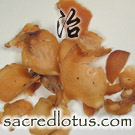 Zhi Tian Nan Xing180 gWarm Herbs that Transform Phlegm-Cold
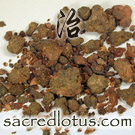 Mo Yao66 gInvigorate Blood and Remove Stagnation
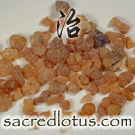 Ru Xiang66 gInvigorate Blood and Remove Stagnation
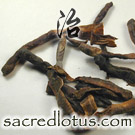 Di Long180 gExtinguish Wind and Stop Tremors
Preparation & dosage
How is Xiao Huo Luo Dan prepared?
Xiao Huo Luo Dan is a pill ("dan"), not a decoction — the herbs are ground to a fine powder and formed into small pills, traditionally taken with warm rice wine or lightly salted warm water, reflecting its intended use for a chronic condition needing a modest, sustained dose rather than a large acute one.
- Aconite must be processed before use: our composition data specifies Chuan Wu and Cao Wu as prepared/processed roots (Radix Aconiti Preparata), never raw — prolonged steaming or boiling is the traditional method used to reduce the toxic diester alkaloids in raw aconite to far less toxic forms. This processing step is a public-safety requirement of the formula, not an optional refinement.
- Zhi Tian Nan Xing similarly denotes processed (not raw) Arisaema rhizome, since the raw herb is likewise too irritating/toxic for internal use.
- Pill form and dosing are part of the safety design: because two of the six ingredients are aconite-derived, this formula is traditionally prepared and dosed only by a qualified practitioner, and is not a household or self-prepared decoction.
Source: Sacred Lotus sources & references (composition, herb processing) cross-referenced against multiple online sources; Bensky & Barolet, Formulas & Strategies.
Safety — read before use
What are the cautions for Xiao Huo Luo Dan?
Xiao Huo Luo Dan contains processed aconite (Chuan Wu and Cao Wu), toxic herbs that must be properly processed, correctly dosed, and used only under qualified professional supervision — the following is neutral public-safety reference information, not administration guidance.
- Raw aconite is never used internally: unprocessed Chuan Wu/Cao Wu contain diester-type aconitine alkaloids that are cardiotoxic and neurotoxic; traditional processing (prolonged steaming/boiling) hydrolyzes these into far less toxic forms, but processed aconite remains a restricted, prescription-only substance in many jurisdictions.
- Not for Bi obstruction with heat signs: as a warming formula, it is traditionally reserved for cold-type presentations and avoided where heat, redness, swelling, or fever accompany the joint pain.
- Contraindicated in pregnancy, given both the aconite content and the blood-invigorating resins Ru Xiang and Mo Yao.
- Classical incompatibility: aconite-category herbs are traditionally listed among the "eighteen incompatible medicaments" (shi ba fan) and are not combined with Ban Xia, Gua Lou, Bei Mu, Bai Lian, or Bai Ji.
- Long-term or unsupervised use is discouraged: even properly processed aconite carries a narrow margin between therapeutic and toxic effect, so use is traditionally limited in duration and dose and reserved for qualified practitioner oversight.
Source: Sacred Lotus sources & references (composition) cross-referenced against multiple online sources; Bensky & Barolet, Formulas & Strategies; Chan, Wang & Feng, "The toxicology and detoxification of Aconitum: traditional and modern views," PMID 34315520; Gao et al., "Aconitine: a review of its pharmacokinetics, pharmacology, toxicology and detoxification," PMID 35405250. Public-safety reference; not administration guidance or medical advice.
Originally Appeared In:
- Imperial Grace Formulary of the Tai Ping Era (Tai Ping Hui Min He Ji Ju Fang)
Notes:
What is the classical source of Xiao Huo Luo Dan?
Xiao Huo Luo Dan is traditionally attributed to the Tai Ping Hui Min He Ji Ju Fang (Formulas of the Peaceful Benevolent Dispensary), the Song-dynasty imperial pharmacy formulary, placing it among the classical Wind-Damp-expelling formulas for chronic Bi obstruction.
Is Xiao Huo Luo Dan the same formula as Huo Luo Xiao Ling Dan?
No — despite the similar name, Huo Luo Xiao Ling Dan is a different, more recent formula built around Dang Gui, Dan Shen, Ru Xiang, and Mo Yao rather than aconite, and it is this differently-composed formula that appears in most modern clinical research indexed under a similar-sounding name. The two should not be conflated: Xiao Huo Luo Dan (this formula) is the older aconite-containing pill for cold-type Bi with phlegm and stasis, while Huo Luo Xiao Ling Dan is a non-aconite, blood-invigorating formula used more broadly for pain and inflammation without the toxicity profile discussed above.
How does Xiao Huo Luo Dan differ from Juan Bi Tang?
Both treat Wind-Damp Bi, but Xiao Huo Luo Dan is reserved for more chronic, deeper obstruction with phlegm and blood stasis, using the stronger, toxic aconite pair, whereas Juan Bi Tang uses gentler wind-damp-expelling and qi-blood-tonifying herbs suited to presentations with more underlying deficiency and less need for aconite's intensity.
Source: Bensky & Barolet, Formulas & Strategies (classical attribution and formula comparisons) cross-referenced against multiple online sources.
Clinical Studies & Research:
Is there modern research on Xiao Huo Luo Dan?
No dedicated clinical trials of this specific six-herb aconite formula were identified in PubMed under its own name — searches instead surface a differently-composed, similarly-named formula (see notes), so no efficacy research is cited here to avoid conflating the two. Its key ingredient, processed aconite, does have a substantial pharmacology and toxicology literature.
- Aconitine pharmacology and toxicology (review): summarizes pharmacokinetics, therapeutic and toxic mechanisms, and detoxification approaches for aconitine-type alkaloids (PMID 35405250).
- Aconitum toxicology and detoxification (review): reviews traditional processing and modern findings on reducing Aconitum toxicity while retaining therapeutic use (PMID 34315520).
Sources: PubMed 35405250; PubMed 34315520. Research context on the constituent herb's safety profile, not a therapeutic claim for this formula.
Sources & References
Compiled and edited by Thomas Dehli, Founder & Editor, Sacred Lotus Updated
The information here is referenced from numerous sources — teachers, practitioners, class notes from Five Branches University, the books below, and the published research literature, with citations given as resolvable PubMed identifiers. Where sources disagree, I have flagged the discrepancies directly. If facts couldn't be verified, I have left them out. How we source our content.
Reference information for students and practitioners — not medical advice. Consult a qualified practitioner. Terms of use.
Chinese Formulas Books & References
 https://amzn.to/4fYI3f8
 https://amzn.to/4j55NRA
 https://amzn.to/4gMROyv
 https://amzn.to/4h7msSK