

Xiao Ji Yin Zi (Cephalanoplos Decoction)
Xiao Ji Yin Zi
Cephalanoplos Decoction
- Category
- Formulas that Stop Bleeding
- Subcategory
- Formulas that Clear Heat and Stop Bleeding
- Ingredients
- 10 herbs
Actions
What does Xiao Ji Yin Zi do?
Xiao Ji Yin Zi (Small Thistle Drink) cools the blood and stops bleeding while promoting urination and unblocking painful urinary dribbling (lin syndrome). It is built for heat that has scorched into the blood and settled in the Lower Burner, injuring the vessels of the Bladder and forcing blood into the urine — classically called "Blood Lin."
The ten ingredients divide by role:
- Chief: Sheng Di Huang and Xiao Ji — Sheng Di Huang richly cools the blood and nourishes yin (also replacing fluids lost through the bleeding and heat), while Xiao Ji cools the blood, stops bleeding, and mildly resolves stasis. Together they address both the root heat and the bleeding it causes.
- Deputies: Pu Huang (dry-fried) and Ou Jie strengthen the hemostatic action and keep the stopped blood from lingering as stasis; Hua Shi and Chuan Mu Tong clear heat and drain it out through urination, unblocking the painful, dribbling urination; Dan Zhu Ye and Zhi Zi drain heat downward from the Heart and Triple Burner into the urine, reinforcing the cooling, heat-clearing action.
- Assistant: Dang Gui nourishes and gently moves the blood, keeping the formula’s cold, diuretic herbs from congealing the blood into further stasis and helping to "regulate the blood" rather than simply suppress the bleeding.
- Envoy: Gan Cao harmonizes the other nine herbs and protects the Stomach from their cold, draining nature.
Discrepancy: Sacred Lotus sources & references lists plain Gan Cao (licorice) as the envoy, while Bensky & Barolet and most Formulas & Strategies–based teaching present the classical envoy as Zhi Gan Cao (honey mix-fried licorice), whose gentler, more tonifying preparation is traditionally preferred to harmonize a cooling, diuretic formula like this one. Both are the same herb in different processed forms; our plain-Gan-Cao entry is followed here as authoritative for this record.
Source: Sacred Lotus sources & references + Bensky & Barolet, Formulas & Strategies (chief/deputy/assistant/envoy analysis). Traditional-use framing; not medical advice.
Indications
What is Xiao Ji Yin Zi used for?
Xiao Ji Yin Zi treats Blood Lin — painful, bloody urination caused by heat pouring into the Lower Burner and damaging the Bladder’s blood vessels. It is one of the classic formulas for hematuria in Chinese medicine, used when the bleeding is clearly a heat pattern rather than a deficiency pattern.
Its classic clinical presentation:
- Urinary signs: blood in the urine (from a faint tinge to grossly bloody, occasionally with clots), frequent and urgent urination, and a burning or painful sensation on voiding.
- Associated signs: possible lower-abdominal or lumbar discomfort, thirst, and a general sense of heat consistent with heat forcing blood from the vessels.
Tongue and pulse (Sacred Lotus sources & references): red tongue with a thin yellow coat; a rapid, forceful pulse — both consistent with excess heat in the blood.
Source: Sacred Lotus sources & references on pattern/tongue/pulse + Bensky & Barolet, Formulas & Strategies. Traditional-use framing; not medical advice.
Western Uses:
What is Xiao Ji Yin Zi used for in modern practice?
In modern practice Xiao Ji Yin Zi is referenced for visible or microscopic blood in the urine from urinary-tract irritation or inflammation — contexts such as cystitis/urinary-tract infection, urinary calculi, radiation-induced cystitis, bleeding after urological procedures, and hematuria associated with IgA nephropathy, where Western medicine also recognizes blood in the urine as the presenting problem.
These biomedical correlates are offered as a reference to the formula’s traditional heat-in-the-blood pattern, not as a claim that it treats any of these diagnoses. Blood in the urine always warrants proper medical evaluation, since it can signal a range of conditions of differing severity; this formula does not substitute for that workup or for medical care.
Source: traditional-use correlates summarized from a 2025 Chinese-language review of the formula's modern clinical applications (DOI 10.13422/j.cnki.syfjx.20240712) + Bensky & Barolet, Formulas & Strategies; reference only, not a treatment claim.
Ingredients
10 substances in Xiao Ji Yin Zi — each links to its full herb monograph.
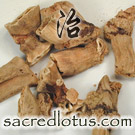 Ou Jie5-10 gStop Bleeding
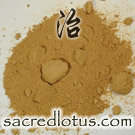 Pu Huang5-10 gdry-friedStop Bleeding
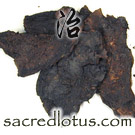 Sheng Di Huang30 gCool the Blood
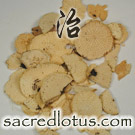 Chuan Mu Tong5-10 gRegulate Water and Drain Dampness
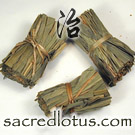 Dan Zhu Ye5-10 gDrain Fire
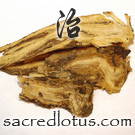 Dang Gui5-10 gTonify Blood
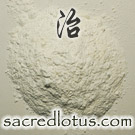 Hua Shi5-10 gRegulate Water and Drain Dampness
 Zhi Zi5-10 gDrain Fire
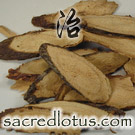 Gan Cao5-10 gTonify Qi
Preparation & dosage
How is Xiao Ji Yin Zi prepared?
Xiao Ji Yin Zi is taken as a decoction ("yin," a lighter drink-style preparation). Pu Huang is conventionally wrapped in cloth and dry-fried (chao) before decocting, which is thought to enhance its hemostatic action and reduce stomach irritation; Hua Shi, being a mineral, is also typically wrapped in cloth to keep its fine particles from clouding the decoction.
Sheng Di Huang is used at a notably larger dose than the other nine herbs, reflecting its role as the richly cooling, yin-nourishing chief that anchors the formula.
Source: Bensky & Barolet, Formulas & Strategies (preparation conventions for wrapped/dry-fried herbs; "yin" decoction form) + Sacred Lotus sources & references.
Decoction (yin). Sacred Lotus reference composition: Sheng Di Huang 30 g (chief, dominant dose); Xiao Ji, Ou Jie, Pu Huang (dry-fried, wrapped), Hua Shi (wrapped), Chuan Mu Tong, Dan Zhu Ye, Zhi Zi, Dang Gui, and Gan Cao each 5-10 g. Reference only; not a prescription.
Safety — read before use
What are the cautions for Xiao Ji Yin Zi?
Xiao Ji Yin Zi is a cooling, draining formula for heat-type Blood Lin, and is inappropriate for hematuria or frequent urination caused by Spleen/Kidney qi deficiency without heat signs (pale, watery, unforced urination with fatigue and cold signs) — using cold, diuretic herbs on a deficiency-cold pattern can worsen it.
- Not for long-term use: the formula's cold, draining herbs (Hua Shi, Zhi Zi, Chuan Mu Tong) can injure Spleen and Stomach yang with prolonged use; it is meant to clear active heat and bleeding, then be stopped or modified.
- Pregnancy: contains Dang Gui (blood-moving) and strongly downward-draining, diuretic herbs — use only under professional guidance.
- Mu Tong identity matters: this formula calls for Chuan Mu Tong (Clematis armandii), as reflected in Sacred Lotus sources & references — not Guan Mu Tong (Aristolochia manshuriensis), which was withdrawn from use in many countries after being linked to serious kidney toxicity and, with long-term use, urothelial cancer. The two "Mu Tong" herbs are unrelated botanically despite the shared common name.
- Persistent or recurrent hematuria needs medical evaluation — blood in the urine can reflect a range of underlying conditions and should be properly diagnosed rather than self-treated.
Source: Bensky & Barolet, Formulas & Strategies (pattern differentiation, cautions for cold/diuretic formulas) + regulatory/pharmacological literature on Aristolochia-associated nephrotoxicity (widely documented; e.g. FDA and Health Canada import/consumer alerts on aristolochic acid–containing botanicals). Traditional-use framing; not medical advice.
Originally Appeared In:
- Formulas to Aid the Living (Ji Sheng Fang)
Notes:
How is Xiao Ji Yin Zi built, and how does it compare to other Lin-syndrome formulas?
Xiao Ji Yin Zi can be understood as Dao Chi San (Sheng Di Huang, Mu Tong, Dan Zhu Ye, Gan Cao — a formula that clears Heart heat and drains it via urination) with hemostatic and blood-regulating herbs added — Xiao Ji, Ou Jie, Pu Huang, Zhi Zi, and Dang Gui — to address active bleeding rather than heat and painful urination alone.
- vs Dao Chi San: Dao Chi San treats Heart-fire flowing to the Small Intestine/Bladder (mouth/tongue sores, painful urination) without bleeding; Xiao Ji Yin Zi adds the hemostatic herbs needed once blood appears in the urine.
- vs Ba Zheng San: Ba Zheng San is a broader damp-heat Lin-syndrome formula (for painful, stone-type, or turbid Lin generally) without Xiao Ji Yin Zi's dedicated blood-cooling, hemostatic herbs, and it lacks a blood-nourishing assistant like Dang Gui.
- Common modifications: add Bai Mao Gen or Da Ji to strengthen cooling and stopping bleeding for more severe hematuria; add Qu Mai and Bian Xu for a more pronounced Lin-syndrome, painful-urination presentation.
Source: Sacred Lotus sources & references + Bensky & Barolet, Formulas & Strategies (formula composition/comparison, Dao Chi San relationship).
Clinical Studies & Research:
Is there modern research on Xiao Ji Yin Zi?
Direct clinical-trial evidence on the formula as a whole is limited; most available research is either a modern clinical-use review of the classical formula or preclinical/mechanistic work on its individual herbs. A 2025 Chinese-language review traces the formula's modern clinical applications beyond simple hematuria — including radiation-induced cystitis, bleeding after urological procedures, allergic purpura, IgA-nephropathy-related hematuria, seminal vesiculitis, and bladder-cancer-related hemorrhage — and notes it is sometimes extended to other systems by pattern (not disease name).
- Modern clinical-use review (formula-level): a 2025 review in a Chinese formula-research journal surveys contemporary applications of Xiao Ji Yin Zi, concentrated in urological bleeding and hematuria-related conditions (DOI 10.13422/j.cnki.syfjx.20240712).
- Xiao Ji (chief herb, preclinical): network-pharmacology and molecular-docking analysis of Cirsium setosum identified candidate compounds (quercetin, acacetin, sitosterol, stigmasterol) with predicted activity against bladder-cancer-related targets (IL-6, EGFR, MYC) — mechanistic, not clinical, evidence (PMID 40575382).
- Pu Huang (deputy herb, preclinical): an experimental study found Pollen Typhae reduced coagulation times and activated Factor XII by an acidic polysaccharide (external hemostatic effect), while separate flavonoid constituents accounted for an oral hemostatic effect in mice — laboratory support for the herb's traditional styptic use (PMID 21934490).
Sources: DOI 10.13422/j.cnki.syfjx.20240712; PubMed 40575382; PubMed 21934490. Research context only — a mix of a formula-level clinical-use review and herb-level preclinical studies, not a therapeutic claim; a specific human clinical trial for the formula itself was searched for but not found with a verifiable citation, so none is claimed here.
Sources & References
Compiled and edited by Thomas Dehli, Founder & Editor, Sacred Lotus Updated
The information here is referenced from numerous sources — teachers, practitioners, class notes from Five Branches University, the books below, and the published research literature, with citations given as resolvable PubMed identifiers. Where sources disagree, I have flagged the discrepancies directly. If facts couldn't be verified, I have left them out. How we source our content.
Reference information for students and practitioners — not medical advice. Consult a qualified practitioner. Terms of use.
Chinese Formulas Books & References
 https://amzn.to/4fYI3f8
 https://amzn.to/4j55NRA
 https://amzn.to/4gMROyv
 https://amzn.to/4h7msSK