

Ci Zhu Wan (Magnetite and Cinnabar Pill)
Ci Zhu Wan
Magnetite and Cinnabar Pill
- Category
- Formulas that Calm the Spirit
- Subcategory
- Formulas that Sedate and Calm the Spirit
- Ingredients
- 3 herbs
Actions
What does Ci Zhu Wan do?
Ci Zhu Wan (Magnetite and Cinnabar Pill) anchors floating yang and sedates the Heart to re-establish communication between the Heart and Kidneys. It pairs two heavy, sinking mineral substances — one that settles from below, one that quiets from above — so that Kidney water can again nourish Heart fire instead of fire floating unchecked upward.
The three ingredients divide by role:
- Chief: Ci Shi (Magnetitum, 60 g) — a cold, salty, heavy mineral that sinks into the Kidney and Liver channels to anchor rebellious yang, nourish Kidney yin, and sharpen vision and hearing.
- Deputy: Zhu Sha (Cinnabaris, 30 g) — enters the Heart channel to clear Heart fire and settle the Shen (spirit), reinforcing Ci Shi’s anchoring action from above.
- Assistant: Shen Qu (Massa Medica Fermentata, 120 g) — a fermented digestive aid that protects Spleen and Stomach qi from the two heavy, hard-to-digest minerals and helps the formula assimilate.
Source: Sacred Lotus sources & references and dosages + Bensky & Barolet, Formulas & Strategies (chief/deputy/assistant role analysis; role data is not recorded for this formula, assigned here from this reference). Traditional-use framing; not medical advice.
Indications
What is Ci Zhu Wan used for?
Ci Zhu Wan treats Heart and Kidney yin deficiency in which the Heart and Kidneys lose their normal communication — Kidney water no longer rises to cool and anchor Heart fire, so fire floats upward while the senses and spirit lose their root below.
Its classic presentation:
- Spirit-disturbance signs: palpitations, anxiety, insomnia or unsettled sleep, and a tendency to be easily startled.
- Sensory signs: dizziness, tinnitus or diminished hearing, and blurred or dim vision — reflecting the Kidney’s classical link to hearing and its nourishing role for the eyes.
- Cognitive signs: poor memory or difficulty concentrating.
Source: Sacred Lotus sources & references on pattern, “Heart and Kidneys not communicating” + Bensky & Barolet, Formulas & Strategies. Traditional-use framing; not medical advice.
Western Uses:
What is Ci Zhu Wan used for in modern practice?
In modern practice, Ci Zhu Wan and modified versions of it have chiefly been studied as an adjunct for tinnitus and hearing-related complaints, extending its traditional role in benefiting the ears. Because it also settles the spirit, it is traditionally discussed alongside anxiety- and insomnia-related presentations, though direct clinical evidence for the formula itself is limited.
One published clinical observation combined a modified Cizhu Wan with Buzhong Yiqi Tang and acupuncture for idiopathic tinnitus and reported greater symptom improvement than the herbal combination given alone (PMID 29696920) — a modified, multi-formula, acupuncture-combined design, not a test of Ci Zhu Wan in isolation. These are traditional-use correlates, not a claim that Ci Zhu Wan treats any diagnosed condition; any use belongs with a qualified practitioner and appropriate medical care.
Source: PubMed 29696920; traditional-use correlates summarized from Bensky & Barolet, Formulas & Strategies. Reference only, not a treatment claim.
Ingredients
3 substances in Ci Zhu Wan — each links to its full herb monograph.
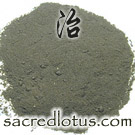 Ci Shi60 gAnchor, Settle, and Calm the SpiritNo specimen photographZhu Sha30 gAnchor, Settle, and Calm the Spirit
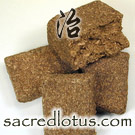 Shen Qu120 gRelieve Food Stagnation
Preparation & dosage
How is Ci Zhu Wan prepared?
Traditionally Ci Zhu Wan is prepared as a honey-bound pill (wan): Ci Shi and Zhu Sha are ground to a fine powder, combined with a paste made from cooked Shen Qu, and formed into small pills. This slow-release pill form is traditional for mineral-heavy formulas, allowing gradual absorption and easing the digestive burden of the heavy minerals compared with a decoction.
Source: Bensky & Barolet, Formulas & Strategies (traditional pill preparation for mineral formulas). Reference only, not administration guidance.
Historical reference ratio (pill form): Ci Shi 60 g : Zhu Sha 30 g : Shen Qu 120 g (Sacred Lotus sources & references). Reference only, not a recommendation. Because this formula contains cinnabar (mercury sulfide), whether and how it is used is a matter for a licensed practitioner operating within applicable regulation — see cautions.
Safety — read before use
What are the cautions for Ci Zhu Wan?
Ci Zhu Wan contains Zhu Sha (Cinnabaris), a mercury sulfide (HgS) mineral that this database flags as a toxic substance this site’s own record flags zhu-sha-cinnabar as toxic. The facts below are neutral public-safety/toxicology reference information about the ingredient — they are not administration or dosing instructions; any decision about whether and how a cinnabar-containing formula is used is a matter for a licensed practitioner operating within applicable regulation.
- Mercury toxicology: cinnabar (HgS) is largely insoluble and poorly absorbed from the gastrointestinal tract at ordinary doses, and in direct animal comparisons is substantially less nephrotoxic than mercuric chloride or methylmercury (PMID 18445765; PMID 21126564). However, heating cinnabar releases toxic mercury vapor, and heavy or prolonged exposure has been linked to mercury accumulation and hepatorenal (liver and kidney) toxicity (PMID 35308204 / PMC 8924441).
- Regulatory status: cinnabar remains listed in the current Chinese Pharmacopoeia, but some cinnabar-containing patent medicines are subject to restricted, short-duration use in China, and mercury-containing traditional medicines face restriction or prohibition in over-the-counter trade in a number of other countries (PMID 35308204 / PMC 8924441).
- Groups flagged in the toxicology literature: pregnancy and childhood are specifically noted for heightened mercury sensitivity, and pre-existing renal or hepatic impairment is flagged as a risk factor for mercury accumulation.
- Ci Shi (Magnetite): the formula’s other mineral is a heavy, hard iron-oxide substance carrying the standard materia medica caution for mineral drugs — difficult to digest, traditionally used only short-term, with care where Spleen and Stomach function is weak.
Source: Sacred Lotus toxic/endangered flag + Liu et al., Exp Biol Med (Maywood) 2008;233(7):810-817 (PMID 18445765); Shi et al., Toxicol Lett 2011;200(3):194-200 (PMID 21126564); Zhao et al., Front Pharmacol 2022;13:807807 (PMID 35308204 / PMC 8924441); Sacred Lotus sources & references for ci-shi-magnetite. Encyclopedia reference on ingredient toxicology and regulatory status, not administration guidance or medical advice.
Originally Appeared In:
- Thousand Ducat Formulas (Qian Jin Yao Fang)
Notes:
How is Ci Zhu Wan different from Zhu Sha An Shen Wan?
Both formulas contain Zhu Sha (Cinnabaris) to settle the spirit, but they target different mechanisms. Ci Zhu Wan pairs Zhu Sha with the anchoring mineral Ci Shi for a Heart-Kidney-not-communicating pattern with sensory symptoms (tinnitus, blurred vision); Zhu Sha An Shen Wan pairs the same Zhu Sha with Huang Lian, Dang Gui, Sheng Di Huang, and Zhi Gan Cao for a Heart-fire-injuring-yin-and-blood pattern with more pronounced heat and blood-deficiency signs.
- vs Zhu Sha An Shen Wan: favor Ci Zhu Wan when dizziness, tinnitus, or blurred vision accompany the spirit disturbance; favor Zhu Sha An Shen Wan when marked Heart-fire heat signs (irritability, mouth sores, insomnia with vivid dreaming) and blood-deficiency signs predominate.
Historical note: per Bensky & Barolet, the formula originates in Sun Simiao’s Qian Jin Yao Fang (Essential Prescriptions Worth a Thousand Gold, 652 CE) — Sacred Lotus records this origin as “Thousand Ducat Formulas (Qian Jin Yao Fang).” It is reported to have first appeared there under the name Shen Qu Wan, with the Ci Shi-and-Zhu Sha pairing later giving rise to its familiar name.
Source: Sacred Lotus origin record + Sacred Lotus sources & references for zhu-sha-an-shen-wan + Bensky & Barolet, Formulas & Strategies.
Clinical Studies & Research:
Is there modern research on Ci Zhu Wan?
Direct clinical research on Ci Zhu Wan itself is limited; most available evidence either studies a modified/combined version of the formula or examines the toxicology of its cinnabar ingredient.
- Tinnitus (clinical observation): a modified Cizhu Wan combined with Buzhong Yiqi Tang and acupuncture reduced idiopathic tinnitus symptom scores more than the herbal combination given alone, in a 60-patient comparison (PMID 29696920) — not a test of Ci Zhu Wan in isolation.
- Cinnabar toxicology (ingredient-level): cinnabar (HgS) is poorly absorbed orally and markedly less nephrotoxic than mercuric chloride or methylmercury in rat comparisons (PMID 18445765; PMID 21126564), though a 2022 review documents hepatorenal risk with heavy or prolonged exposure and notes cinnabar-containing patent medicines remain under regulatory scrutiny in China (PMID 35308204 / PMC 8924441).
Sources: PubMed 29696920; PubMed 18445765; PubMed 21126564; PubMed 35308204 / PMC 8924441. Research context, not a therapeutic claim; the toxicology sources describe the cinnabar ingredient generally, not Ci Zhu Wan as a compounded formula.
Sources & References
Compiled and edited by Thomas Dehli, Founder & Editor, Sacred Lotus Updated
The information here is referenced from numerous sources — teachers, practitioners, class notes from Five Branches University, the books below, and the published research literature, with citations given as resolvable PubMed identifiers. Where sources disagree, I have flagged the discrepancies directly. If facts couldn't be verified, I have left them out. How we source our content.
Reference information for students and practitioners — not medical advice. Consult a qualified practitioner. Terms of use.
Chinese Formulas Books & References
 https://amzn.to/4fYI3f8
 https://amzn.to/4j55NRA
 https://amzn.to/4gMROyv
 https://amzn.to/4h7msSK