

Sheng Tie Luo Yin (Iron Filings Decoction)
Sheng Tie Luo Yin
Iron Filings Decoction
- Category
- Formulas that Calm the Spirit
- Subcategory
- Formulas that Sedate and Calm the Spirit
- Ingredients
- 14 herbs
Actions
What does Sheng Tie Luo Yin do?
Sheng Tie Luo Yin heavily settles and anchors a frenetic Spirit while clearing Phlegm-Fire from the Heart. It was designed for the manic (kuang) presentation of dian-kuang-xian — acute agitation and disturbed behavior arising when long-standing Liver constraint transforms into Fire, scorches fluids into Phlegm, and the resulting Phlegm-Fire rises to cloud the Heart orifices that house the Shen.
The fourteen ingredients divide by role:
- Chief: Sheng Tie Luo (iron filings) — heavy and cool, it forcefully descends rebellious qi and Liver Fire and anchors the disturbed Spirit; the formula is named for it.
- Deputies: Dan Nan Xing and Chuan Bei Mu clear heat and transform the stubborn Phlegm-Fire; Lian Qiao clears Heart-level heat; Gou Teng clears Liver heat and extinguishes the wind-like agitation that accompanies it.
- Assistants: Tian Men Dong, Mai Men Dong, and Xuan Shen nourish yin and generate fluids, restraining the dryness of the heat-clearing, phlegm-transforming herbs; Dan Shen cools the blood and calms the Spirit; Fu Ling, Fu Shen, Shi Chang Pu, and Yuan Zhi open the Heart orifices, transform phlegm, and settle the Spirit.
- Envoy: Zhu Sha (cinnabar), added in a small amount at the end, directs the formula to the Heart and adds a final sedating, spirit-calming action.
Several modern compendia (e.g., summaries circulated online) classify Zhu Sha alongside Sheng Tie Luo as a co-chief, citing its potent sedative effect. This monograph follows the more common classical reading — and the formula’s own name — in giving Sheng Tie Luo sole chief status, with Zhu Sha as a directing envoy; the disagreement is one of emphasis, not of what each herb does. Separately, some published editions of this formula substitute or add Ju Hong (tangerine peel) in place of, or alongside, Chuan Bei Mu; Sacred Lotus sources & references used here (Chuan Bei Mu, no Ju Hong) is treated as authoritative.
Source: Sacred Lotus sources & references + Bensky & Barolet, Formulas & Strategies (chief/deputy/assistant/envoy analysis). Traditional-use framing; not medical advice.
Indications
What is Sheng Tie Luo Yin used for?
Sheng Tie Luo Yin treats the manic (kuang) pattern of Phlegm-Fire disturbing the Heart — an acute presentation of severe emotional and behavioral disturbance traditionally distinguished from the withdrawn, depressive dian pattern. Classically it was reserved for florid, agitated states rather than quiet withdrawal.
Its classic clinical presentation:
- Behavioral/emotional signs: restless agitation, sudden and severe temper outbursts, shouting or raving without apparent cause, extreme emotional instability, manic behavior.
- Associated signs: severe, throbbing headache and marked insomnia.
Tongue and pulse: a scarlet tongue with a yellow, greasy coating (reflecting Fire with Phlegm); a wiry, rapid pulse (reflecting Liver Fire with heat).
Source: Sacred Lotus sources & references on pattern/tongue/pulse + Bensky & Barolet, Formulas & Strategies. Traditional-use framing; not medical advice.
Western Uses:
What is Sheng Tie Luo Yin used for in modern practice?
In modern practice Sheng Tie Luo Yin is referenced, mainly within Chinese-language clinical literature, for acute manic and agitated psychiatric presentations — contexts where Western medicine recognizes conditions such as the manic phase of bipolar disorder, acute psychotic agitation, and severe insomnia with agitation. Chinese-language sources also describe modified versions used for menopausal-syndrome agitation and sleepwalking.
These biomedical correlates are offered as a reference to the formula’s traditional use, not as a claim that it treats any diagnosed disease. Because the formula classically includes cinnabar (Zhu Sha, a mercury sulfide mineral), any modern application belongs strictly with a qualified practitioner working within current safety standards — see cautions.
Source: traditional-use correlates summarized from Bensky & Barolet, Formulas & Strategies, and Chinese-language clinical references; reference only, not a treatment claim.
Ingredients
14 substances in Sheng Tie Luo Yin — each links to its full herb monograph.
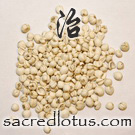 Chuan Bei Mu3 gCool and Transform Phlegm-Heat
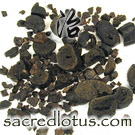 Dan Nan Xing3 gCool and Transform Phlegm-Heat
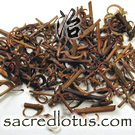 Gou Teng4.5 gExtinguish Wind and Stop Tremors
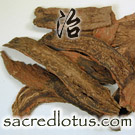 Dan Shen4.5 gInvigorate Blood and Remove Stagnation
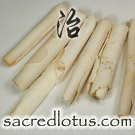 Fu Ling3 gRegulate Water and Drain Dampness
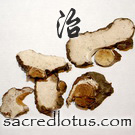 Fu Shen3 gRegulate Water and Drain Dampness
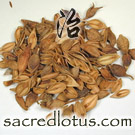 Lian Qiao3 gClear Heat and Eliminate Toxins
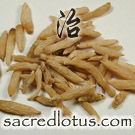 Mai Men Dong9 gTonify Yin
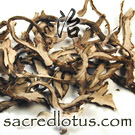 Shi Chang Pu3 gAromatic Substances that Open the Orifices
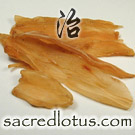 Tian Men Dong9 gTonify Yin
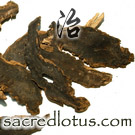 Xuan Shen4.5 gCool the Blood
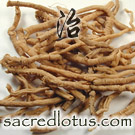 Yuan Zhi3 gNourish the Heart and Calm the SpiritNo specimen photographZhu Sha0.9 gadd at endAnchor, Settle, and Calm the Spirit
Preparation & dosage
How is Sheng Tie Luo Yin prepared?
Sheng Tie Luo (iron filings) is decocted first, alone, before the remaining herbs are added. Sacred Lotus sources & references specifies decocting Sheng Tie Luo from 5 cups of water down to 3 cups over about 1.5 hours; the resulting mineral-infused liquid is then used as the base water to decoct the rest of the formula. Zhu Sha, where used, is classically added at the very end in a minimal amount (0.9 g) rather than boiled with the other herbs.
Source: Sacred Lotus sources & references, corroborated by secondary clinical references describing the same iron-first decocting method. Traditional-use framing; not medical advice.
Decoction. Sheng Tie Luo (30-60 g) is decocted first (in Sacred Lotus: 5 cups of water reduced to 3 cups over about 1.5 hours) and the resulting liquid used to decoct the remaining herbs. Reference relative amounts: Tian Men Dong, Mai Men Dong 9 g; Xuan Shen, Gou Teng, Dan Shen 4.5 g each; Dan Nan Xing, Chuan Bei Mu, Lian Qiao, Fu Ling, Fu Shen, Shi Chang Pu, Yuan Zhi 3 g each; Zhu Sha 0.9 g, added at the end. Reference only; cinnabar dosing/inclusion is a safety decision for a qualified practitioner (see cautions).
Safety — read before use
What are the cautions for Sheng Tie Luo Yin?
Sheng Tie Luo Yin is a strong, cooling, heavy-sedating formula reserved for acute excess/Fire patterns — it is not appropriate for deficiency-type agitation or for Spleen-Stomach weakness. Its mineral and yin-nourishing ingredients are heavy and can burden weak digestion, and it is not intended for prolonged, open-ended use.
- Zhu Sha (cinnabar) is a mercury-sulfide mineral. Modern toxicology reviews document real mercury-exposure risk from cinnabar-containing formulas with prolonged or high-dose use; many contemporary practitioners and suppliers omit or substitute it (e.g., with Mu Li or another non-mineral spirit-settling herb) rather than dose cinnabar directly. Any use of Zhu Sha should be at minimal dose, short duration, and under qualified supervision.
- Pregnancy and breastfeeding: avoid the cinnabar-containing formula; several of the phlegm/blood-moving herbs also warrant caution in pregnancy.
- Spleen-Stomach deficiency with loose stools or a weak digestion: use cautiously — the heavy minerals and rich yin tonics can aggravate digestive weakness.
- Not for deficiency-pattern agitation: avoid where agitation stems from yin or blood deficiency without a true Phlegm-Fire excess pattern (scarlet tongue with greasy yellow coat, wiry rapid pulse).
Source: Bensky & Barolet, Formulas & Strategies (cautions for strong sedating/heat-clearing formulas) + PubMed 35308204 (mercury-containing TCM preparations, toxicology review); PubMed 31866510 (cinnabar mercury exposure/risk assessment). Traditional-use framing; not medical advice.
Originally Appeared In:
- Medical Revelations (Yi Xue Xin Wu)
Notes:
How does Sheng Tie Luo Yin compare to related formulas for phlegm-fire and spirit disturbance?
Sheng Tie Luo Yin is among the strongest classical formulas for acute manic agitation, distinguished by its heavy mineral chief (Sheng Tie Luo) and, classically, cinnabar — both chosen for their forceful anchoring/sedating action rather than for the milder phlegm-heat-clearing approach of gentler formulas.
- vs Wen Dan Tang: Wen Dan Tang is a much milder formula for Phlegm-Heat disturbing the Gallbladder (irritability, insomnia, timidity); it lacks Sheng Tie Luo Yin’s heavy anchoring minerals and is used for far less severe agitation.
- vs Huang Lian Wen Dan Tang: a moderate step up from Wen Dan Tang for more pronounced Phlegm-Fire, but still without the heavy mineral anchoring of Sheng Tie Luo Yin.
- vs Gun Tan Wan: a strongly purgative phlegm-expelling formula; when Phlegm-Fire mania is accompanied by constipation, some clinicians use Gun Tan Wan first to purge downward before or alongside Sheng Tie Luo Yin.
Key modification pattern (per secondary clinical sources, not verified against the primary text): Da Huang and Mang Xiao are sometimes added for constipation; Long Dan Cao and Zhi Zi for more intense Liver-Gallbladder Fire. These modifications are noted here as commonly cited but should be confirmed against a primary formula reference before clinical use.
Source: Bensky & Barolet, Formulas & Strategies (formula-category comparisons) + secondary Chinese-medicine clinical references for modification pattern (flagged as unverified against the primary text).
Clinical Studies & Research:
Is there modern research on Sheng Tie Luo Yin?
Direct clinical-trial research on this specific formula is very limited; most available material is Chinese-language clinical literature review rather than controlled trials. One indexed review surveyed the traditional Chinese-medicine syndrome types (including Phlegm-Fire) documented across published Chinese case literature on single-syndrome bipolar mania — the same clinical picture Sheng Tie Luo Yin was classically designed to treat — without evaluating this formula specifically. Because the classical formula contains cinnabar (Zhu Sha), the more substantial modern research relevant to it concerns mercury-containing mineral medicinals generally.
- Bipolar mania syndrome literature (context, not a trial of this formula): a review of TCM syndrome types documented among single-syndrome bipolar mania cases in the Chinese literature, including Phlegm-Fire (PMID 34559688).
- Cinnabar/mercury safety (relevant to the Zhu Sha ingredient): a pharmacology/toxicology review of mercury and mercury-containing preparations in Chinese medicine (PMID 35308204 / PMC 8924441); a pharmacokinetic/tissue-distribution risk assessment of mercury exposure from cinnabar-containing pills (PMID 31866510).
Sources: PubMed 34559688; PubMed 35308204 / PMC 8924441; PubMed 31866510. Research context, not a therapeutic claim; no controlled clinical trial of Sheng Tie Luo Yin itself was found.
Sources & References
Compiled and edited by Thomas Dehli, Founder & Editor, Sacred Lotus Updated
The information here is referenced from numerous sources — teachers, practitioners, class notes from Five Branches University, the books below, and the published research literature, with citations given as resolvable PubMed identifiers. Where sources disagree, I have flagged the discrepancies directly. If facts couldn't be verified, I have left them out. How we source our content.
Reference information for students and practitioners — not medical advice. Consult a qualified practitioner. Terms of use.
Chinese Formulas Books & References
 https://amzn.to/4fYI3f8
 https://amzn.to/4j55NRA
 https://amzn.to/4gMROyv
 https://amzn.to/4h7msSK