

Da Huang Mu Dan Tang (Rhubarb and Moutan Decoction)
Da Huang Mu Dan Tang
Rhubarb and Moutan Decoction
- Category
- Formulas that Drain Downward
- Subcategory
- Formulas that Purge Heat Accumulation
- Ingredients
- 5 herbs
Actions
What does Da Huang Mu Dan Tang do?
Da Huang Mu Dan Tang (Rhubarb and Moutan Decoction) purges heat and stagnant blood from the Intestines, breaking up early-stage abscess-forming clumping before it can mature into pus. It comes from Zhang Zhong-jing’s Jin Gui Yao Lue and pairs a strong purgative action with blood-invigorating and damp-draining herbs, so that heat, blood stasis, and accumulation are cleared downward together rather than left to fester into a fully formed abscess.
The five ingredients divide by role, as analyzed in the classical formulary literature:
- Chief: Da Huang drains heat and stagnation through the bowels and breaks up blood stasis, opening the pathway for clumped heat and blood to exit.
- Deputy: Mang Xiao softens hardness and unblocks the bowels, reinforcing Da Huang’s purgative action against firm accumulation.
- Deputies: Tao Ren and Mu Dan Pi invigorate the blood and cool blood-heat, resolving the stagnant, clumped blood that is forming the incipient abscess.
- Assistant: Dong Gua Zi (wax gourd seed) drains damp-heat and helps expel pus — a classical pairing used wherever an internal abscess is forming or has formed (the same logic appears in lung-abscess formulas).
Source: Jin Gui Yao Lue (source text); Bensky & Barolet, Formulas & Strategies (chief/deputy/assistant analysis). Traditional-use framing; not medical advice.
Indications
What is Da Huang Mu Dan Tang used for?
Da Huang Mu Dan Tang is the classical Jin Gui Yao Lue formula for early-stage intestinal abscess (chang yong) — the historical pattern most often equated with the earliest phase of acute appendicitis — before pus has fully formed. Zhang Zhong-jing’s original text describes a right-lower-abdominal mass that is tender to palpation, with the skin over the area appearing unchanged, distinguishing it from a superficial, externally visible abscess.
- Classical presentation: right lower abdominal pain and a palpable mass, worse with pressure, with skin over the area looking normal — not red or hot to the touch.
- Accompanying signs: low-grade or intermittent fever and chills, possible constipation, and a sensation of fullness or tightness in the lower abdomen.
- Tongue and pulse: a thin, yellow, greasy tongue coating with a rapid, slippery pulse — signs of damp-heat and blood stasis together.
- Modern correlate, historical framing only: this classical presentation corresponds to what is recognized today as acute appendicitis. That correspondence is offered as historical/traditional context, not as guidance for managing a present-day acute abdomen — see cautions.
Source: Jin Gui Yao Lue; Sacred Lotus sources & references (diagnostic profile); Bensky & Barolet, Formulas & Strategies. Traditional-use framing; not medical advice.
Ingredients
5 substances in Da Huang Mu Dan Tang — each links to its full herb monograph.
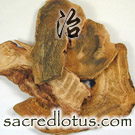 Da Huang12-18 gPurgatives
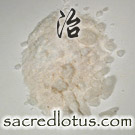 Mang Xiao9-12 gPurgatives
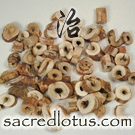 Mu Dan Pi9 gCool the Blood
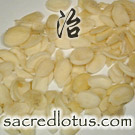 Tao Ren9-15 gInvigorate Blood and Remove Stagnation
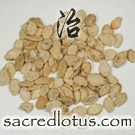 Dong Gua Zi15-30 gRegulate Water and Drain Dampness
Preparation & dosage
How is Da Huang Mu Dan Tang prepared?
Da Huang Mu Dan Tang is a decoction; classically, Mang Xiao (mirabilite) is dissolved into the strained decoction rather than boiled together with the other herbs, following the standard method used whenever Mang Xiao appears in a formula. Da Huang, Mu Dan Pi, Tao Ren, and Dong Gua Zi are decocted together and strained; the hot strained liquid is then used to dissolve the Mang Xiao, preserving its softening, purgative action rather than degrading it with prolonged boiling. Historical accounts describe the decoction being taken until a bowel movement is produced and the dose then adjusted; this is presented strictly as historical practice, not a present-day dosing instruction.
Source: Bensky & Barolet, Formulas & Strategies (standard Mang Xiao preparation method); Jin Gui Yao Lue.
Safety — read before use
What are the cautions for Da Huang Mu Dan Tang?
Da Huang Mu Dan Tang is a historical formula for the earliest phase of intestinal abscess; a real, acute abdomen — suspected appendicitis, or any acute and worsening abdominal pain — is a surgical emergency requiring immediate medical evaluation, not herbal self-treatment. This entry is offered strictly as neutral historical and reference information about a classical Chinese medicine formula, not as guidance for managing appendicitis or any acute abdomen today.
- Traditionally withheld once the abscess has matured (pus fully formed), in infants, in pregnancy, when peritonitis (signs of rupture or generalized peritoneal involvement) is present, or when intestinal parasites are the underlying cause — classical sources restrict its use to the early, pre-suppurative stage.
- Elderly or weak patients: the combined purgative and blood-breaking action is strong; classical sources counsel caution or modification in frail patients.
- Pregnancy: Da Huang, Mang Xiao, and Tao Ren are all generally avoided in pregnancy given their strong purgative and blood-moving action.
- Any suspected appendicitis, diverticulitis, or other acute abdominal emergency needs prompt medical/surgical assessment — delaying evaluation in favor of any herbal formula carries serious risk, including perforation, peritonitis, and sepsis.
Source: Jin Gui Yao Lue; Bensky & Barolet, Formulas & Strategies (traditional contraindications). Historical/traditional-use framing; not medical advice.
Originally Appeared In:
- Essentials from the Golden Cabinet (Jin Gui Yao Lue)
Notes:
How does Da Huang Mu Dan Tang differ from Yi Yi Fu Zi Bai Jiang San?
Both are Jin Gui Yao Lue formulas for intestinal abscess (chang yong), but Zhang Zhong-jing wrote them for opposite stages and constitutions of the same disease.
- vs Yi Yi Fu Zi Bai Jiang San: Da Huang Mu Dan Tang is for the early-stage, excess, heat-and-stasis presentation — skin over the area unchanged, marked tenderness on pressure, fever. Yi Yi Fu Zi Bai Jiang San is for the later stage once pus has already formed, presenting instead with a cold, deficient picture: wrinkled, dried-looking abdominal skin and a weak pulse rather than heat signs. The two formulas frame the same disease at opposite points in its course.
- Historical vs modern management: in the era before antibiotics and surgery, formulas like this one were a primary treatment for intestinal abscess; today, suspected appendicitis is managed surgically and medically, and this formula survives mainly as a historical and educational reference, with modern research (see research) exploring it only as a possible adjunct alongside, not instead of, standard care.
- Shared herbs, different targets: Da Huang and Tao Ren also appear in general blood-stasis formulas such as Da Huang Zhe Chong Wan, but there they address chronic, deep-seated “dry blood” rather than an acute abscess.
Source: Jin Gui Yao Lue; Bensky & Barolet, Formulas & Strategies (comparative formula analysis).
Clinical Studies & Research:
Is there modern research on Da Huang Mu Dan Tang?
Yes — modern research (much of it from Japan and China, where the formula is also known as Daiobotanpito or Dahuang Mudan decoction) has tested it as an adjunct to conventional treatment for appendicitis and diverticulitis, with mixed results that argue for caution rather than replacement of standard care. A 2023 meta-analysis of 16 randomized controlled trials found that combining Dahuang Mudan decoction with laparoscopic surgery for acute appendicitis improved overall clinical efficacy and bowel-function recovery compared with surgery alone (PMID 37773648). By contrast, a 2025 double-blind, placebo-controlled trial in 171 patients with acute diverticulitis found no significant difference in the primary treatment-success outcome when the Kampo formula daiobotanpito was added to antibiotics, though the treatment group showed lower C-reactive protein by day 5 and, among patients with an abscess, resumed oral intake sooner (PMID 40595170).
Sources: PubMed 37773648; PubMed 40595170. Research context on the formula as a studied surgical/antibiotic adjunct, not a treatment claim; any acute abdominal presentation requires prompt medical evaluation.
Sources & References
Compiled and edited by Thomas Dehli, Founder & Editor, Sacred Lotus Updated
The information here is referenced from numerous sources — teachers, practitioners, class notes from Five Branches University, the books below, and the published research literature, with citations given as resolvable PubMed identifiers. Where sources disagree, I have flagged the discrepancies directly. If facts couldn't be verified, I have left them out. How we source our content.
Reference information for students and practitioners — not medical advice. Consult a qualified practitioner. Terms of use.
Chinese Formulas Books & References
 https://amzn.to/4fYI3f8
 https://amzn.to/4j55NRA
 https://amzn.to/4gMROyv
 https://amzn.to/4h7msSK