

Qiang Lan Tang (Notopterygium and Isatis Root Decoction)
Qiang Lan Tang
Notopterygium and Isatis Root Decoction
- Category
- Formulas that Release the Exterior
- Subcategory
- Formulas that Release Exterior Wind-Heat
- Ingredients
- 2 herbs
Actions
What does Qiang Lan Tang do?
Qiang Lan Tang releases the exterior and clears heat-toxin at the same time, pairing one acrid, warm, dispersing herb with one bitter, cold, detoxifying herb. It is a simple two-herb combination rather than a classical multi-role formula.
- Qiang Huo (Notopterygium Root), 9–12 g: acrid and bitter, warm; releases the exterior, dispels wind-cold-damp, and is a strong analgesic that travels upward to the head, neck, and upper body — addressing the headache and body ache of an external contraction.
- Ban Lan Gen (Isatis Root), 15–30 g: bitter and cold; clears heat and resolves toxicity, and is the larger-dose herb in the pair, targeting sore/swollen throat, mumps, and toxic-heat.
Discrepancy: this site’s own record places this formula under “Formulas that Release Exterior Wind-Heat,” yet Qiang Huo’s individual nature is acrid-warm (associated with wind-cold-damp), not acrid-cool. This is a recognized TCM strategy — a small dose of a warm, exterior-releasing, head-directing herb combined with a larger dose of a cold, toxin-clearing herb — but it means the formula's overall temperature character is better described as releasing the exterior while clearing toxic-heat, rather than a pure wind-heat formula in the mould of, e.g., Yin Qiao San.
Source: this site’s own composition record + Bensky & Barolet, Chinese Herbal Medicine: Materia Medica (individual entries for Qiang Huo and Ban Lan Gen). Traditional-use framing; not medical advice.
Indications
What is Qiang Lan Tang used for?
Qiang Lan Tang treats early-stage external contraction with concurrent heat-toxin — chills and fever, headache, body/limb soreness, together with a sore, swollen, or inflamed throat.
- Exterior signs: chills and fever, headache, generalized soreness and body ache.
- Toxic-heat signs: sore and swollen throat, swollen glands, mumps (parotitis), tonsillitis, and pharyngitis.
- Pulse: rapid, with a surging (flooding) and rolling (slippery) quality, consistent with heat and toxin in the upper body.
Source: this site’s own composition record/origin fields + legacy Sacred Lotus formula data (consistent presentation independently cross-referenced against multiple online sources) + Bensky & Barolet Materia Medica herb entries. Traditional-use framing; not medical advice.
Western Uses:
What is Qiang Lan Tang used for in modern practice?
In modern practice this Qiang Huo + Ban Lan Gen pairing is referenced for early-stage influenza-type illness and for sore-throat/swollen-gland presentations such as mumps, tonsillitis, and pharyngitis — conditions where Western medicine recognizes an acute upper-respiratory viral or feverish illness.
These biomedical correlates describe the formula's traditional use pattern, not a claim that it treats any diagnosed disease. Ban Lan Gen (Isatis Root) individually has the better-studied modern pharmacology of the pair (see research); direct modern research on this specific two-herb combination was not found. Any use for a diagnosed condition belongs with a qualified practitioner and appropriate medical care.
Source: traditional-use correlates summarized from this site’s own record indications + Bensky & Barolet Materia Medica; reference only, not a treatment claim.
Ingredients
2 substances in Qiang Lan Tang — each links to its full herb monograph.
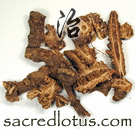 Qiang Huo9-12 gWarm, Spicy Herbs that Release the Exterior
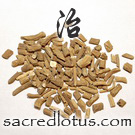 Ban Lan Gen15-30 gClear Heat and Eliminate Toxins
Preparation & dosage
How is Qiang Lan Tang prepared?
Qiang Lan Tang is prepared as a water decoction of its two ingredients, with Ban Lan Gen dosed toward the higher end of its range (15–30 g) when toxic-heat/throat symptoms predominate.
- Qiang Huo: 9–12 g.
- Ban Lan Gen: 15–30 g.
Source: this site’s own dosage record, consistent with legacy Sacred Lotus formula data. Reference only, not a prescribing instruction.
Decoction. Reference amounts: Qiang Huo 9-12 g; Ban Lan Gen 15-30 g (higher end for stronger toxic-heat/sore-throat presentation). Reference only.
Safety — read before use
What are the cautions for Qiang Lan Tang?
No formula-specific cautions were found for Qiang Lan Tang itself; the following are drawn from the individual herbs' standard Materia Medica cautions and should guide careful use.
- Ban Lan Gen (cold, bitter): can injure Spleen-Stomach yang with prolonged or high-dose use, causing loose stools, poor appetite, or abdominal discomfort — use cautiously in patients with a weak, cold digestion.
- Qiang Huo (warm, strongly dispersing): contraindicated for headache from blood or yin deficiency; larger doses can cause nausea or dizziness in sensitive patients; use cautiously in deficient or elderly patients.
- Pattern fit: not appropriate for pure wind-cold without heat-toxin, nor for deficiency-type (as opposed to excess/toxic-heat) sore throat.
Source: Bensky & Barolet, Chinese Herbal Medicine: Materia Medica (standard cautions for Qiang Huo and Ban Lan Gen, extrapolated to the combination). Traditional-use framing; not medical advice.
Originally Appeared In:
- Traditional Chinese Medical Formulas (Fang Ji Xue)
Notes:
How does Qiang Lan Tang compare to other exterior-releasing / heat-toxin formulas?
Qiang Lan Tang is a minimal, two-herb pairing rather than a full classical formula, which makes it easy to compare against more elaborate options for the same presentation.
- vs Yin Qiao San: Yin Qiao San is a larger, more balanced acrid-cool wind-heat formula (Jin Yin Hua, Lian Qiao, Bo He, etc.); Qiang Lan Tang is narrower — essentially one exterior-releasing herb plus one heat-toxin-clearing herb — and leans on Ban Lan Gen's dose for its detoxifying strength.
- vs Pu Ji Xiao Du Yin: Pu Ji Xiao Du Yin is the classical formula for severe head/face toxic-heat (e.g. da tou wen, epidemic parotitis) with many more heat-clearing herbs; Qiang Lan Tang is a simpler, milder pairing for the same general symptom picture (sore throat, swollen glands).
- Modification principle: as a simple pair, it is commonly built out with additional heat-clearing/throat-benefiting herbs (e.g. Jie Geng, Gan Cao, Xuan Shen) or antitussives/expectorants depending on accompanying symptoms, rather than used rigidly as a fixed prescription.
Source: Bensky & Barolet, Formulas & Strategies (comparison formulas Yin Qiao San, Pu Ji Xiao Du Yin) + general Materia Medica modification principles. Comparative reference, not a prescribing recommendation.
Clinical Studies & Research:
Is there modern research on Qiang Lan Tang?
No clinical trials or studies on this specific two-herb formula were found; the available modern research is at the individual-herb level, chiefly for Ban Lan Gen (Isatis Root), which has substantial in-vitro antiviral pharmacology.
- Ban Lan Gen vs influenza (in vitro): a boiling-water decoction of Isatidis Radix inhibited influenza virus adsorption onto MDCK cells via a cytoprotective mechanism (PMID 24716114).
- Ban Lan Gen constituents vs influenza A (in vitro/in ovo): glucosinolate isomers and their breakdown products from Isatidis Radix showed antiviral activity against influenza A, with proposed mechanisms of action (PMC 7126217).
- Qiang Huo pharmacology (review): a review of Notopterygium incisum's ethnopharmacology, phytochemistry, and pharmacology documents anti-inflammatory and analgesic activity consistent with its traditional use for headache and body pain (PMID 28336469).
Sources: PubMed 24716114; PMC 7126217; PubMed 28336469. All herb-level (not formula-level) preclinical research; context only, not a therapeutic claim.
Sources & References
Compiled and edited by Thomas Dehli, Founder & Editor, Sacred Lotus Updated
The information here is referenced from numerous sources — teachers, practitioners, class notes from Five Branches University, the books below, and the published research literature, with citations given as resolvable PubMed identifiers. Where sources disagree, I have flagged the discrepancies directly. If facts couldn't be verified, I have left them out. How we source our content.
Reference information for students and practitioners — not medical advice. Consult a qualified practitioner. Terms of use.
Chinese Formulas Books & References
 https://amzn.to/4fYI3f8
 https://amzn.to/4j55NRA
 https://amzn.to/4gMROyv
 https://amzn.to/4h7msSK