

Er Chen Tang (Two Cured Decoction)
Er Chen Tang
Two Cured Decoction
- Category
- Formulas that Treat Phlegm
- Subcategory
- Formulas that Dry Dampness and Expel Phlegm
- Ingredients
- 4 herbs
Actions
What does Er Chen Tang do?
Er Chen Tang dries dampness and transforms phlegm, regulates the qi so phlegm can disperse rather than re-form, and harmonizes and strengthens the Spleen and Stomach at the source of phlegm production. It is the foundational damp-phlegm formula in the Chinese herbal canon — the template that later, more specialized phlegm formulas add herbs onto, rather than a formula only used on its own.
Its name, “Er Chen” (二陈, “two aged”), refers to a specific piece of processing advice, not to the number of herbs: two of the four ingredients, Ban Xia and Chen Pi/Ju Hong, are traditionally recommended in their aged (stored, not fresh) form. Freshly harvested Ban Xia and citrus peel are considered more acrid, drying, and irritating; storing them for a year or more is said to mellow that harshness while preserving their phlegm-transforming and qi-regulating action, giving a gentler, more harmonious effect — the basis for the formula’s name.
- Dries dampness, transforms phlegm: the core action, addressing damp-phlegm wherever it has settled in the chest, epigastrium, or throat.
- Regulates qi: moves stagnant qi in the Middle Jiao, on the classical principle that when qi moves smoothly, phlegm cannot easily accumulate.
- Strengthens the Spleen, harmonizes the Stomach: supports the organ classically held responsible for generating phlegm in the first place, so the underlying tendency to produce more phlegm is addressed, not just the phlegm already formed.
Source: Sacred Lotus sources & references + Bensky & Barolet, Formulas & Strategies; Chen & Chen, Chinese Herbal Formulas and Applications (formula name and “two aged” processing rationale). Traditional-use framing; not medical advice.
Indications
What is Er Chen Tang used for?
Er Chen Tang treats the classic damp-phlegm pattern — phlegm-dampness accumulating in the Spleen and Lung and obstructing the Middle Jiao (the digestive core), producing a cluster of symptoms centered on a heavy, phlegmy chest and a queasy stomach.
- Cough with copious, easily-expectorated white sputum
- A feeling of fullness or oppression in the chest and epigastrium
- Nausea and vomiting
- Palpitations and dizziness
- A heavy sensation in the head or limbs
Tongue and pulse: a swollen tongue with teeth marks and a thick, white, greasy coating; a slippery pulse — the standard signs of dampness and phlegm recorded for this formula.
Source: Sacred Lotus sources & references on pattern/tongue/pulse + Bensky & Barolet, Formulas & Strategies. Traditional-use framing; not medical advice.
Western Uses:
What is Er Chen Tang used for in modern practice?
In modern practice Er Chen Tang is referenced for conditions Western medicine associates with excess mucus/secretions and metabolic phlegm-damp, including chronic tracheitis and chronic bronchitis with copious sputum, pulmonary emphysema, and goiter/thyroid nodules — its traditional damp-phlegm indications mapped onto biomedical categories.
These biomedical correlates describe the formula’s traditional use; they are not a claim that it treats, cures, or replaces medical care for any diagnosed respiratory or thyroid condition. Contemporary research (below) has also explored Er Chen Tang and its modifications for metabolic conditions such as hyperlipidemia and fatty liver, framed in TCM terms as phlegm-damp affecting fat and lipid metabolism; any such use belongs alongside a qualified practitioner and appropriate medical care, never in place of it.
Source: Sacred Lotus sources & references + traditional-use correlates cross-checked against modern clinical literature (see research). Reference only, not a treatment claim.
Ingredients
4 substances in Er Chen Tang — each links to its full herb monograph.
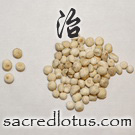 Ban Xia15 gWarm Herbs that Transform Phlegm-Cold
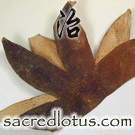 Ju Hong15 gRegulate the Qi
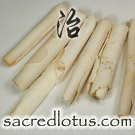 Fu Ling9 gRegulate Water and Drain Dampness
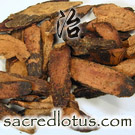 Zhi Gan Cao4.5 gTonify Qi
Preparation & dosage
How is Er Chen Tang prepared?
Er Chen Tang is taken as a decoction (tang), with the herbs simmered together in water and the strained liquid drunk warm. The local database records the core relative amounts as Ban Xia 15 g, Ju Hong 15 g, Fu Ling 9 g, and Zhi Gan Cao (honey-fried Licorice) 4.5 g — a 10:10:6:3 ratio that matches the classical He Ji Ju Fang proportions for this formula.
- Herb substitution (per local Sacred Lotus notes): Chen Pi (aged, plain-dried tangerine peel) can be substituted for Ju Hong (red tangerine/pomelo peel) when a milder, less drying qi-regulating effect is wanted.
- Ban Xia must be processed: only correctly processed Ban Xia (e.g. ginger- or alum-processed) is used internally — see cautions.
- Classical method (He Ji Ju Fang): several slices of fresh Sheng Jiang and one Wu Mei are traditionally added to the pot during decocting (see the discrepancy note in the Description section); this is a classical refinement, not part of our recorded four-herb composition.
Source: Sacred Lotus sources & references and preparation fields + Bensky & Barolet, Formulas & Strategies (classical decoction method and Sheng Jiang/Wu Mei addition).
Decoction. Reference relative amounts (Sacred Lotus sources & references): Ban Xia 15 g; Ju Hong 15 g (Chen Pi may be substituted); Fu Ling 9 g; Zhi Gan Cao (honey-fried) 4.5 g — a 10:10:6:3 ratio matching the classical He Ji Ju Fang proportions. Classically several slices of fresh Sheng Jiang and one Wu Mei are also decocted in (see the Description section discrepancy note). Reference only; not a prescription.
Safety — read before use
What are the cautions for Er Chen Tang?
Er Chen Tang is a warm, drying formula for a damp, phlegm-cold pattern, so it is not appropriate wherever phlegm-heat, dryness, or Yin/Qi deficiency of the Lung predominates. Signs such as a dry cough, thick yellow phlegm, a dry mouth, or a red tongue with little coating indicate the pattern has turned toward heat or dryness, which the formula’s warm, drying herbs would aggravate.
- Avoid or modify in phlegm-heat or dry-phlegm patterns, and where there is Lung Qi or Yin deficiency with dry cough (per the Sacred Lotus existing caution).
- Raw Ban Xia is toxic and never used internally — only correctly processed Ban Xia is appropriate for a decoction; this is a general herb-safety point, not administration guidance, and is documented in more detail on the Ban Xia herb page in this reference.
- The eighteen incompatibilities (shi ba fan): Ban Xia is classically listed as incompatible with aconite-type herbs (Wu Tou/Fu Zi) and should not be combined with them.
- Pregnancy: Ban Xia has a traditional caution in pregnancy owing to its downward-directing, mildly toxic nature; use of this formula in pregnancy is a matter for a qualified practitioner, not self-directed treatment.
Source: Sacred Lotus sources & references on cautions + Sacred Lotus herb toxicity data for Ban Xia + Bensky & Barolet, Formulas & Strategies (phlegm-heat/Yin-deficiency contraindication, eighteen-incompatibilities note). Traditional-use framing; not medical advice.
Originally Appeared In:
- Imperial Grace Formulary of the Tai Ping Era (Tai Ping Hui Min He Ji Ju Fang)
Notes:
How does Er Chen Tang relate to Wen Dan Tang, Ban Xia Bai Zhu Tian Ma Tang, and Liu Jun Zi Tang?
Er Chen Tang is the base formula for damp-phlegm generally, and much of Chinese herbal medicine’s phlegm-formula family is built by adding herbs onto its core Ban Xia/Ju Hong (Chen Pi)/Fu Ling/Gan Cao structure. Recognizing it as the common ancestor makes several well-known formulas easier to understand.
- Wen Dan Tang (Warm the Gallbladder Decoction): commonly understood as Er Chen Tang plus Zhi Shi and Zhu Ru, shifting the target from plain damp-phlegm to phlegm-heat disturbing the Gallbladder and Stomach — irritability, insomnia, and a bitter taste alongside the nausea and fullness.
- Ban Xia Bai Zhu Tian Ma Tang: built from Er Chen Tang with Bai Zhu and Tian Ma added (plus supporting herbs in most versions), redirecting the formula toward wind-phlegm rising to disturb the head — dizziness and headache with a heavy sensation, rather than the cough/nausea picture of plain Er Chen Tang.
- Liu Jun Zi Tang (Six Gentlemen Decoction): essentially Si Jun Zi Tang (Ren Shen, Bai Zhu, Fu Ling, Zhi Gan Cao — the classic Spleen-qi tonic) combined with Er Chen Tang’s Ban Xia and Chen Pi, for Spleen-Qi deficiency complicated by phlegm-damp (poor appetite, loose stools, and cough or nausea together).
- Di Tan Tang and Dao Tan Tang: both add Zhi Shi (and Nan Xing/Dan Nan Xing) onto the Er Chen Tang base to scour more stubborn phlegm, with Di Tan Tang further adding Ren Shen and Shi Chang Pu for phlegm misting the Heart orifices.
Classical source and lineage: Er Chen Tang first appears in the He Ji Ju Fang (Formulas of the Peaceful Benevolent Dispensary), the Imperial Pharmacy formulary compiled in the Song dynasty (printed 1107 CE), in its phlegm-damp category — one of the most influential formularies in the history of Chinese medicine, and the reason Er Chen Tang is taught as the template phlegm formula in most modern formula texts.
Source: Bensky & Barolet, Formulas & Strategies; Chen & Chen, Chinese Herbal Formulas and Applications (formula-family relationships and classical source). Traditional-use framing.
Clinical Studies & Research:
Is there modern research on Er Chen Tang?
Yes — research on Er Chen Tang (Erchen Decoction) concentrates on lipid and metabolic effects, with supporting preclinical work on its anti-cancer and anti-inflammatory mechanisms. A 2024 meta-analysis pooling six randomized controlled trials (438 participants) found that Er Chen Tang used adjunctively significantly improved total cholesterol, triglycerides, LDL cholesterol, body mass index, and visceral fat area compared with control treatment, though the authors flagged a lack of high-quality, large-sample double-blind trials.
- Obesity/dyslipidemia (clinical meta-analysis): 6 RCTs, 438 participants; significant post-treatment improvements in total cholesterol, triglycerides, LDL-C, BMI, and visceral fat area versus controls (PMID 38847686).
- Hyperlipidemia (narrative review): synthesis of Chinese clinical trials reports comparable or superior lipid-lowering efficacy for modified Erchen Decoction versus standard statin therapy in several small studies, with proposed mechanisms spanning lipid metabolism, oxidative stress, and inflammatory signaling (PMID 39605912).
- Metabolic disorders (preclinical, mouse): in high-fat-diet-fed C57BL/6 mice, Erchen Decoction lowered body weight, improved glucose tolerance and insulin secretion, and reduced triglycerides and cholesterol, with the effect linked to increased CDKAL1 gene expression (PMID 26504476).
- Colorectal cancer (preclinical, network pharmacology + experimental validation): identified 116 active compounds and 12 hub targets, with Erchen Decoction suppressing colorectal cancer cell growth via cell-cycle arrest and apoptosis, acting on MAPK, PPAR, TP53, and STAT signaling pathways (PMID 36313338).
Direct clinical-trial evidence remains concentrated in metabolic/lipid indications and is still limited by trial size and quality; the cancer and broader mechanistic findings are preclinical and do not establish a treatment effect in humans.
Sources: PubMed 38847686 (Medicine (Baltimore), 2024); PubMed 39605912 (Frontiers in Pharmacology, 2024); PubMed 26504476 (Evidence-Based Complementary and Alternative Medicine, 2015); PubMed 36313338 (Frontiers in Pharmacology, 2022). Research context, not a therapeutic claim.
Sources & References
Compiled and edited by Thomas Dehli, Founder & Editor, Sacred Lotus Updated
The information here is referenced from numerous sources — teachers, practitioners, class notes from Five Branches University, the books below, and the published research literature, with citations given as resolvable PubMed identifiers. Where sources disagree, I have flagged the discrepancies directly. If facts couldn't be verified, I have left them out. How we source our content.
Reference information for students and practitioners — not medical advice. Consult a qualified practitioner. Terms of use.
Chinese Formulas Books & References
 https://amzn.to/4fYI3f8
 https://amzn.to/4j55NRA
 https://amzn.to/4gMROyv
 https://amzn.to/4h7msSK