

Wen Dan Tang (Warm the Gallbladder Decoction)
Wen Dan Tang
Warm the Gallbladder Decoction
- Category
- Formulas that Treat Phlegm
- Subcategory
- Formulas that Clear Heat and Transform Phlegm
- Ingredients
- 8 herbs
Actions
What does Wen Dan Tang do?
Wen Dan Tang clears Phlegm-Heat that is harassing the Gallbladder and Heart, harmonizes the Stomach, and directs rebellious Qi downward — settling the nausea, timidity, and restlessness that arise when phlegm-heat lodges in the chest and diaphragm.
- Clears Phlegm-Heat from the Gallbladder and Stomach — Zhu Ru (bamboo shavings) cools and transforms phlegm-heat and stops vomiting.
- Regulates Qi and descends rebellious Qi — Zhi Shi breaks up Qi stagnation and pushes phlegm accumulation downward; Chen Pi assists it.
- Dries Dampness and transforms Phlegm — Ban Xia, Chen Pi, and Fu Ling (the Er Chen Tang core) resolve the phlegm at its source.
- Harmonizes the Stomach and stops vomiting — Sheng Jiang restrains Ban Xia's toxicity and reinforces its antiemetic action.
- Calms without heavy sedation — by clearing the phlegm-heat that is disturbing it, the formula restores the Gallbladder's normal, decisive calm rather than forcing sleep.
Source: Bensky & Barolet, Formulas & Strategies; Chen & Chen, Chinese Herbal Formulas and Applications.
Indications
What is Wen Dan Tang used for?
Wen Dan Tang treats insomnia, anxiety, and palpitations caused by Phlegm-Heat disturbing the Gallbladder and Heart — a "timid," easily startled pattern with a greasy yellow tongue coat, rather than insomnia from simple Blood or Yin deficiency.
- Insomnia with frequent waking, unsettled or vivid dreaming
- Palpitations and anxiety with a timid, easily startled quality
- Dizziness or vertigo with a heavy, muddled sensation in the head
- Nausea or vomiting, a bitter taste in the mouth, and sour regurgitation
- A stifling sensation or focal distension in the chest and epigastrium
- Slight thirst together with gnawing hunger
- Seizures with copious sputum (classical indication)
Source: Chen Yan, San Yin Ji Yi Bing Zheng Fang Lun (1174); Bensky & Barolet, Formulas & Strategies.
Western Uses:
What conditions is Wen Dan Tang used for in modern practice?
Wen Dan Tang clears phlegm-heat disturbing the Gallbladder and Heart with Stomach-qi rebellion (dizziness, nausea, palpitations, a "stuck" oppressed feeling, anxiety, timidity and disturbed sleep), so it is referenced for phlegm-heat conditions of the mind and chest: chronic tracheitis, bronchitis, pulmonary emphysema, insomnia, and anxiety/timidity.
It is chosen for the phlegm-heat pattern, not for a diagnosis. Persistent anxiety, insomnia, or a chronic cough all warrant proper assessment, and emphysema (COPD) requires medical management. Traditional-use correlates only, not a treatment claim.
Source: Sacred Lotus sources & references (pattern) + Bensky & Barolet, Formulas & Strategies; biomedical correlates as reference only. Not medical advice.
Ingredients
8 substances in Wen Dan Tang — each links to its full herb monograph.
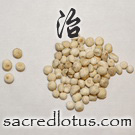 Ban Xia6 gWarm Herbs that Transform Phlegm-Cold
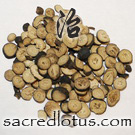 Zhi Shi6 gRegulate the Qi
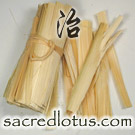 Zhu Ru6 gCool and Transform Phlegm-Heat
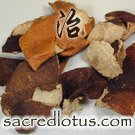 Chen Pi9 gRegulate the Qi
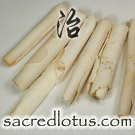 Fu Ling4.5 gRegulate Water and Drain Dampness
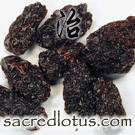 Da Zao3-5 piecesTonify Qi
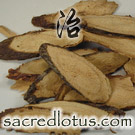 Gan Cao3 gTonify Qi
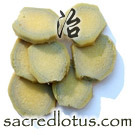 Sheng Jiang3-6 gWarm, Spicy Herbs that Release the Exterior
Preparation & dosage
How is Wen Dan Tang prepared?
Wen Dan Tang is a water decoction: Zhu Ru 6g, Zhi Shi 6g, Ban Xia 6g, Chen Pi 9g, Fu Ling 4.5g, Gan Cao 3g, Sheng Jiang 3–6g, and Da Zao 3–5 pieces are combined and simmered together, then taken warm in divided doses; Da Zao is sometimes left out in modern practice.
Ban Xia is classically used in a processed form (e.g. Fa Ban Xia, prepared with ginger and lime/alum) to reduce its raw irritant and toxic properties before decoction — a standard materia medica processing step, not unique to this formula. Sheng Jiang is added both to season the decoction and to further offset Ban Xia's harshness.
Source: ingredient links (site database); Bensky, Gamble & Kaptchuk, Chinese Herbal Medicine: Materia Medica, for Ban Xia processing.
Safety — read before use
What are the cautions for Wen Dan Tang?
Wen Dan Tang is not appropriate for insomnia or palpitations caused by Blood or Yin deficiency, or for dizziness from Yin deficiency — it is formulated for an excess, Phlegm-Heat pattern (greasy yellow tongue coat, slippery rapid pulse), and using it for a deficiency pattern can aggravate the underlying depletion.
- Avoid when tongue coating is thin or absent, or when the pulse is thin/fine rather than slippery — these point to deficiency rather than Phlegm-Heat.
- Ban Xia is classically used with caution in pregnancy; this is a general materia medica caution for the herb rather than a finding specific to this formula.
- As a phlegm-resolving, Qi-moving formula, it is intended for the specific pattern above and not for general or prolonged unsupervised use.
Source: Bensky & Barolet, Formulas & Strategies; Bensky, Gamble & Kaptchuk, Chinese Herbal Medicine: Materia Medica.
Originally Appeared In:
- Golden Mirror of the Medical Tradition (Yi Zong Jin Jian)
Notes:
How does Wen Dan Tang differ from Suan Zao Ren Tang and Huang Lian Wen Dan Tang?
Wen Dan Tang treats an excess, Phlegm-Heat pattern of insomnia, while Suan Zao Ren Tang treats a deficiency pattern of Liver Blood and Yin depletion; Huang Lian Wen Dan Tang is Wen Dan Tang with Huang Lian added for more intense Phlegm-Fire.
- vs. Suan Zao Ren Tang — Suan Zao Ren Tang (Suan Zao Ren, Fu Ling/Fu Shen, Chuan Xiong, Zhi Mu, Gan Cao) nourishes Liver Blood and clears empty vexation heat for insomnia from Blood and Yin deficiency: a thin or absent tongue coating and a thready, wiry-thin pulse. Wen Dan Tang instead clears an excess Phlegm-Heat pattern with a greasy yellow coat and a slippery, rapid pulse. Matching the pattern to the tongue and pulse is the key differentiation.
- vs. Huang Lian Wen Dan Tang — Huang Lian Wen Dan Tang adds Huang Lian to the base formula, strengthening its ability to drain Heart and Gallbladder Fire. It is reserved for more pronounced Phlegm-Fire: marked irritability or agitation, a redder tongue body, and insomnia with a more agitated quality than plain Wen Dan Tang addresses.
Why is a cooling formula named "Warm the Gallbladder"?
The name is classical and refers to restoring the Gallbladder's normal calm, decisive temperament, not to literally heating it — the formula's actual effect, produced by pairing warm, drying herbs (Ban Xia, Chen Pi) with cool, clearing herbs (Zhu Ru, Zhi Shi), is gently clearing and calming rather than warming.
Historical formulary sources describe an earlier, literally warming precursor for a Gallbladder-cold/deficient pattern, later revised by Chen Yan in the Song dynasty into the cooler, Phlegm-Heat-clearing version used today; we have not independently verified the earliest primary-source text for that precursor, so it is noted here only as reported formulary history, not as a database fact.
Source: Bensky & Barolet, Formulas & Strategies; Chen Yan, San Yin Ji Yi Bing Zheng Fang Lun (1174).
Clinical Studies & Research:
Is there modern research on Wen Dan Tang?
Modern research on Wen Dan Tang is mostly preclinical and mechanistic, focused on insomnia and anxiety, with clinical trial evidence still limited — findings are research context only, not a treatment claim.
- A 2025 rat study found Wen Dan Tang shortened sleep latency, prolonged sleep duration, and reduced anxiety-like behavior, proposing a mechanism involving gut microbiota and tryptophan/kynurenine metabolism along the gut-brain axis (PMID 40618491).
- A 2014 study in sleep-deprived rats found Wen Dan Tang reduced insomnia-related anxiety and prevented the post-deprivation drop in hypothalamic Ghrelin, a brain-gut peptide linked to mood regulation (PMID 25206802).
- A 2022 review of Wen Dan Tang's potential for headache disorders found no clinical trials directly testing the formula for migraine or tension-type headache, and instead reasoned from the anti-inflammatory and antioxidant properties of individual constituent compounds, explicitly calling for controlled trials (PMC 8955743).
Sources: PMID 40618491; PMID 25206802; PMC 8955743.
Sources & References
Compiled and edited by Thomas Dehli, Founder & Editor, Sacred Lotus Updated
The information here is referenced from numerous sources — teachers, practitioners, class notes from Five Branches University, the books below, and the published research literature, with citations given as resolvable PubMed identifiers. Where sources disagree, I have flagged the discrepancies directly. If facts couldn't be verified, I have left them out. How we source our content.
Reference information for students and practitioners — not medical advice. Consult a qualified practitioner. Terms of use.
Chinese Formulas Books & References
 https://amzn.to/4fYI3f8
 https://amzn.to/4j55NRA
 https://amzn.to/4gMROyv
 https://amzn.to/4h7msSK