

Xiang Fu Xuan Fu Hua Tang (Cyperus and Inula Decoction)
Xiang Fu Xuan Fu Hua Tang
Cyperus and Inula Decoction
- Category
- Formulas that Treat Phlegm
- Subcategory
- Formulas that Dry Dampness and Expel Phlegm
- Ingredients
- 7 herbs
Actions
What does Xiang Fu Xuan Fu Hua Tang do?
Xiang Fu Xuan Fu Hua Tang (Cyperus and Inula Decoction) unblocks the Liver channel and collaterals, transforms phlegm-rheum, and spreads Liver qi. It comes from Wu Ju-Tong’s Wen Bing Tiao Bian (Systematic Differentiation of Warm Diseases, 1798), where Wu adapted the older Xuan Fu Hua Tang of the Jin Gui Yao Lue — a three-herb formula built around Xuan Fu Hua, scallion (Cong Bai), and a blood-invigorating herb for Liver-channel Blood stasis — into a formula for phlegm-rheum (thin, damp phlegm-fluid) lodging in the same collaterals, replacing the blood-moving herbs with Xiang Fu plus a damp-draining, phlegm-transforming group.
The seven ingredients divide by role:
- Chiefs: Xuan Fu Hua (descends rebellious qi, transforms phlegm-rheum, and unblocks the collaterals) paired with Xiang Fu (spreads and regulates Liver qi) — the pair that gives the formula its name and addresses both the phlegm obstruction and the qi stagnation behind the rib-side pain.
- Deputy: Zi Su Zi supports Xuan Fu Hua by descending qi and transforming phlegm, easing cough and a feeling of fullness in the chest.
- Assistants: Ban Xia and Chen Pi (the core Er Chen Tang pairing) dry dampness, transform phlegm, and regulate qi; Fu Ling strengthens the Spleen and leaches out dampness at the source of phlegm production.
- Envoy: Yi Yi Ren strengthens the Spleen and percolates dampness, its slightly cold nature balancing the warmth of the other herbs.
Source: this site’s own composition record + Bensky & Barolet, Formulas & Strategies (chief/deputy/assistant/envoy analysis), cross-checked against secondary Wen Bing Tiao Bian formula compilations. Traditional-use framing; not medical advice.
Indications
What is Xiang Fu Xuan Fu Hua Tang used for?
Xiang Fu Xuan Fu Hua Tang treats phlegm-rheum (damp-phlegm) obstructing the Liver channel and collaterals, a pattern that can follow a warm-pathogen or damp-warmth illness in which residual dampness and qi stagnation settle into the rib-side collaterals rather than fully resolving.
Its classic clinical presentation:
- Rib-side (hypochondriac) pain that worsens with coughing, deep breathing, or turning from side to side.
- Cough, with a feeling of distension or mild fluid accumulation in the chest, consistent with the “fluid retention” (zhi yin) category of classical fluid-disease theory.
- Possible low-grade afternoon fever, or chills alternating with fever, reflecting lingering pathogenic qi from the preceding warm-disease process.
Tongue and pulse: the tongue has swollen edges with a thick coating; the pulse is wiry, often most pronounced in the middle (guan) position.
Source: this site’s own pattern/tongue/pulse record + Bensky & Barolet, Formulas & Strategies, cross-referenced against multiple online sources. Traditional-use framing; not medical advice.
Western Uses:
What is Xiang Fu Xuan Fu Hua Tang used for in modern practice?
In modern practice this formula is referenced for rib-side (hypochondriac) pain and chest discomfort associated with cough or a sense of fluid accumulation — contexts practitioners have traditionally mapped onto conditions such as intercostal neuralgia, pleurisy, mild pleural effusion, and chronic bronchitis with rib pain, where Western medicine recognizes pleuritic-type chest-wall pain or fluid in the pleural space.
These biomedical correlates describe the formula’s traditional use only, not a claim that it treats any diagnosed disease. Direct modern research on this specific formula is essentially absent (see research); any use for a diagnosed condition belongs with a qualified practitioner and appropriate medical evaluation, particularly to rule out serious causes of rib/chest pain or pleural fluid.
Source: traditional-use correlates summarized from multiple online sources, cross-checked against the formula’s classical indications. Reference only, not a treatment claim.
Ingredients
7 substances in Xiang Fu Xuan Fu Hua Tang — each links to its full herb monograph.
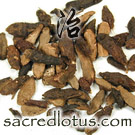 Xiang Fu9 gRegulate the Qi
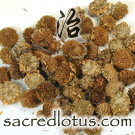 Xuan Fu Hua9 gdecoct in cheeseclothWarm Herbs that Transform Phlegm-Cold
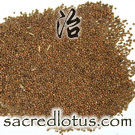 Zi Su Zi9 gRelieve Coughing and Wheezing
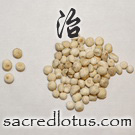 Ban Xia15 gWarm Herbs that Transform Phlegm-Cold
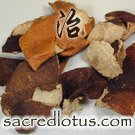 Chen Pi6 gRegulate the Qi
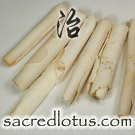 Fu Ling9 gRegulate Water and Drain Dampness
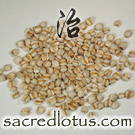 Yi Yi Ren15 gRegulate Water and Drain Dampness
Preparation & dosage
How is Xiang Fu Xuan Fu Hua Tang prepared?
Xiang Fu Xuan Fu Hua Tang is prepared as a decoction, with Xuan Fu Hua wrapped in cheesecloth (bao jian) before it is added to the pot. Wrapping keeps the flower’s fine hairs, which can irritate the throat and digestive tract, out of the strained liquid.
Source: this site’s own composition record + multiple online sources. Traditional-use framing; not medical advice.
Decoction; Xuan Fu Hua wrapped in cheesecloth. Reference relative amounts: Xiang Fu 9 g; Xuan Fu Hua 9 g (wrapped); Zi Su Zi 9 g; Fu Ling 9 g; Chen Pi 6 g; Yi Yi Ren 15 g; Ban Xia (processed) 15 g. Reference only.
Safety — read before use
What are the cautions for Xiang Fu Xuan Fu Hua Tang?
The formula contains Ban Xia, which is toxic when raw and must be processed (Zhi Ban Xia) before use, and is traditionally listed as incompatible with Wu Tou (aconite) under the classical “eighteen antagonisms” (shi ba fan). Because several ingredients are warm and drying, the formula is not appropriate for rib-side pain arising from pure Blood stasis (the pattern its Jin Gui Yao Lue ancestor formula addresses), Yin deficiency, or heat patterns without an underlying damp-phlegm component.
- Pregnancy: Ban Xia is traditionally used with caution in pregnancy — use only under professional guidance.
- Not for dry or heat-predominant presentations: the drying, phlegm-transforming herbs can aggravate conditions with little or no damp-phlegm component.
- Persistent or severe rib-side pain, fever, or breathlessness warrants medical evaluation to rule out conditions such as pleural effusion, pneumonia, or gallbladder disease before relying on herbal treatment alone.
Source: standard herb-processing/incompatibility convention (Ban Xia processing; eighteen antagonisms) + Bensky & Barolet, Formulas & Strategies (cautions for phlegm-transforming/collateral-unblocking formulas). Traditional-use framing; not medical advice.
Originally Appeared In:
- Systematic Differentiation of Warm Diseases (Wen Bing Tiao Bian)
Notes:
How is Xiang Fu Xuan Fu Hua Tang different from the original Xuan Fu Hua Tang, Er Chen Tang, and Shi Zao Tang?
Xiang Fu Xuan Fu Hua Tang is Wu Ju-Tong’s Wen Bing Tiao Bian adaptation of the older Jin Gui Yao Lue formula Xuan Fu Hua Tang. The original three-herb formula (Xuan Fu Hua, scallion/Cong Bai, and a blood-invigorating herb) unblocks the Liver collaterals to treat rib-side pain from Blood stasis; Wu removed the blood-moving herb and scallion and added Xiang Fu plus a damp-draining, phlegm-transforming group (Ban Xia, Chen Pi, Fu Ling, Yi Yi Ren, Zi Su Zi), shifting the target from Blood stasis to phlegm-rheum in the same collaterals.
- vs the original Xuan Fu Hua Tang (Jin Gui Yao Lue): choose the Wen Bing version when rib pain accompanies damp-phlegm signs (thick tongue coat, cough, possible fever) rather than a clear history of trauma or Blood-stasis pain.
- vs Er Chen Tang: Ban Xia, Chen Pi, and Fu Ling form the same core damp-phlegm pairing found in Er Chen Tang; this formula builds on that base by adding Xuan Fu Hua, Xiang Fu, Zi Su Zi, and Yi Yi Ren to direct the action specifically to the Liver collaterals and rib-side pain, rather than treating general phlegm-damp of the middle burner.
- vs Shi Zao Tang: Shi Zao Tang is a much stronger, drastic hydragogue formula reserved for severe, copious fluid accumulation; Xiang Fu Xuan Fu Hua Tang is a gentler formula for milder, more chronic phlegm-rheum in the collaterals.
Source: Wu Ju-Tong, Wen Bing Tiao Bian (formula origin) + Bensky & Barolet, Formulas & Strategies (formula-family comparison), cross-referenced against multiple online sources.
Clinical Studies & Research:
Is there modern research on Xiang Fu Xuan Fu Hua Tang?
No dedicated modern clinical or laboratory studies of Xiang Fu Xuan Fu Hua Tang as a formula were located. PubMed searches for the formula’s name and transliteration variants returned no results, and Chinese-language sources mention it only as one of several classical herbal options cited for phlegm-type rib-side pain or pleural fluid accumulation, without controlled clinical data.
Discrepancy note: a 2025 study (PMID 40444091) on “Xuanfu Hua Tang” and hepatocellular-carcinoma/sorafenib sensitivity surfaces in name-similarity searches, but its subject is the different, three-herb Jin Gui Yao Lue ancestor formula (Xuan Fu Hua, scallion, and Qian Cao/madder) — not Xiang Fu Xuan Fu Hua Tang — so it is flagged here and not cited as evidence for this formula.
Source: PubMed search, no results for “Xiang Fu Xuan Fu Hua Tang” / “Xiangfu Xuanfuhua” (July 2026); PubMed 40444091 identified and excluded as a different formula. No modern clinical evidence found for this formula; not a therapeutic claim.
Sources & References
Compiled and edited by Thomas Dehli, Founder & Editor, Sacred Lotus Updated
The information here is referenced from numerous sources — teachers, practitioners, class notes from Five Branches University, the books below, and the published research literature, with citations given as resolvable PubMed identifiers. Where sources disagree, I have flagged the discrepancies directly. If facts couldn't be verified, I have left them out. How we source our content.
Reference information for students and practitioners — not medical advice. Consult a qualified practitioner. Terms of use.
Chinese Formulas Books & References
 https://amzn.to/4fYI3f8
 https://amzn.to/4j55NRA
 https://amzn.to/4gMROyv
 https://amzn.to/4h7msSK