

Er Zhi Wan (Two Ultimate Pill)
Er Zhi Wan
Two Ultimate Pill
- Category
- Formulas that Tonify
- Subcategory
- Formulas that Nourish and Tonify the Yin
- Ingredients
- 2 herbs
Actions
What does Er Zhi Wan do?
Er Zhi Wan enriches and nourishes the yin of the Liver and Kidney. It is a small, gentle, balanced formula — just two herbs in equal amounts — that supplements yin without being heavy or cloying, so it can be taken over the long term for chronic Liver-and-Kidney yin deficiency and its associated deficiency heat and bleeding.
How the two ingredients work together:
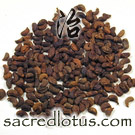
- Nu Zhen Zi (Fructus Ligustri Lucidi) — sweet, bitter and cool; enriches and tonifies Liver and Kidney yin, benefits the eyes, and helps darken the hair.
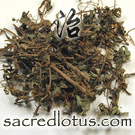
- Han Lian Cao / Mo Han Lian (Herba Ecliptae) — sweet, sour and cold; nourishes Liver and Kidney yin while cooling the blood and stopping bleeding that arises from yin-deficient heat.
- The pair — balanced and moistening rather than rich; the classic gentle yin tonic that also addresses bleeding of the deficient-heat type.
Its name ("Two Ultimates") refers to the two solstices: Nu Zhen Zi is traditionally gathered near the winter solstice and Han Lian Cao near the summer solstice.
Source: Bensky & Barolet, Chinese Herbal Medicine: Formulas & Strategies (2nd ed.), Er Zhi Wan entry. Traditional-use framing; not medical advice.
Indications
What is Er Zhi Wan used for?
Er Zhi Wan is used for Liver and Kidney yin deficiency. The picture is dizziness and blurred vision, ringing in the ears (tinnitus), a sore and weak lower back and knees, premature graying of the hair, insomnia and a dry mouth — and, where deficiency heat pushes blood out of the vessels, bleeding such as blood in the urine or abnormal uterine bleeding.
Typical presentation:
- Head & sensory — dizziness, blurred vision, tinnitus, premature graying of the hair.
- Lower body — weak, sore lower back and knees; weak legs.
- Heat & dryness signs — insomnia, restlessness, a dry mouth and throat.
- Bleeding from yin-deficient heat — e.g. blood in the urine or uterine bleeding (via Han Lian Cao's cool-the-blood action).
- Tongue & pulse — a red, dry tongue with little coat; a thin, rapid pulse.
Source: Bensky & Barolet, Formulas & Strategies; tongue and channels confirmed against the Sacred Lotus formula record. Traditional-use framing; not medical advice.
Western Uses:
What is Er Zhi Wan used for in modern practice?
In modern reference sources Er Zhi Wan is applied to conditions where practitioners identify Liver and Kidney yin deficiency. Commonly cited associations include menopausal complaints, chronic hepatitis, low white-blood-cell or platelet counts, age-related dizziness and blurred vision, and postmenopausal bone loss. This is pattern-based reference framing, not a diagnosis-specific treatment claim.
Reported reference associations include:
- Menopausal & menstrual complaints — hot-flash and yin-deficiency pictures, and some abnormal uterine bleeding.
- Chronic liver disorders — chronic hepatitis of the yin-deficient type.
- Blood-count support — leukopenia and thrombocytopenia, reflecting its modern research focus.
- Aging complaints — dizziness, blurred vision, premature graying, weak lower back (and postmenopausal osteoporosis in research).
Any such use is decided by pattern differentiation, not by the Western label alone.
Source: Bensky & Barolet, Formulas & Strategies (modern applications). Reference framing only; not a medical claim.
Ingredients
2 substances in Er Zhi Wan — each links to its full herb monograph.
Preparation & dosage
How is Er Zhi Wan prepared?
Er Zhi Wan ("Two Ultimate Pill") is prepared as honey pills: equal amounts of its two herbs — Nu Zhen Zi and Han Lian Cao — are ground to a fine powder and bound with honey into pills.
A typical traditional dose is about 9–15 g, taken two to three times a day. The pill form suits its role as a gentle, long-term Liver-and-Kidney yin tonic; concentrated granules are a modern equivalent.
Source: Sacred Lotus sources & references (composition and preparation note) + Bensky & Barolet, Formulas & Strategies.
Traditionally prepared as honey pills from equal amounts of Nu Zhen Zi and Han Lian Cao, taken 9-15 g, 2-3 times daily; also given as a decoction. Reference range only, not a prescription.
Safety — read before use
What are the cautions for Er Zhi Wan?
Er Zhi Wan is enriching and cool, so it is not suited to Spleen and Stomach deficiency with cold or dampness. Its yin-nourishing, blood-cooling herbs can burden a weak digestion — worsening poor appetite, loose stools, or a stifling, full sensation — and it does not address cold-type or damp-phlegm patterns.
- Spleen/Stomach deficiency with cold — use with caution or modification when there is poor appetite, loose stools, or aversion to cold; Han Lian Cao is cold and can be slippery to the bowel.
- Pattern fit — it treats yin-deficiency heat; it is not for cough, exterior conditions, or excess/damp patterns.
- Scope — a gentle formula best for mild-to-moderate or maintenance cases; stronger essence depletion needs a richer formula.
Source: Bensky & Barolet, Formulas & Strategies (cautions). Not medical advice; consult a qualified practitioner.
Originally Appeared In:
- Analytic Collection of Medicinal Formulas (Yi Fang Ji Jie)
Notes:
How does Er Zhi Wan compare to other formulas, and how is it modified?
Er Zhi Wan is the gentlest of the Liver-Kidney yin tonics — two balanced herbs, mild enough for long-term use. It is often chosen for milder cases or as a maintenance base, and it uniquely adds a blood-cooling, bleeding-stopping dimension that the larger yin tonics lack.
Common comparisons and modifications:
- vs Liu Wei Di Huang Wan — both enrich Liver and Kidney yin; Liu Wei Di Huang Wan is broader and stronger (its "three tonify, three drain" design), while Er Zhi Wan is lighter, more balanced, and better for bleeding of the deficient-heat type.
- vs Zuo Gui Wan — Zuo Gui Wan is far richer and reserved for marked yin-and-essence depletion; Er Zhi Wan is mild by comparison.
- As a "pair" — Nu Zhen Zi with Han Lian Cao is frequently added into larger formulas to reinforce Liver-Kidney yin.
- Marked bleeding — classically combined with cooling, hemostatic herbs.
- Dizziness & blurred vision — commonly paired with eye-brightening yin tonics such as Gou Qi Zi and Ju Hua.
Source: Bensky & Barolet, Formulas & Strategies (comparisons & modifications). Traditional-use framing; not medical advice.
Clinical Studies & Research:
Is there modern research on Er Zhi Wan?
Modern study is largely preclinical and centers on postmenopausal-type bone loss. In ovariectomized rats (a menopause model), Er-Zhi-Wan significantly prevented bone loss, preserved trabecular microarchitecture and bone strength, and lowered bone-turnover markers — without stimulating uterine tissue — suggesting an anti-osteoporotic effect (J Ethnopharmacol, 2011). A later network-pharmacology and molecular-docking study modeled candidate active constituents and targets for the same osteoporosis indication (J Mol Model, 2022). Human clinical data remain limited.
Sources: PubMed 22001072 (Er-Zhi-Wan prevents ovariectomy-induced osteoporosis in rats); PubMed 36565386 (mechanism in osteoporosis by molecular docking & dynamics). Research context, not a therapeutic claim.
Sources & References
Compiled and edited by Thomas Dehli, Founder & Editor, Sacred Lotus Updated
The information here is referenced from numerous sources — teachers, practitioners, class notes from Five Branches University, the books below, and the published research literature, with citations given as resolvable PubMed identifiers. Where sources disagree, I have flagged the discrepancies directly. If facts couldn't be verified, I have left them out. How we source our content.
Reference information for students and practitioners — not medical advice. Consult a qualified practitioner. Terms of use.
Chinese Formulas Books & References
 https://amzn.to/4fYI3f8
 https://amzn.to/4j55NRA
 https://amzn.to/4gMROyv
 https://amzn.to/4h7msSK