

Qi Bao Mei Ran Dan (Seven Treasure Special Pill for Beautiful Whiskers)
Qi Bao Mei Ran Dan
Seven Treasure Special Pill for Beautiful Whiskers
- Category
- Formulas that Tonify
- Subcategory
- Formulas that Nourish and Tonify the Yin
- Ingredients
- 7 herbs
Actions
What does Qi Bao Mei Ran Dan do?
Qi Bao Mei Ran Dan (Seven Treasure Special Pill for Beautiful Whiskers) tonifies the Liver and Kidney and nourishes Essence (Jing) and Blood, with a particular reputation for restoring hair color and thickness. Its chief herb, He Shou Wu, takes its name from a legend of a man whose grey hair reportedly turned black after long use — the literal meaning is “Mr. He’s Black Hair.”
The seven ingredients divide by role:
- Chief: He Shou Wu (300 g, steamed with black sesame seeds) tonifies Liver and Kidney and nourishes Essence and Blood — the formula’s core hair- and Jing-restoring herb.
- Deputies: Gou Qi Zi and Tu Si Zi (150 g each) nourish Liver-Kidney yin and consolidate Essence, reinforcing He Shou Wu.
- Assistants: Dang Gui (150 g) nourishes and invigorates Blood; Huai Niu Xi (150 g) strengthens the low back and knees and guides the formula’s action downward to the Kidney; Bu Gu Zhi (120 g, dry-fried with black sesame seeds) warms Kidney yang, balancing the formula’s yin-heavy composition and helping consolidate the Essence the other herbs build.
- Envoy: Fu Ling (150 g) strengthens the Spleen and drains dampness, keeping the rich tonics from becoming stagnant.
Source: Sacred Lotus sources & references + Bensky & Barolet, Formulas & Strategies chief/deputy/assistant/envoy framework, cross-checked against multiple TCM formula references. Traditional-use framing; not medical advice.
Indications
What is Qi Bao Mei Ran Dan used for?
Qi Bao Mei Ran Dan treats combined Liver and Kidney deficiency with depleted Essence and Blood — the pattern classically blamed for hair losing its color and vitality, and for the low back, knees, and teeth weakening ahead of their time.
Its classic clinical presentation:
- Hair: premature greying and hair thinning or loss.
- Low back/knees: aching or weakness in the lower back and knees.
- Other Kidney-Essence signs: loose teeth, tinnitus, and reduced libido or fertility.
Recorded in the Ming-dynasty Yi Fang Ji Jie (Analytic Collection of Medicinal Formulas), the formula was popularized after the Daoist physician Shao Yuanjie presented it to the Jiajing Emperor as a vitality and longevity tonic.
Source: Sacred Lotus sources & references/origin + Bensky & Barolet, Formulas & Strategies. Traditional-use framing; not medical advice.
Western Uses:
What is Qi Bao Mei Ran Dan used for in modern practice?
In modern practice, Qi Bao Mei Ran Dan is referenced for premature greying and hair thinning (correlating with what biomedicine calls canities and androgenetic alopecia), and for age-related low back/knee weakness and declining fertility or libido — conditions that map onto the classical Kidney-Essence-deficiency pattern the formula was built for.
These biomedical correlates are offered as a reference to the formula’s traditional use, not as a claim that it treats any diagnosed disease. The formula’s own research base is thin: a 2022 network-pharmacology study modeled it against skin-aging pathways (see research), but controlled clinical trials on its classical hair/Kidney indications are lacking. Any use for a diagnosed condition belongs with a qualified practitioner.
Source: traditional-use correlates summarized from Bensky & Barolet, Formulas & Strategies and cross-checked TCM formula references; reference only, not a treatment claim.
Ingredients
7 substances in Qi Bao Mei Ran Dan — each links to its full herb monograph.
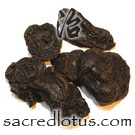 He Shou Wu300 gsteam with black sesame seedsTonify Blood
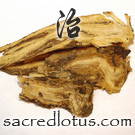 Dang Gui150 gTonify Blood
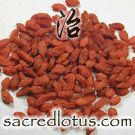 Gou Qi Zi150 gTonify Blood
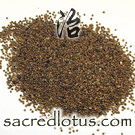 Tu Si Zi150 gTonify Yang
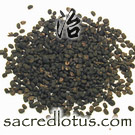 Bu Gu Zhi120 gdry-fry with black sesame seedsTonify Yang
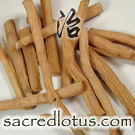 Huai Niu Xi150 gInvigorate Blood and Remove Stagnation
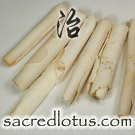 Fu Ling150 gRegulate Water and Drain Dampness
Preparation & dosage
How is Qi Bao Mei Ran Dan prepared?
Classically, the seven ingredients are ground to a fine powder and formed with honey into pills of about 9 g, taken morning and evening with warm salted water. He Shou Wu is steamed with black sesame seeds and Bu Gu Zhi is dry-fried with black sesame seeds beforehand (see notes).
Modern manufactured versions (granules, capsules, tablets) follow the same seven-herb ratio but are dosed per the product label; see dosage.
Source: Sacred Lotus sources & references + Bensky & Barolet, Formulas & Strategies.
Classical honey pill (Mi Wan): one ~9 g pill morning and evening with warm salted water. Reference ingredient ratio (per Sacred Lotus sources & references): He Shou Wu 300 g; Fu Ling, Huai Niu Xi, Dang Gui, Gou Qi Zi, Tu Si Zi 150 g each; Bu Gu Zhi 120 g. Modern granule/capsule products follow label dosing (commonly ~6-9 g/day in 2-3 divided doses). Reference only; individualized by a practitioner.
Safety — read before use
What are the cautions for Qi Bao Mei Ran Dan?
The formula’s chief herb, He Shou Wu, carries a documented risk of hepatotoxicity, so liver health is the central caution. A case series linked Polygonum multiflorum (He Shou Wu) to acute, occasionally severe hepatitis in 25 patients — 91.6% recovered with conservative care, one required liver transplant, and one died (PMID 22195249) — and a separate case report specifically implicated a Qi Bao Mei Ran Dan product (marketed as Qibao Meiran Wan) in biopsy-confirmed acute hepatitis that resolved after stopping it (PMID 26379995).
- Liver monitoring: use only the properly processed (steamed, zhi) form, avoid raw He Shou Wu, and check liver function at baseline and periodically with prolonged use; avoid with pre-existing liver disease or unexplained elevated liver enzymes.
- Spleen deficiency: the rich tonics can burden a weak Spleen — use cautiously with poor appetite, bloating, or loose stools.
- Anticoagulants: Gou Qi Zi (goji) has been linked in case reports to elevated INR and bleeding in patients on warfarin (PMID 22392461) — monitor coagulation if combined.
- Avoid in acute exterior conditions or pronounced excess/damp-heat patterns, and use only under professional guidance during pregnancy.
Sources: PubMed 22195249 (Polygonum multiflorum hepatotoxicity case series); PubMed 26379995 (Qibao Meiran Wan hepatitis case report); PubMed 22392461 (goji–warfarin interaction case report). Traditional-use framing; not medical advice.
Originally Appeared In:
- Analytic Collection of Medicinal Formulas (Yi Fang Ji Jie)
Notes:
How is Qi Bao Mei Ran Dan processed, and how does it compare to other hair/Jing tonics?
Processing is central to this formula’s safety and function: the chief herb He Shou Wu is steamed with black sesame seeds and Bu Gu Zhi is dry-fried with black sesame seeds before compounding — classical processing (paozhi) that converts the harsher raw herbs into gentler, more targeted tonics, and for He Shou Wu specifically is understood to reduce the raw root’s hepatotoxicity risk relative to using it unprocessed (see cautions).
- vs Er Zhi Wan (Nu Zhen Zi + Han Lian Cao): a simpler, gentler Liver-Kidney yin tonic also used for premature greying, but without Qi Bao Mei Ran Dan’s Blood-nourishing (Dang Gui) and Kidney-yang-warming (Bu Gu Zhi) components — Qi Bao Mei Ran Dan is the broader formula for combined yin-yang Essence and Blood depletion.
- Modern forms: commercial versions are commonly sold as granules, capsules, or tablets rather than the classical honey pill; dosing follows the manufacturer’s label and should be adjusted to the individual pattern by a practitioner.
Source: Sacred Lotus sources & references notes + Bensky & Barolet, Formulas & Strategies + cross-checked TCM formula references.
Clinical Studies & Research:
Is there modern research on Qi Bao Mei Ran Dan?
Direct clinical research on the formula is sparse; the most substantive study is a 2022 network-pharmacology investigation into skin aging, not its classical hair/Kidney indications. That study modeled 72 active compounds against 234 skin-aging-related genes, identified 64 shared core targets, and reported predicted (and cell-assay-supported) downregulation of TNF-α and MMP-1, consistent with reduced oxidative stress and improved collagen metabolism (PMID 35274812).
- Skin aging (preclinical/network pharmacology): network pharmacology plus cell assays suggested multi-target activity via TNF-α/MMP-1 downregulation (PMID 35274812).
- Safety (case report): a Qibao Meiran Wan product was directly implicated in a case of acute hepatitis, confirmed by liver biopsy and resolving after discontinuation (PMID 26379995) — see cautions.
Sources: PubMed 35274812; PubMed 26379995. Research context, not a therapeutic claim; no controlled clinical trials on the formula’s classical hair/Kidney-Jing indications were found.
Sources & References
Compiled and edited by Thomas Dehli, Founder & Editor, Sacred Lotus Updated
The information here is referenced from numerous sources — teachers, practitioners, class notes from Five Branches University, the books below, and the published research literature, with citations given as resolvable PubMed identifiers. Where sources disagree, I have flagged the discrepancies directly. If facts couldn't be verified, I have left them out. How we source our content.
Reference information for students and practitioners — not medical advice. Consult a qualified practitioner. Terms of use.
Chinese Formulas Books & References
 https://amzn.to/4fYI3f8
 https://amzn.to/4j55NRA
 https://amzn.to/4gMROyv
 https://amzn.to/4h7msSK